Skovgaard Museum Review
Viborg, Denmark. The Skovgaard Museum, located in Viborg, Denmark, traces its origins to the life and work of the Skovgaard family, a notable lineage of Danish artists spanning the 19th and early 20th centuries. The museum…
Viborg, Denmark. The Skovgaard Museum, located in Viborg, Denmark, traces its origins to the life and work of the Skovgaard family, a notable lineage of Danish artists spanning the 19th and early 20th centuries. The museum…
Best forMuseum lovers, culture travelers, first-time visitors
Review focusCollections, visitor experience, and practical planning
Historical Context
The Skovgaard Museum, located in Viborg, Denmark, traces its origins to the life and work of the Skovgaard family, a notable lineage of Danish artists spanning the 19th and early 20th centuries. The museum focuses principally on the art connected to this family, particularly that of P.C. Skovgaard (1817–1875), his sons Joakim Skovgaard (1856–1933) and Niels Skovgaard (1858–1938), and other family members closely related to the artistic legacy they created. The Skovgaard family played a prominent role in the Danish Golden Age of painting and later periods, emphasizing themes of national identity, landscape, and religious motifs.
The museum’s foundation in Viborg, a city with deep historic roots in Denmark, underlines a regional commitment to preserving the cultural heritage of central Jutland. Founded in the early 20th century and housed in a building designed by the prominent Danish architect Hack Kampmann, the institution developed from the initiative of descendants and patrons wishing to consolidate the family’s artistic contributions in one place. Over time, the collection has expanded modestly but remains centered on the Skovgaard oeuvre, offering a narrowed yet concentrated view into Danish art history.
In a broader European context, the museum’s significance lies in its dedication to an individual family’s artistic accomplishments rather than a sweeping national or international scope. This specialized focus allows it to present Danish art and cultural identity on a microcosmic scale, anchored in the Romantic and Symbolist traditions as well as early modernist impulses expressed in the family’s work. Therefore, the Skovgaard Museum offers a focused historical lens that complements larger Danish institutions dealing with national art history.
What You See on Arrival
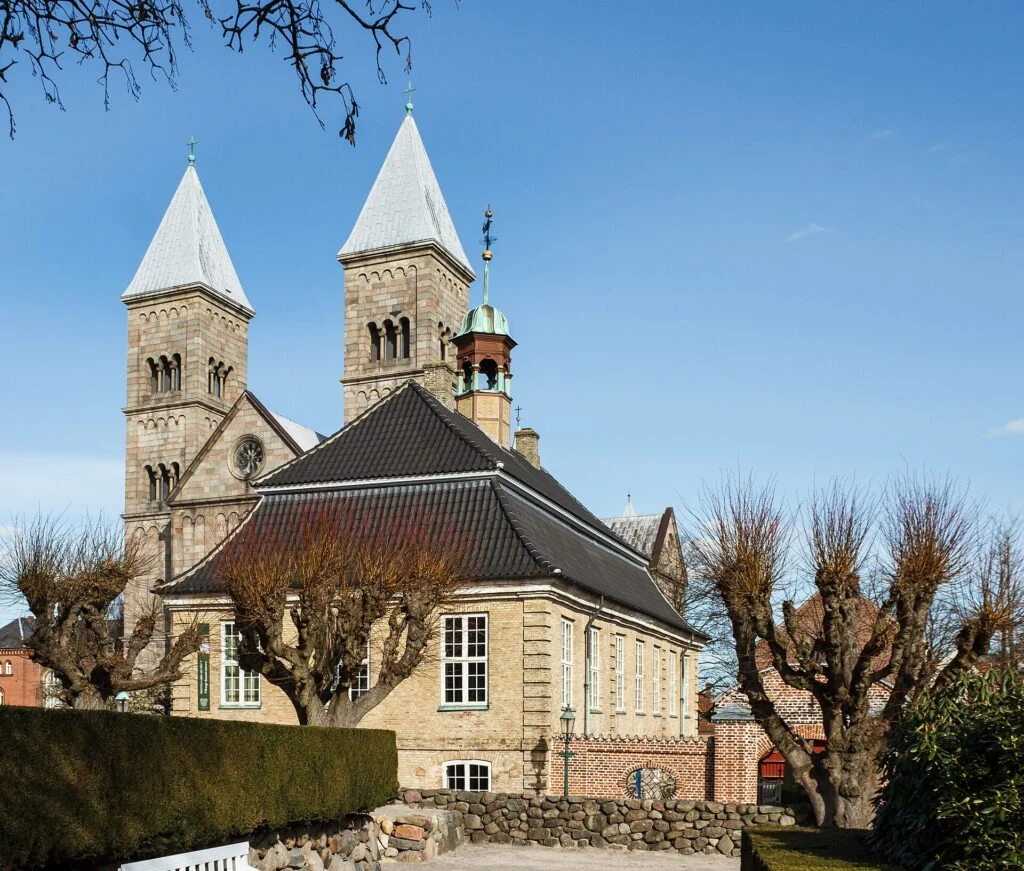
Approaching the Skovgaard Museum, visitors are met with a modest yet stately presence that aligns with early 20th-century Danish architectural sensibilities. The edifice itself, designed by Hack Kampmann, reflects a restrained classicism with clean lines, harmonious proportions, and an emphasis on craftsmanship—aesthetic qualities that resonate with the museum’s interior content.
The museum’s location in Viborg situates it among a collection of civic and cultural landmarks, framing it as a regional hub for art connected to local heritage. Without external distractions or overt commercial signage, the building emphasizes the contemplative nature of the experience inside rather than relying on spectacle or promotional display.
Decoration on the façade remains minimal, directing attention inward rather than outward. The entrance area likely offers orientation through standard museum signage, maps, or a small reception desk, establishing a quiet, focused atmosphere that prepares the visitor for a contemplative encounter with the artworks on view. This approach signals that the museum privileges depth of artistic engagement over visitor entertainment.
The overall institutional identity, as communicated through the building’s design, exterior presentation, and introductory materials, suggests an environment that values artistic and historic reverence. The ambiance leans toward the scholarly or art-historical, suitable for visitors with some prior interest in Danish art, landscape painting traditions, or religious symbolism in Nordic cultural contexts.
Highlights and Key Exhibitions
The core of the Skovgaard Museum’s collections resonates strongly with the artwork of P.C. Skovgaard, a key figure in Denmark’s Golden Age of painting, known especially for his landscapes. His work demonstrates an intense engagement with the Danish countryside, reflecting national romantic ideals through detailed depictions of light, foliage, and atmospheric effects. P.C. Skovgaard’s paintings frequently emphasize motifs of nature’s harmony and rustic life, establishing a definitive visual vocabulary for Danish national identity in art.
Beyond P.C. Skovgaard himself, the museum displays significant material by his sons—Joakim and Niels Skovgaard—who carried the family’s artistic lineage into new thematic and formal territories. Joakim Skovgaard’s output is noted for its strong religious elements, including altarpieces and murals, which integrate Symbolist tendencies with traditional Christian iconography. His work approaches large-scale ecclesiastical commissions with a modern sensibility, combining sculptural drawing and color to explore spiritual themes.
Niels Skovgaard’s work often intersects fine art and craft, incorporating elements of sculpture alongside painting. His interest in naturalistic detail and symbolism complements that of his father and brother, but carries a unique formal expressiveness and occasional flirtations with early modernism. Collectively, the Skovgaard family provides a coherent narrative of artistic evolution spanning roughly seven decades of Danish art history.
The museum’s presentation of these works is likely arranged chronologically and thematically to demonstrate stylistic development and the transmission of motifs between generations. While the Skovgaard Museum’s collection primarily features family works, it often situates these within broader artistic movements of the 19th and early 20th centuries, enabling visitors to discern influences and continuities.
Paintings displaying the Danish landscape—woodlands, streams, rural structures—serve as points of visual and emotional anchor. They communicate cultural identity as much as aesthetic achievement. Equally, the religious commissions and sketches on display reveal the Skovgaards’ significant contribution to the sacred arts tradition in Denmark. While the museum’s permanent holdings focus tightly on this family, occasional inclusion of material by contemporaries or related artists adds contextual depth.
The institution does not pursue a wide-ranging survey beyond this scope, so visitors interested in modern or international art movements, or a comprehensive overview of Danish art, may find the focus narrowly specialized. However, the museum’s strength is precisely this concentrated spotlight on one artistic lineage, allowing for close study of subtle artistic shifts and thematic persistence.
Visitor Experience
The size and scale of the Skovgaard Museum suggest that the visitor experience is intimate rather than overwhelming. The museum’s exhibition layout likely supports a deliberate pacing, encouraging close engagement with individual works, rather than rapid movement through large galleries. The collection’s specialized nature means that visitors are generally expected to have an interest either in Danish art history, landscape painting, or Christian artistic traditions.
Interpretation at the museum is probably aligned with standard art-historical approaches. Wall labels, didactic panels, and catalog entries provide background on authorship, dates, and stylistic developments, supplemented by biographical detail about the Skovgaard family. The focus on one family allows for narrative coherence, presenting artworks as interconnected episodes in an evolving artistic and personal saga. This may prove rewarding to visitors seeking depth and historical nuance.
However, the museum’s specialized emphasis also potentially limits its appeal to those with little previous knowledge or curiosity about Danish art. It is not necessarily designed as a general introduction for broad audiences unfamiliar with the historical or cultural context. Additionally, the relatively small scale of the collection and gallery space means that visitors should not expect major blockbuster exhibitions or a variety of media.
For those interested in landscape painting, national romanticism, or ecclesiastical art, the museum offers a focused experience without distraction. The lack of large-scale multimedia or interactive elements marks the institution as traditional in its museological approach. This is not a museum that heavily employs contemporary visitor engagement technologies or multisensory installations, which may suit some visitors seeking a quieter and more contemplative environment but might strike others as less accessible or dynamic.
The museum is arguably best suited to audiences willing to spend time reflecting on subtle artistic qualities and historical relationships, rather than those looking for rapid consumption or entertainment-driven content. The art is accompanied by scholarship, but the interpretive framework remains straightforward and does not attempt to complication or provoke beyond the material’s inherent qualities.
Tickets, Access, and Planning
Potential visitors should approach planning a visit to the Skovgaard Museum through official sources. Information about opening hours, admission fees, guided tours, audio guides, accessibility, and available discounts is best confirmed on the museum’s official website or by direct inquiry. The museum’s relatively modest size and setting in Viborg suggest that planning ahead can avoid inconveniences, especially in peak tourist seasons or local festivals.
Transportation options and parking facilities are not widely advertised, so visitors relying on private vehicles or public transport should verify arrangements in advance. Similarly, considerations about physical accessibility within the building, including provisions for mobility impairments, require confirmation from current institutional policies.
While the museum likely does not demand extensive time investments, allocating sufficient hours to appreciate the depth of the Skovgaard family’s art is advisable. The facility probably supports a variety of visitor types—from dedicated art historians or Danish cultural enthusiasts to more casual travelers with a tentative interest in regional art cultures.
Finally, it is prudent to check ahead for any temporary closures or special events that might affect access. The onsite amenities, such as coat storage or rest areas, are typically standard, but not guaranteed; thus, visitors should prepare accordingly.
Final Verdict
The Skovgaard Museum offers an uncommon opportunity to engage closely with a single family’s artistic heritage, providing insight into a central strand of Danish art history. Its focused collection on P.C. Skovgaard and his sons Joakim and Niels allows for concentrated study of landscape painting, religious art, and artistic evolution within a defined family narrative.
For those with an interest in the cultural and artistic history of Denmark, and especially the 19th-century Golden Age and subsequent early modern period, the museum furnishes valuable first-hand examples of important themes and styles. Its restrained and straightforward presentation favors depth over spectacle and serves scholarly appreciation and contemplative viewing well.
However, the Skovgaard Museum’s specialized nature means it may not satisfy visitors looking for broader or more diverse artistic surveys. It is not a venue for extensive interdisciplinary programming or interactive experiences, limiting its appeal to a niche audience. Visitors seeking a sweeping introduction to Danish art, or those more interested in international modernist movements, should complement the visit with other institutions.
Functioning as a quiet testament to a family’s artistic contribution, and housed in architecturally significant premises, the museum occupies a well-defined place within Denmark’s cultural landscape. Careful planning is advised to ensure an optimal visit, and prospective guests should use official channels to confirm practical details.
In sum, the Skovgaard Museum is a focused cultural resource best appreciated by visitors who come prepared to explore a particular artistic lineage in depth, rather than those seeking broad or popular museum programming. Its strengths lie in its specificity and the quality of its core collection, balanced by an institutional modesty and lack of wide-ranging thematic ambition.