Fuglsang Kunstmuseum Review
Toreby, Denmark. Fuglsang Kunstmuseum is situated in the rural town of Toreby on the Danish island of Lolland. Established in 2008, the museum carries a relatively recent history compared to many of Denmark’s older, more established…
Toreby, Denmark. Fuglsang Kunstmuseum is situated in the rural town of Toreby on the Danish island of Lolland. Established in 2008, the museum carries a relatively recent history compared to many of Denmark’s older, more established…
Best forMuseum lovers, culture travelers, first-time visitors
Review focusCollections, visitor experience, and practical planning
Historical Context
Fuglsang Kunstmuseum is situated in the rural town of Toreby on the Danish island of Lolland. Established in 2008, the museum carries a relatively recent history compared to many of Denmark’s older, more established art institutions. Its inception was tied to the local cultural heritage and the desire to create a dedicated venue for Danish art centered on the Island of Lolland. The museum’s founding vision was to bring regional artistic production into a cohesive dialogue with the wider Scandinavian art scene. Set against the backdrop of Lolland’s agricultural landscape and historical estates, the museum connects contemporary art with the cultural traditions and natural surroundings of the region.
The building itself is a notable example of modern Danish architecture, designed to harmonize with the local environment without overwhelming it. Fuglsang Kunstmuseum stands on the grounds of Fuglsang Manor, an estate with long-standing artistic connections dating back to the 19th century. Over the decades, the manor has been a meeting point for Danish artists, patrons, and cultural figures. The museum’s establishment formalizes this legacy by housing art collections that reflect the aesthetic and social aspirations of the area. It also contributes to Lolland’s cultural tourism, a region more known for its countryside than for major art hubs.
What You See on Arrival
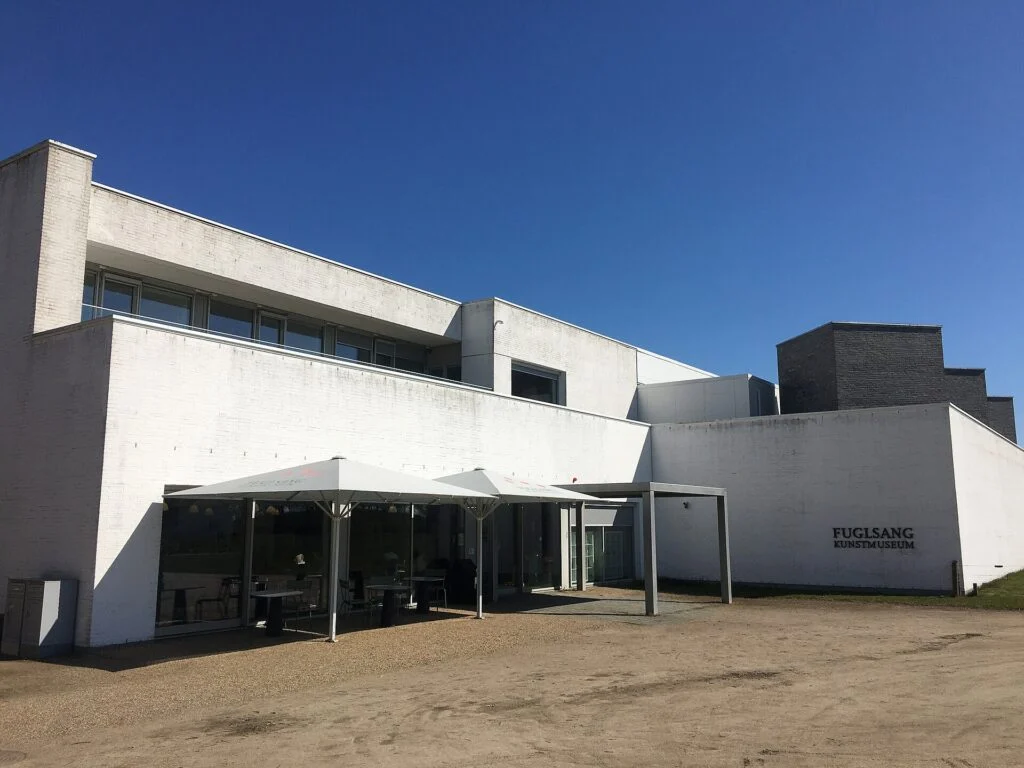
From the outside, the museum’s aesthetic is restrained and thoughtful. Its low-profile, elongated building uses materials and architectural lines that link subtlety with its surroundings. Visitors arriving at Fuglsang Kunstmuseum will immediately note the blend of contemporary structure with pastoral calm. The natural light, clean surfaces, and minimalist forms set an atmosphere that suits quiet contemplation and an intimate viewing experience.
The entrance and framing of visitor arrival create a sense of transition from the rural environment into a cultivated art experience. The landscaped grounds and sightlines toward the sea beyond establish a connection between the museum’s collection and the environment that influenced many artists represented inside. There is no ostentation or grandiosity in the building’s identity; instead, the museum presents itself as a carefully curated cultural space catering primarily to those interested in Danish art history and modernist expression.
Visitors new to Danish art are introduced to a geographic and artistic sense that this museum is regionally focused yet opens out to national modern art developments. While signage and orientation information are present, the overall approach emphasizes direct engagement with the artworks rather than heavy-handed explanation.
Highlights and Key Exhibitions
The core strength of Fuglsang Kunstmuseum lies in its collection of 19th and 20th-century Danish art, closely linked to modernism and movements such as the Skagen painters and the Funen Painters. These artists are integral to Danish cultural identity, and the museum holds a respectable number of works from them, providing insight into regional interpretations of naturalism and modern life. The connection with Fuglsang Manor’s historical artistic importance means that works presented often reflect the estate’s patronage and artist residencies or friendships.
Among the notable thematic strands are landscape painting, which figures prominently given the island’s coastal and agrarian scenery. This emphasis connects Fuglsang Kunstmuseum’s displays to the specific environment of Lolland and Zealand’s southern islands. Visitors should expect to encounter multiple perspectives on Danish landscape, from en plein air techniques to more expressionist renderings.
The collection also includes significant examples of Danish modernist painting from the early to mid-20th century, which mark the transition from naturalistic tendencies toward abstraction and experimentation with form and color. Works in this vein illustrate the dialogue between Danish artists and broader European developments, including influences from French impressionism and German expressionism.
Portraiture and figure studies, though less dominant, provide a human dimension to the collection. These pieces often convey insights into Danish society and the intelligentsia connected to the regional artistic milieu. In addition, the museum houses a modest but meaningful selection of contemporary Danish art, which tends to focus on innovative uses of materials and conceptual approaches rooted in national but outward-looking perspectives.
Care is taken in the museum’s curatorial presentation to balance chronological breadth with thematic coherence. Permanent displays are generally well-organized, allowing visitors to see a progression of styles and ideas without becoming overwhelmed. The museum’s collection size permits intimate viewing conditions—works are not densely packed, and the lighting is adjusted to complement the variety of media and techniques.
Highlights include key pieces by noted artists such as L.A. Ring, whose naturalism and social commentary resonate with the Danish countryside, and Vilhelm Hammershøi, famous for his muted palettes and atmospheric interiors. The museum’s holdings offer a solid representation of the Danish Golden Age’s influence while tracing the evolution that follows into modernity and contemporary art.
Although Fuglsang Kunstmuseum is not primarily a venue for international art, it situates Danish works within the context of European modern art trajectories without overwhelming the local narrative. This focus on regional identity distinguishes it from larger national museums that emphasize global art histories.
Visitor Experience
The visitor experience at Fuglsang Kunstmuseum is shaped by its deliberate pace and scale. The museum’s modest size means it does not cater to large crowds, and visitors should anticipate a quiet, reflective environment. Those with a keen interest in Danish art or Scandinavian modernism will find the setting rewarding, as the exhibits offer depth without requiring extensive prior knowledge.
Interpretive materials and labels tend to be clear and informative, striking a balance between accessibility for general audiences and sufficient detail for more knowledgeable visitors. The museum avoids heavy academic language, which helps maintain its welcoming atmosphere. Although the absence of extensive digital or multimedia components may limit engagement for some visitor groups, the emphasis remains on direct visual experience and personal interpretation.
Family visits and casual tourists might find the museum’s focus somewhat specialized, particularly if unfamiliar with basic Danish art history. However, the quality of the artworks and the contextual setting in a rural Danish landscape can enhance appreciation even for those new to the subject.
The museum space encourages walking without haste, and the flow from room to room is intuitive, allowing visitors to absorb individual works at their own pace. The controlled scale also limits sensory overload; art objects are spaced out enough to invite contemplation and detailed viewing. However, this can also mean that those seeking a broad or international survey of art might find Fuglsang Kunstmuseum somewhat narrow in scope.
One potential limit to visitor experience is the museum’s relative remoteness. Located on Lolland away from Denmark’s main urban centers, it requires planning for those unfamiliar with the region. Visitors should consult current information sources to coordinate transportation and timing. Despite this, the rural context is integral to the museum’s identity, reinforcing the art’s connection to landscape and locality.
Tickets, Access, and Planning
Given its regional location, visitors should plan ahead by checking the museum’s official website for the latest information on opening hours, ticketing policies, admission fees, and any visitor services offered. Seasonal variations or local conditions can affect access.
Details about ticket prices or discounts were not specified at the time of review. Nor is there confirmed public information on the availability of guided tours or audio guides, which may be limited in a smaller institution like Fuglsang Kunstmuseum. Those requiring such services or visiting in group situations should inquire directly with museum management before planning their visit.
Accessibility details—such as provision for mobility-impaired visitors or facilities for families—are not explicitly documented in available sources. Given the museum’s modern construction, basic accommodations may be expected, but verification is advisable.
As for amenities like cafés, bookshops, or nearby cultural institutions, information is sparse. The rural setting means local amenities might be limited compared to city museums. Visitors should prepare accordingly when organizing their trip.
Visitors traveling from Copenhagen or other Danish cities should allow for the journey to Lolland, considering public transit options or private transportation. The museum’s official channels remain the best source for logistical updates and specific visitor protocols.
Final Verdict
Fuglsang Kunstmuseum presents a purposeful and well-conceived focus on Danish art rooted firmly in the cultural context of Lolland. While it does not aim to rival larger national institutions in scale or international breadth, it carves out a distinctive niche by highlighting regional landscapes and artists who shaped Denmark’s modern artistic identity.
The museum’s architectural design aligns well with its mission, setting a calm and contemplative mood that supports thoughtful engagement with the artworks. Its collection offers a solid representation of 19th and 20th-century Danish painting, with select forays into contemporary art that reflect ongoing dialogues within the national art scene.
Visitors with specific interests in Danish art history, modernism, and regional artistic traditions will find the museum’s holdings coherent and satisfactorily contextualized. Conversely, those seeking a wide-ranging or heavily interactive experience may find its scope limited and its interpretive style understated.
Planning a visit requires some care due to the museum’s location and lack of extensive publicly available practical information. Prospective visitors should consult official sources to confirm hours, accessibility, and any events or services that may enhance their visit.
In summary, Fuglsang Kunstmuseum functions as a focused, quietly confident regional institution that enriches Denmark’s cultural geography. It offers visitors a chance to explore distinct artistic narratives connected to place and history, though with a concentrated thematic scope that will appeal most to those invested in the specifics of Danish modern art and cultural heritage.