Museo del Oro Precolombino Review
San José, Costa Rica. The Museo del Oro Precolombino in San José, Costa Rica, serves as a significant repository and showcase of the region’s pre-Columbian goldwork and related cultural materials. Its focus centers on the indigenous societies of…
San José, Costa Rica. The Museo del Oro Precolombino in San José, Costa Rica, serves as a significant repository and showcase of the region’s pre-Columbian goldwork and related cultural materials. Its focus centers on the indigenous societies of…
Best forMuseum lovers, culture travelers, first-time visitors
Review focusCollections, visitor experience, and practical planning
Historical Context
The Museo del Oro Precolombino in San José, Costa Rica, serves as a significant repository and showcase of the region’s pre-Columbian goldwork and related cultural materials. Its focus centers on the indigenous societies of Costa Rica and neighboring areas prior to European contact, emphasizing the role of gold artifacts in social, religious, and economic spheres. Gold objects have long been central to Costa Rica’s archaeological heritage due to their abundance and the cultural importance attributed to them. Unlike in some parts of the Americas where monumental architecture dominates museum presentations, the cultural narrative here is woven primarily through portable objects such as jewelry, ceremonial items, and tools.
The museum’s collections reflect centuries of indigenous craftsmanship, with pieces dating back over a millennium before Columbus arrived. These artifacts reveal complex iconography, metallurgical skill, and symbolic systems used by various groups including the Chorotega, Huetar, and others who once populated the region. The historical context provided by the museum illuminates indigenous life in an interpretive framework that considers social hierarchy, spiritual beliefs, and interaction with the environment. It also implicitly addresses the impact of colonialism, which disrupted but did not erase these cultures.
By concentrating on gold, the Museo del Oro Precolombino offers a focused lens on material culture and indigenous artistry rather than a general archaeological survey of Costa Rica. This specialization differentiates it from broader history or anthropology museums in San José and allows for a detailed, albeit narrower, understanding of the region’s past.
What You See on Arrival
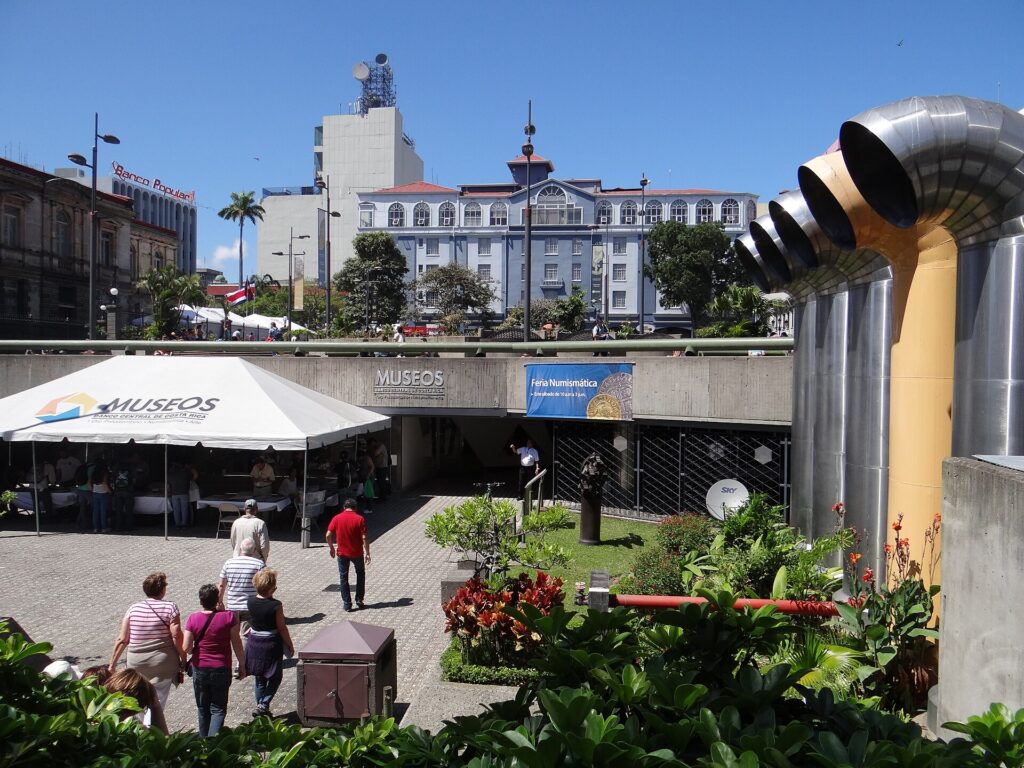
Approaching the Museo del Oro Precolombino, visitors encounter a modern facility set in downtown San José, often integrated within a multi-use complex. The building’s entrance and exterior do not overwhelm with flashy design but instead evoke a respectful tone suited to the cultural weight of the collection. This setting situates the museum within an urban context that connects past and present Costa Rica.
Immediately inside, the visitor is likely to gain a clear introduction to the museum’s theme and scope. The spatial organization and signage tend to orient audiences toward gold artifacts as the centerpiece, supported by explanatory panels that frame the pieces within their historical and cultural milieu. The entrance area typically includes an introductory timeline or map that locates goldworking cultures geographically and chronologically, setting the stage for what follows.
The museum’s identity is firmly tied to its role as a custodian of pre-Columbian metalwork, and this is underscored by a design emphasis on display cases housing intricate objects rather than immersive reconstructive environments. The presentation style reflects a balance between artifact visibility and informative context, aiming to communicate significance without sensationalizing. This tone sets reasonable expectations: the museum is a place for object-based study and reflection, not theatrical storytelling or interactive spectacle.
In summary, visitors can expect a straightforward, focused introduction to Costa Rican pre-Columbian goldwork that signals the museum’s strengths and limitations from the start.
Highlights and Key Exhibitions
The heart of the Museo del Oro Precolombino lies in its extensive collection of gold artifacts, which is one of the most important assemblies of such material in Central America. The exhibits center mainly on small to medium-sized objects, including exquisite pendants, nose rings, collars, bracelets, and other forms of personal adornment crafted from gold and its alloys. These items exemplify ancient metallurgical techniques such as hammering, casting, and filigree, demonstrating an advanced level of skill.
Among the standout themes are the variety of stylized motifs found on the artifacts. These motifs often have symbolic or religious connotations, including anthropomorphic figures, animals, and abstract geometric patterns. The museum provides context for these symbols, explaining their connections to indigenous cosmogony, shamanic practices, and social structures. For example, certain pendants featuring jaguar or bat imagery are interpreted as representing powerful spiritual beings or clan emblems.
Ceremonial objects also form a significant part of the collection. These include items thought to have been used in ritual contexts, such as pectorals or adornments associated with elite status. The display elucidates how the use and display of gold functioned as a marker of political and religious authority. Alongside gold, some exhibits present complementary materials like stone or pottery artifacts, which frame the cultural backdrop of metalwork production and use.
The museum’s chronological narrative is typically structured to show the evolution of styles and techniques over centuries, illustrating regional differences across Costa Rica. While gold artifacts dominate, the museum’s comparative approach provides insight into the broader archaeological picture, highlighting interactions between groups and the movement of materials and ideas.
One notable limitation is the absence of large-scale architectural or contextual reconstructions commonly favored in archaeology-focused museums. The emphasis remains primarily on portable objects, which means visitors must rely on interpretive texts, images, or occasional multimedia to build a fuller understanding of the cultural settings from which the artifacts emerged.
In addition to the permanent collection, the museum may feature displays that touch on gold’s role in colonial and post-colonial Costa Rica, though its main concentration stays with pre-Columbian periods. This positioning helps maintain clarity of focus while acknowledging the enduring cultural significance of gold.
Visitor Experience
The Museo del Oro Precolombino is best suited to visitors who have a particular interest in archaeology, indigenous cultures, or decorative arts. Its object-centric nature will appeal strongly to those who appreciate fine craftsmanship and historical detail. The presentation style is clear and well-organized, supporting visitors in making connections between form, function, and meaning within the artifacts’ original contexts.
Pace-wise, the museum encourages careful examination rather than rapid walkthroughs. The display cases allow a close-up view of intricate details, which rewards patient visitors. Interpretation generally avoids heavy jargon, relying instead on straightforward labels and accessible descriptions with occasional illustrations or diagrams to clarify technological or symbolic concepts.
Families and casual tourists might find the museum’s concentration on small objects and detailed explanation moderately challenging if not supplemented by a guide or prior reading. Children especially may need additional engagement tools to appreciate the cultural significance behind the artifacts. Thus, while the museum is intellectually stimulating, it is less oriented toward interactive or entertainment-driven experiences common in some modern museums.
Crowd patterns in the museum can vary depending on season and time of day. Due to its downtown location and moderate scale, visitors typically navigate the galleries without feeling rushed or overcrowded. This relatively tranquil atmosphere suits those looking to absorb detailed knowledge and reflect on the displays.
From a design perspective, lighting is generally well-managed to showcase the reflective qualities of gold without causing glare or damage risk. The exhibition design respects conservation requirements, which can limit handling and close physical interaction but preserve the collection’s integrity.
Overall, the visitor experience balances scholarly depth with visitor accessibility, though those seeking broad, cross-cultural or immersive indigenous history may find the focus somewhat narrow. Likewise, the lack of extensive multimedia or interactive components might disappoint visitors accustomed to heavily mediated museum environments.
Tickets, Access, and Planning
The museum occupies a central location in San José, making it accessible via public transportation and within reach of other cultural sites in the city. Visitors should consult the official Museo del Oro Precolombino website or contact local tourist offices for the most current information on admission fees, opening hours, and services.
Information around ticketing policies such as discounts, group rates, or admission packages is not definitively available in broad sources and may vary seasonally or due to special programming activities. It is advisable to verify these details directly before planning a visit.
Similarly, details on guided tours, audio guides, and accessibility accommodations are not uniformly published and may be subject to change. Prospective visitors with specific needs or interests would benefit from confirming these in advance to arrange appropriate support.
Because the museum’s core content revolves around detailed artifacts that might require quiet, focused viewing, visitors may want to consider visit timing to avoid busier periods if looking for a more contemplative experience. Peak tourist seasons in Costa Rica can affect urban museum attendance, and local holidays or events may alter open hours.
Given the museum’s urban siting, parking options may be limited, and parking fees could apply, which should be planned accordingly. Though the museum does not prioritize extensive hospitality facilities, nearby amenities in downtown San José provide options for meals and shopping.
Final Verdict
The Museo del Oro Precolombino stands as a substantial cultural institution for those drawn to pre-Columbian art and archaeology, focusing in particular on the goldworking traditions of Costa Rica’s indigenous peoples. Its strength lies in the comprehensive presentation of gold objects that combine technical mastery with deep cultural symbolism, offering a window into societies often underrepresented in larger regional narratives.
The museum’s approach favors clarity and scholarly rigor over entertainment or extensive contextualization beyond the artifacts themselves. As a result, it excels for visitors seeking an artifact-centered exploration of indigenous craftsmanship and symbolism but may appear limited to those expecting a broader anthropological sweep or interactive exhibition formats.
Visitors interested in the specifics of metallurgy, ancient symbolism, and the political-religious meanings encoded in gold objects will find much of interest. However, those seeking a more varied archaeological narrative including architecture, large-scale artifacts, or broader indigenous history should consider supplementing their visit with other Costa Rican museums or archaeological sites.
Planning a visit requires some practical forethought concerning admissions details and available services, as information is not always detailed or consistent outside official sources. The museum’s central location makes it convenient within San José but does not automatically guarantee easy parking or extended visitor amenities.
In conclusion, the Museo del Oro Precolombino serves as a focused and carefully curated institution that enriches understanding of a particular dimension of Costa Rica’s indigenous past. Its restrained presentation invites reflection and study rather than casual consumption, making it best suited for visitors prepared to engage with its specialized content. Those who approach it with clear expectations will come away with a meaningful appreciation of the technical and symbolic roles gold played in pre-Columbian Costa Rican cultures.