Royal Tyrrell Museum Review
Drumheller, Canada. The Royal Tyrrell Museum, located in Drumheller, Alberta, Canada, is an institution primarily dedicated to paleontology and the natural history of dinosaur fossils. Established in 1985, the museum was named in honor of Joseph…
Drumheller, Canada. The Royal Tyrrell Museum, located in Drumheller, Alberta, Canada, is an institution primarily dedicated to paleontology and the natural history of dinosaur fossils. Established in 1985, the museum was named in honor of Joseph…
Best forMuseum lovers, culture travelers, first-time visitors
Review focusCollections, visitor experience, and practical planning
Historical Context
The Royal Tyrrell Museum, located in Drumheller, Alberta, Canada, is an institution primarily dedicated to paleontology and the natural history of dinosaur fossils. Established in 1985, the museum was named in honor of Joseph Burr Tyrrell, a Canadian geologist whose 1884 discovery of dinosaur bones in the region marked a pivotal moment in North American paleontology. The museum’s existence is closely tied to the rich fossiliferous sedimentary deposits found in the surrounding area, often referred to as the “Dinosaur Provincial Park,” which is one of the most significant Late Cretaceous fossil sites in the world.
Since its founding, the Royal Tyrrell Museum has become a crucial research center for paleontology, contributing valuable findings to the scientific community while maintaining a strong public education mission. The focus on dinosaurs is complemented by exhibits on other prehistoric life forms and geological processes that have shaped what is now Alberta’s badlands. The institution serves as a bridge between serious scientific study and public engagement, offering insights into Earth’s deep past through its extensive collections and exhibitions.
The museum’s establishment responded to both the scientific interest in Alberta’s fossils and the public’s curiosity about prehistoric life, positioning Drumheller as a key destination for anyone interested in natural history. Combining academic research with museum displays, it has become an important cultural and educational resource in Canada.
What You See on Arrival
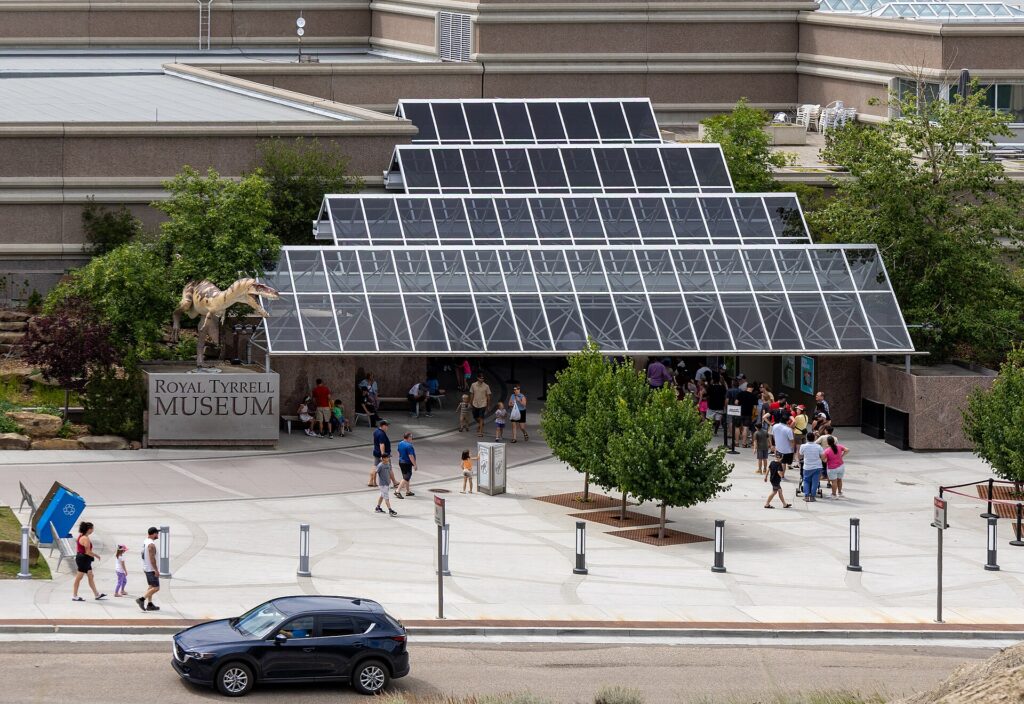
Visitors approaching the Royal Tyrrell Museum are met with an architectural design that reflects both function and the thematic core of the institution. The building’s appearance, constructed with materials that resonate with the surrounding badland landscape, signals the museum’s integration with its natural environment. The grounds tend to frame the visitor experience before entry, aligning with the museum’s identity as a site where science and nature intersect.
On arrival, the approach pathway and exterior signage clearly establish the museum’s focus on paleontological research and dinosaur fossils, preparing visitors for an educational experience centered on ancient life. The entrance typically features displays or outdoor installations related to the region’s geological and paleontological significance, immediately orienting visitors to the museum’s specialization.
Inside the initial entrance and lobby area, visitors encounter the museum’s orientation materials, including maps, introductory panels, and possibly temporary exhibitions focusing on themes tied to ongoing research or fossil discoveries. The layout and design here aim to ease visitors into a gradually unfolding narrative about Earth’s prehistoric past, setting the stage for the more detailed galleries that follow.
The overall framing upon entrance clearly positions the Royal Tyrrell Museum as both a research institution and a public educational site, highlighting Alberta’s unique contribution to paleontology without overwhelming the visitor with jargon or scientific complexity from the outset.
Highlights and Key Exhibitions
The Royal Tyrrell Museum’s core strength lies in its extensive and well-curated collection of dinosaur fossils, one of the finest in Canada and internationally respected. The museum specializes in Late Cretaceous specimens, many sourced directly from local sites that have yielded critical fossils in understanding dinosaur diversity and evolution.
The fossil displays cover numerous species, with detailed skeletal reconstructions that demonstrate the anatomy and scale of these ancient creatures. Visitors can expect to see predatory dinosaurs such as tyrannosaurs alongside herbivorous species like ceratopsians and hadrosaurs. These exhibits provide clarity about the variety of dinosaur life, their ecological roles, and evolutionary adaptations.
Notably, the museum presents complete or near-complete dinosaur skeletons mounted in lifelike poses, allowing visitors to appreciate the size and form of extinct species. The exhibitions often include interpretive panels explaining the fossilization process, the significance of the Badlands ecosystem, and the geological context of the fossils.
In addition to dinosaur specimens, the museum features collections of prehistoric marine reptiles, fossil plants, and smaller vertebrates, which together offer a more comprehensive view of the ecosystems that existed millions of years ago. These exhibits assist visitors in understanding the broader environmental and ecological settings beyond the dinosaurs themselves.
The museum also dedicates attention to the paleontological methods used for excavation and preparation, often including displays of tools, fossil casts, and explanations of research techniques. This behind-the-scenes perspective adds depth to the visitor’s understanding and emphasizes the scientific rigor involved in studying prehistoric life.
While the Royal Tyrrell Museum focuses on its permanent exhibits rooted in scientific discovery, it routinely updates or enhances its displays with new findings from ongoing fieldwork in the Alberta region. However, it is essential to note that the museum does not heavily rely on temporary or rotating exhibitions to draw visitors but instead aims to maintain a stable, informative presentation of its core collection.
Visitor Experience
The Royal Tyrrell Museum is designed to engage a diverse audience, from school groups and families to amateur fossil enthusiasts and academic researchers. The pacing of the visit typically encourages a gradual build-up of information, starting with introductory material and progressing towards more detailed fossil displays and scientific explanations.
Interpretation throughout the galleries combines written panels, photographic documentation, and dioramas, offering multiple entry points for understanding. This layered approach attempts to cater to visitors with varying levels of pre-existing knowledge, though some scientific terms and concepts may occasionally challenge casual visitors without a background in paleontology.
Accessibility of information is generally good, with clear labeling and context provided for the fossil specimens. Visitors are likely to appreciate the balance of visual impact and educational content, as the sizable dinosaur skeletons and reconstructed scenes provide immediate fascination while the accompanying text invites deeper reflection.
One of the notable aspects of the museum experience is the ability to see actual fossils alongside recreated skeletons, bridging the gap between scientific artifact and educational display. This practical demonstration of paleontological practice underscores the museum’s dual role as both a research institution and a public museum.
The physical layout accommodates visitor flow effectively, though peak times may see increased crowding, especially in popular galleries featuring large dinosaur mounts. Visitors seeking a quieter experience might consider timing their visit outside school holidays and weekends.
For families and younger visitors, the museum includes interactive elements that encourage learning through engagement. These may consist of discovery stations or hands-on fossil-related activities, although the institution maintains a focus on authenticity and scientific accuracy rather than entertainment-driven content.
Visitor experience may be limited somewhat for those expecting a broader range of natural history topics, as the Royal Tyrrell Museum is heavily weighted towards paleontology and related earth sciences. Those without a keen interest in dinosaurs or prehistoric life might find the museum specialized, though its scientific importance is clear.
Tickets, Access, and Planning
Prospective visitors should consult the Royal Tyrrell Museum’s official website for the most current and precise information regarding hours of operation, admission fees, accessibility accommodations, and potential booking requirements. Such details are subject to change due to seasonal considerations, special events, or public health guidelines.
Access to Drumheller, the museum’s host community, involves driving or regional transportation from major Alberta cities. The museum’s location in a relatively remote area means that advance planning is advisable, particularly for visitors relying on public transit or arriving during less busy times of the year.
The museum’s visitor facilities and interpretive resources are designed to assist a wide range of guests, but specific arrangements, such as guided tours or educational programs, may vary over time. Checking official channels provides the best approach to confirm available services that align with individual interests and needs.
Planning a visit requires a recognition that the Royal Tyrrell Museum is a specialized institution. Visitors might benefit from allowing sufficient time to absorb the extensive fossil displays, which are both visually substantial and content-rich. The museum’s layout and interpretive style encourage a paced exploration rather than a rushed walkthrough.
Given the northern geographic setting and outdoor element of the surrounding Badlands, seasonal weather conditions can impact travel and local activities linked to a museum visit. A flexible schedule and awareness of local conditions enhance the overall experience.
Final Verdict
The Royal Tyrrell Museum stands as one of Canada’s foremost repositories of dinosaur fossils and a significant center for paleontological research. Its emphasis on exhibits drawn from some of the richest fossil beds globally allows for a detailed understanding of dinosaur diversity and ancient ecosystems within a well-structured public museum setting.
The museum’s collections are particularly suited to visitors with an interest in prehistoric life and natural science. Its clear presentation of scientific information, combined with impressive fossil displays, supports educational objectives effectively while celebrating the unique paleontological heritage of Alberta.
While highly specialized, the museum maintains accessibility through layered interpretive materials and a careful balance of visual and textual content. However, less scientifically inclined visitors or those seeking a broader natural history context might find the focus narrower than other institutions covering wide-ranging natural sciences.
Planning is important given the museum’s location and reliance on fossil research narratives. Visitors should prepare by verifying practical information to ensure the best possible experience. The institution’s strengths lie in its serious commitment to paleontology and its role in connecting ongoing research with public education.
In sum, the Royal Tyrrell Museum is a serious museum for serious fossil enthusiasts, students, and anyone drawn to dinosaurs or Earth’s deep past. It offers a substantial collection and informative exhibitions without resorting to entertainment gimmicks, making it a notable institution in Canada’s cultural and scientific landscape.