Museu Oscar Niemeyer Review
Curitiba, Brazil. The Museu Oscar Niemeyer, located in Curitiba, Brazil, is a cultural institution dedicated primarily to visual arts, architecture, and design. It is named after Oscar Niemeyer (1907–2012), one of Brazil’s most influential architects, whose…
Curitiba, Brazil. The Museu Oscar Niemeyer, located in Curitiba, Brazil, is a cultural institution dedicated primarily to visual arts, architecture, and design. It is named after Oscar Niemeyer (1907–2012), one of Brazil’s most influential architects, whose…
Best forMuseum lovers, culture travelers, first-time visitors
Review focusCollections, visitor experience, and practical planning
Historical Context
The Museu Oscar Niemeyer, located in Curitiba, Brazil, is a cultural institution dedicated primarily to visual arts, architecture, and design. It is named after Oscar Niemeyer (1907–2012), one of Brazil’s most influential architects, whose modernist designs have had a far-reaching impact on architecture worldwide. Established in 2002, the museum was conceived as a venue to reflect both the city’s growing cultural ambitions and to honor Niemeyer’s lifelong contributions to architectural innovation.
Curitiba, a city known for its urban planning and environmental initiatives, adds an interesting layer to the museum’s context. The institution serves as a hub for artistic dialogue in southern Brazil and seeks to engage with trends in contemporary art and architecture while endorsing Niemeyer’s legacy. The building itself, often referenced for its architectural uniqueness, is a statement piece within the museum landscape, designed to embody the modernist ideals it both celebrates and critiques. Situated in a dynamic urban environment, the Museu Oscar Niemeyer has embedded itself into Curitiba’s cultural itinerary and functions as a point of convergence for regional, national, and international artistic expressions.
What You See on Arrival
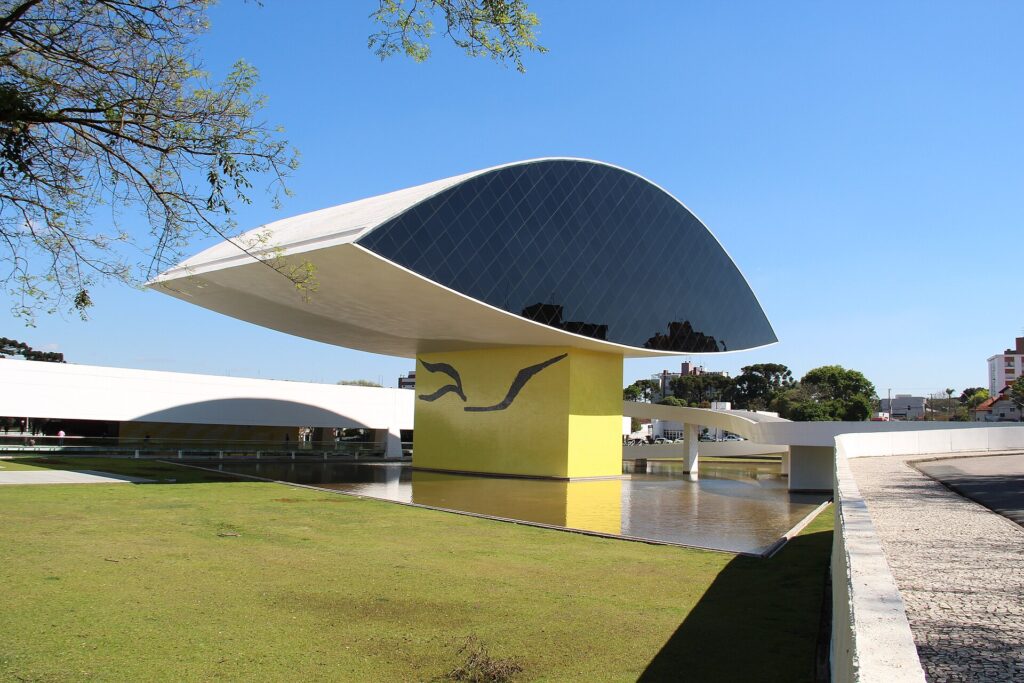
Approaching the Museu Oscar Niemeyer, visitors encounter a distinctive visual identity framed by the museum’s unusual architectural elements. The building features expansive white curves and a tower that evokes the shape of an eye, which can be seen from a distance and signals a departure from conventional museum design. The form itself is often understood as an extension of Niemeyer’s creative philosophy—bold, fluid, and sculptural.
The museum site also includes open plaza areas that merge with the adjacent urban landscape, providing a rhythm of indoor and outdoor space. Visitors may notice how the low horizontal volumes blend with the taller lens-shaped tower, creating a spatial tension that invites closer inspection. This architectural boldness is part of the museum’s appeal but may also set expectations for a visiting experience that combines art, design, and architecture. Signage and orientation are generally straightforward, intended to guide visitors into the gallery spaces and temporary exhibition halls quickly.
The overall atmosphere put forth by the museum’s presence at arrive suggests a focus on creativity and innovation. However, for those unfamiliar with Niemeyer or contemporary Brazilian art, the architectural statement may initially overshadow understanding of the museum’s collection. Visitors preparing to enter would do well to allow time for adjusting to this unique setting and for discerning how the architecture and contents relate.
Highlights and Key Exhibitions
The Museu Oscar Niemeyer hosts a broad range of exhibitions and collections with a special emphasis on visual arts and architectural discourse. Central to its mission is engagement with contemporary art practices, both Brazilian and international, as well as a dedicated focus on Oscar Niemeyer’s architectural oeuvre.
One of the museum’s staple features is its architectural collection, which includes original drawings, models, photographs, and documents related to Niemeyer’s career. This material illustrates key phases of his development, from early masterpieces to later works, and contextualizes his role within modern architecture. While this archive is of particular interest to architecture enthusiasts and scholars, it is also accessible enough for general audiences wishing to understand the significance of Niemeyer’s design language and his approach to form, space, and urbanism.
Art exhibitions frequently rotate, showcasing a variety of mediums, including painting, sculpture, photography, and multimedia installations. These exhibitions tend to emphasize critical contemporary issues and innovative artistic techniques, occasionally intersecting with broader social and cultural themes relevant to Brazil and Latin America. This allows the museum to maintain a dynamic program beyond its fixed architectural legacy, supporting emerging artists and experimental projects.
The museum’s galleries are arranged to facilitate both temporary and long-term displays. Besides the permanent architectural collection, a notable highlight is the sculpture gardens and outdoor installations that utilize the building’s surrounding spaces effectively. These installations often bridge the visual arts with Niemeyer’s architectural principles, reinforcing the dialogue between art and space.
Additionally, graphic design and urban planning exhibit components contribute a different angle to the museum’s offerings. These may serve visitors interested in design thinking and visual communication, rounding out the institution’s focus on interdisciplinary creativity.
Highlight-wise, the museum is not just a monument to Oscar Niemeyer’s fame but an active contemporary art space with evolving exhibitions that respond to current debates and practices. This duality is a strength but might occasionally challenge visitors hoping for a more straightforward or historical narrative.
Visitor Experience
Visiting the Museu Oscar Niemeyer requires adaptation to both its architectural form and the sometimes complex thematic content of its exhibitions. The spaces inside combine large, open galleries with more intimate rooms, providing variation in scale that can support different viewing experiences.
The flow through the museum can feel organic and contemplative, particularly in the way the building’s features—such as the vaulted ceilings and sweeping curves—affect movement and sightlines. This architectural choreography allows artworks and architectural displays to be seen in relation to one another, offering moments for reflection and dialogue between the disciplines.
Interpretive materials are generally well designed, with text panels and labels supporting the exhibitions effectively, though non-Portuguese speakers may find the language coverage limited in some cases. The museum’s educational mission is apparent in the provision of resources that explain architectural concepts alongside contemporary art practices, though the depth and accessibility of interpretation can vary depending on the exhibition.
For audiences with an interest in architecture, design, and contemporary art, the museum provides a varied and stimulating environment. However, visitors whose preference is for more traditional or historicist museums may find the program somewhat challenging or less cohesive, as the museum leans toward experimental and avant-garde presentations.
The outdoor public spaces provide a welcome complement for those who wish to take breaks or appreciate sculptural works in natural light. Weather can impact the enjoyment of these areas, and the suitability of the outdoor galleries fluctuates by season.
Visitor services related to orientation, such as maps and signage, are present but could be clearer in some areas. This is an important consideration given the unusual layout, which might be disorienting for first-time visitors or those less confident navigating non-linear gallery spaces.
Tickets, Access, and Planning
Information on scheduling, ticketing, and public transport access should be confirmed with the museum directly or via its official website before planning a visit. The Museu Oscar Niemeyer is situated in an accessible part of Curitiba and can be reached by multiple modes of transport, but availability and convenience may vary depending on time and local conditions.
Because the museum’s exhibition program changes regularly and some exhibits may have special requirements or restricted access, advanced research is advisable. Visitors interested in particular shows or collections connected to Niemeyer’s architectural legacy should keep abreast of current and upcoming exhibitions to optimize the visit.
It is a good idea to allow flexibility in planning. The combination of indoor and outdoor spaces means that weather conditions may affect the experience. Also, some exhibitions might necessitate a slower pace or repeated visits to grasp their full artistic or intellectual scope.
The institution is typically suited for adults, students, and professionals interested in architecture and contemporary art. Families with children can visit, but the thematic focus and style of presentation may be better appreciated by older children and teenagers. Accessibility specifics, including provisions for mobility or sensory impairments, should be verified directly with the museum to ensure a comfortable visit.
Final Verdict
The Museu Oscar Niemeyer offers a compelling cultural experience centered on the intersection of architecture and contemporary art. Its foundation on the work and legacy of Oscar Niemeyer situates it within a rich tradition of modernist design, yet it embraces an evolving program that speaks to current artistic dialogues beyond historical retrospectives.
The building itself plays a pivotal role in shaping the visitor’s experience. Its striking architectural design, reflecting Niemeyer’s bold approach, is both an attraction and a structural framework for the museum’s content. This dual identity may be challenging for those seeking either a purely architectural museum or solely an art gallery, but it also provides a layered experience unique to this institution.
The collection's strength rests in its architectural holdings, which provide valuable insights into Niemeyer’s work and Brazilian modernism. Meanwhile, the rotating exhibitions promote contemporary artistic practice and critical inquiry, broadening the museum’s appeal. This combination enriches the institution but requires visitors to engage with diverse themes and presentation styles.
Planning a visit to the Museu Oscar Niemeyer calls for careful preparation. Given the changing exhibitions, spatial layout, and interpretive demands, a considered approach ensures that visitors can maximize their time and understanding. The museum suits those with a curiosity for architecture, an appetite for contemporary visual culture, and an interest in the ways public spaces and art can intersect.
In summary, the Museu Oscar Niemeyer stands as an institution of cultural relevance in Curitiba. Its architectural ambition and commitment to contemporary art programming make it a noteworthy destination for those engaged with creative disciplines. It offers a richly textured experience, though it may not meet conventional expectations of a traditional art museum or a singular architectural archive. Visitors seeking depth, innovation, and dialogue between art and design will find the Museu Oscar Niemeyer a thoughtful setting for exploration, provided they approach it with an open mind and a readiness for an unconventional museum encounter.