Barnes Foundation Review
Philadelphia, United States. The Barnes Foundation holds a unique place in the landscape of American art institutions. Established in 1922 by Albert C. Barnes, a Philadelphia-based chemist and art collector, the foundation originally aimed to promote education…
Philadelphia, United States. The Barnes Foundation holds a unique place in the landscape of American art institutions. Established in 1922 by Albert C. Barnes, a Philadelphia-based chemist and art collector, the foundation originally aimed to promote education…
Best forMuseum lovers, culture travelers, first-time visitors
Review focusCollections, visitor experience, and practical planning
Historical Context
The Barnes Foundation holds a unique place in the landscape of American art institutions. Established in 1922 by Albert C. Barnes, a Philadelphia-based chemist and art collector, the foundation originally aimed to promote education and appreciation of the fine arts. Barnes, who amassed a remarkable collection primarily during the early 20th century, envisioned his collection not as a conventional array of individual masterpieces, but rather as an integrated experience. His distinctive approach sought to encourage study of art through relationships between works, focusing on formal qualities such as color, line, and composition.
Initially located in Merion, a suburban area of Philadelphia, the foundation long resisted conventional museum practices, restricting visitor numbers and maintaining strict rules to preserve the pedagogical intent. However, following legal and financial challenges at the turn of the 21st century, the foundation relocated in 2012 to a new, purpose-built facility on Philadelphia’s Benjamin Franklin Parkway. This move sparked significant debate about maintaining Barnes’s original vision versus expanding public accessibility. The current museum reflects a balancing act between preserving the founder’s educational mission and engaging a broader, more diverse audience.
The Barnes Foundation’s collection arose out of Barnes’s personal tastes and intellectual outlook, and his passion for post-impressionist and early modern art is evident throughout. His acquisitions included major works by artists such as Paul Cézanne, Henri Matisse, Pablo Picasso, and Amedeo Modigliani, but also African and Oceanic sculpture, wrought iron, and decorative arts. Rather than amassing art to follow trends or prestige, Barnes cultivated a collection designed to educate and inspire formal analysis, which continues to distinguish the institution today.
What You See on Arrival
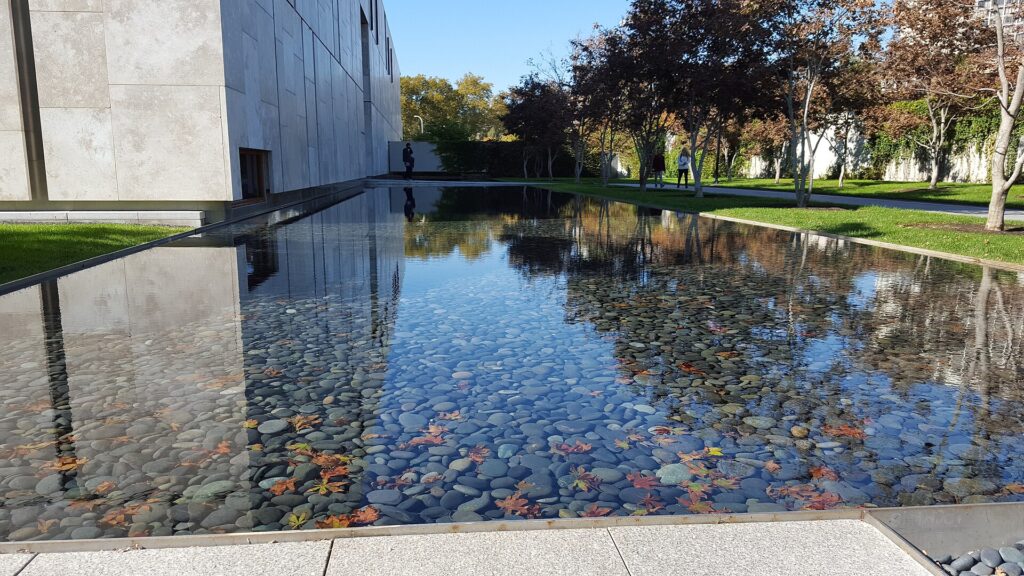
Visitors approaching the Barnes Foundation’s current venue on the Benjamin Franklin Parkway encounter a modern building with a subdued presence amid Philadelphia’s cultural corridor. Designed by architect Tod Williams and Billie Tsien, the museum’s exterior opts for a restrained, geometric style. It does not dominate visually but signals a serious, contemplative atmosphere in line with the foundation’s educational ethos.
The interior layout reflects Barnes’s original arrangement of artworks in ensemble “ensembles” or groupings, mounted salon-style on oak-paneled walls. This method often places paintings by different artists side by side alongside decorative elements and objects from disparate cultures and periods. Visitors are confronted early on with this imposing, deliberate density—unlike many museums where works are spaced generously with extensive interpretive signage.
The setting invites visitors to slow down, take in multiple works at once, and begin to discern relationships between color, shape, and subject matter. Rather than presenting a chronological or thematic narrative typical of art museums, Barnes’s installation encourages visual comparison and a focus on aesthetics. For those accustomed to more conventional museums, the immediate immersion in a highly curated and idiosyncratic environment may feel challenging or even overwhelming.
The museum clearly identifies itself as a place for study and reflection. On arrival, signage and introductory materials emphasize Barnes’s educational mission, highlighting the unique rigor of the display system and the underlying principles that shaped the collection. The museum’s identity is thus established through an invitation to reconsider traditional ways of encountering art, rather than simply consuming an exhibition.
Highlights and Key Exhibitions
The core of the Barnes Foundation is its permanent collection, which is widely regarded as one of the most important assemblies of early modern European paintings in the United States. Central to the collection are dense holdings of works by Cézanne, whose transformative explorations of form and structure greatly influenced 20th-century art. Barnes acquired dozens of Cézanne’s paintings, including still lifes, landscapes, and portraits, allowing visitors to observe variations on motifs and formal experiments in detail.
Matisse is another prominently represented artist, with examples spanning the different phases of his career. The foundation includes masterpieces characterized by vivid color and fluid line, showcasing his ceramic plates, textiles, and paintings in close proximity. This approach reinforces Barnes’s interest in how objects interact visually across media.
Besides these canonical figures, the collection encompasses works by Picasso from his early and mature periods, offering a valuable view of his evolution. Other modernists represented include Renoir, Seurat, Degas, and Toulouse-Lautrec, providing a broad survey of post-impressionism and early modern art movements.
Significantly, the Barnes Foundation also integrates non-Western art into its display. African masks, wood sculptures, and metalwork occupy shared space alongside European paintings, emphasizing Barnes’s conviction that such art offers equal formal interest and educational value. This practice was groundbreaking for its time and continues to invite viewers to reconsider cultural hierarchies in art history.
The wrought iron collection, another distinctive feature, highlights artisanship and design, demonstrating Barnes’s dedication to the decorative arts as a key component of aesthetics. These objects are installed in dialogue with paintings, creating unexpected visual correspondences.
Interpretive materials here are designed to assist viewers in noticing formal relationships rather than imposing a narrative or historical context. The presentation style encourages visitors to engage directly with the visual language of the artworks rather than rely heavily on external information.
While the Barnes Foundation does not emphasize large rotating exhibitions typical of many museums, it does maintain this focused experience rooted in the permanent installation. Temporary exhibitions, when they occur, tend to complement or shed light on the core collection rather than divert attention. Visitors interested in early 20th-century modernism and formal analysis will find the collection extremely rewarding.
Visitor Experience
The visitor experience at the Barnes Foundation is distinctive and may not align perfectly with every museum-goer’s expectations. The density of artworks mounted in tight groupings on oak-blackened walls can be visually intense at first encounter. This arrangement is rooted in the founder’s educational goals, intending to stimulate detailed comparison, but it demands a slower pace and focused attention.
Visitors inclined toward casual museum strolls or those expecting straightforward thematic labels may find the environment less immediately accessible. The museum offers some interpretive text that supports understanding of Barnes’s methods and the formal qualities of the works, but it avoids heavy historical commentary or artist biographies. This interpretive choice maintains the visual priority but can leave gaps for visitors seeking more contextual background.
Because of the presentation style, the Barnes Foundation attracts a particular audience—students of art, educators, and those interested in formal analysis and modernism. It offers an experience best suited to visitors prepared to engage actively with the artworks themselves. For families with young children or visitors preferring a narrative-based museum visit, the foundation might present challenges in maintaining engagement.
The museum’s layout facilitates an essentially linear progression through the galleries, reflecting the original Merion installation moved into a new architectural shell. The flow encourages visitors to proceed from room to room, piecing together the visual and formal dialogues intended by Barnes. Quiet contemplation spaces and seating areas assist with pacing, allowing visitors to pause and absorb the density of images.
Staff presence and front-end information reinforce an educational atmosphere, supporting teachers, students, and serious art enthusiasts. The museum’s interpretation and signage are measured and consistent, focusing on visual literacy rather than broad cultural or historical context.
Although the museum’s modern construction is designed with visitor comfort in mind, the architecture itself tends toward a minimalist interior rather than showcasing ostentatious public areas or grand spaces. The simplicity places emphasis on the art rather than the building experience. This approach complements the foundation’s original pedagogic philosophy but distinguishes it from museums that promote architectural splendor as part of the visit.
Tickets, Access, and Planning
Accurate, up-to-date information about tickets, admission policies, and visitor services at the Barnes Foundation should always be confirmed on the museum’s official website before making plans to visit. Public access to this institution is managed with consideration for visitor experience, but specifics such as opening hours, ticket prices, and availability of tours or audio guides fluctuate and are subject to change.
The museum is located near Philadelphia’s Center City area, making it accessible via public transportation. Visitors planning to attend should review current transportation routes and city parking options in advance, since the neighborhood can be busy and street parking limited.
Prospective guests should also verify any current policies regarding group visits, COVID-related protocols, or special events that might affect entry. Accessibility accommodations are likely available in keeping with standard museum practices, but exact details are best obtained directly from official resources.
Planning a visit merits allocating sufficient time to engage with the collection at a deliberate pace. The density of the installation means that a quick walk-through will not do justice to the nuances of the works or the deliberate design of the display. Those with limited time may wish to prioritize key areas of the collection to avoid feeling overwhelmed.
For educators and students, the Barnes Foundation offers educational programming and resources that align with its mission, though information about scheduling or specific offerings is most reliable when checked directly with the museum.
Final Verdict
The Barnes Foundation occupies a distinctive niche in American museum culture, shaped by its founder’s insistence on a rigorous, formalist approach to art education. Its collection stands as a remarkable concentration of early modern European painting, augmented by significant African art and decorative objects, all presented in an idiosyncratic but purposeful installation.
For visitors with an interest in post-impressionism and modern art, or those open to a sustained, intellectually engaged encounter with art, the museum offers a rich and rewarding experience. It challenges conventional viewing habits by emphasizing visual relationships over historical narratives and demands a slower, more contemplative pace.
The institution’s relocation from Merion to Philadelphia’s Benjamin Franklin Parkway marked a turning point, increasing public access and modernizing facilities, but also raising questions about how best to honor Barnes’s intent. The current museum balances legacy and accessibility but remains unapologetically specialized, which may limit its appeal for casual visitors or those expecting a broad contextual display.
Prospective visitors should prepare for a museum experience that privileges aesthetics and formal study, requiring concentration and a degree of art historical familiarity for full appreciation. The Barnes Foundation does not offer the usual museum comforts or simplified narratives, but for those willing to engage on its terms, it remains a valuable cultural resource and a distinctive expression of early 20th-century artistic vision.