Liangzhu Museum Review
Museums · Hangzhou, China. The Liangzhu Museum in Hangzhou, China, is dedicated to the preservation and presentation of artifacts from the Liangzhu culture, a late Neolithic civilization that flourished approximately between 3300 and 2300 BCE. The culture is…
Museums · Hangzhou, China. The Liangzhu Museum in Hangzhou, China, is dedicated to the preservation and presentation of artifacts from the Liangzhu culture, a late Neolithic civilization that flourished approximately between 3300 and 2300 BCE. The culture is…
Best forMuseum lovers, culture travelers, first-time visitors
Review focusCollections, visitor experience, and practical planning
Historical Context
The Liangzhu Museum in Hangzhou, China, is dedicated to the preservation and presentation of artifacts from the Liangzhu culture, a late Neolithic civilization that flourished approximately between 3300 and 2300 BCE. The culture is primarily associated with the Yangtze River Delta region and is recognized as one of the earliest advanced societies in East Asia. Archaeological discoveries linked to Liangzhu include sophisticated jade objects, pottery, and evidence of complex urban settlements, which have significantly contributed to the understanding of prehistoric Chinese social and technological development. In 2019, the Liangzhu archaeological site was inscribed as a UNESCO World Heritage Site, reflecting its global significance in the narrative of human history and early civilization.
The museum serves as an institutional focal point for showcasing Liangzhu's material culture and explaining the historical and archaeological importance of the site. It stands not only as a repository for a variety of ancient objects but also as an interpretive center aiming to contextualize the achievements and lifestyle of this Neolithic community for domestic and international audiences. The museum's existence supports ongoing archaeological research and public education, emphasizing the role of the Liangzhu culture in China's formative periods. While the emphasis is naturally on ancient artifacts, the museum also situates these findings within a broader cultural and historical framework relevant to contemporary understanding of the region’s past.
What You See on Arrival
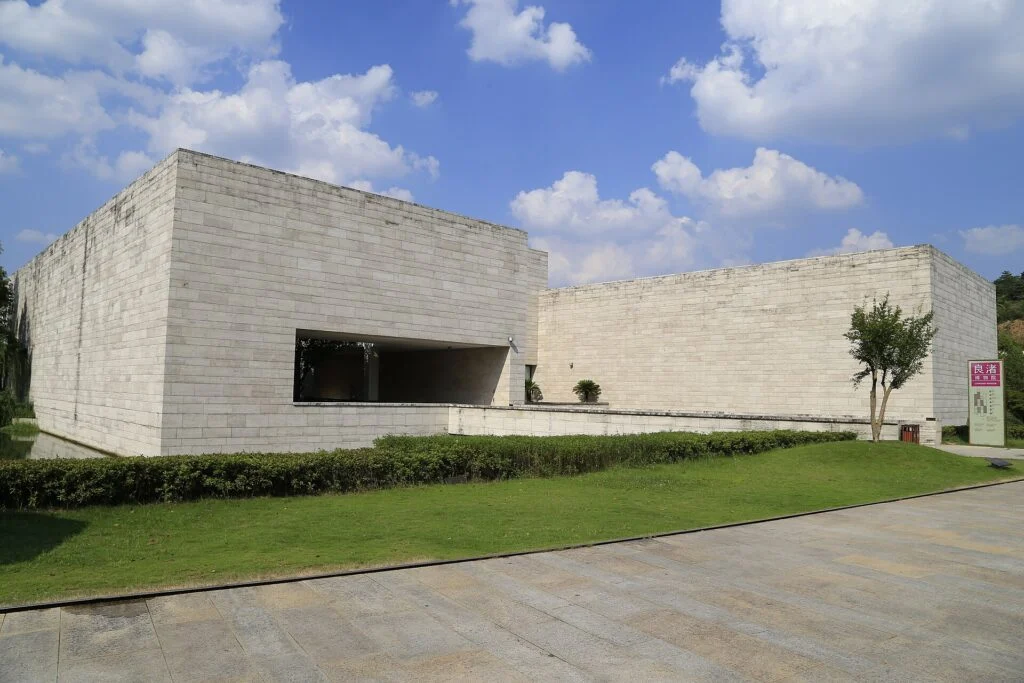
Approaching the Liangzhu Museum, visitors are met with an architectural design that reflects a close relationship with the archaeological site it represents. The building’s aesthetic is restrained but purposeful, designed to blend with its surroundings while signaling its role as a cultural institution. Its low-lying structure and use of natural materials engage subtly with the nearby landforms, which is fitting given the museum’s dedication to an ancient culture closely tied to its natural environment.
The museum’s entrance zone sets a tone of calm and contemplation, preparing visitors for a focus on history and archaeology rather than spectacle. Exterior signage and informational panels orient visitors to the site’s significance and the museum’s mission, framing the upcoming experience as both educational and reflective. The entrance area tends to avoid over-commercialization, emphasizing instead the intellectual and cultural weight of the artifacts and research housed inside. This framing suggests a visit aimed at learning and discovery, suited to those interested in archaeology, ancient history, and early Chinese civilization.
Highlights and Key Exhibitions
The core of the Liangzhu Museum’s exhibition centers on the findings from the Liangzhu archaeological site, presenting a diverse array of Neolithic artifacts that illuminate the culture’s unique characteristics. One of the museum’s primary strengths lies in its jade collection. Liangzhu is particularly famous for its finely crafted jade objects including cong (cylindrical tubes with square outer shapes and circular inner holes), bi disks, ritual axes, and various intricately carved personal ornaments. These pieces demonstrate advanced workmanship and aesthetic sensibilities that were previously unexpected for this period, underscoring the culture’s level of technical skill and ceremonial practice.
Besides jade, the museum contains significant displays of pottery and ceramics that reveal aspects of domestic life and utilitarian function in Liangzhu society. The clay objects often show a polished finish and fairly consistent shapes, indicative of a settled community with specialized craftsmanship. Other artifacts include tools, bone implements, and remnants from architectural structures, which not only reveal daily life but also information about the social and political organization of the Liangzhu people.
A further component of the exhibitions approaches Liangzhu’s urban layout, addressing the scale of the ancient city and its complex water management systems. Interpretive panels and models show how the community built elaborate levees, dams, and canals, illustrating an early form of engineered landscape aimed at controlling flooding and supporting agriculture. This aspect of the exhibition provides an important counterbalance to the focus on artifacts by situating Liangzhu in the broader context of early civilization and environmental adaptation.
The museum also offers insights into the ritual and religious dimensions of Liangzhu culture. Through the presentation of burial practices and symbolic objects, visitors gain an understanding of status differentiation and spiritual beliefs that likely played a role in coordinating the community’s social hierarchy and cohesion. This anthropological dimension enriches the overall narrative and invites reflection on the ways early societies constructed meaning around their material worlds.
What the museum notably avoids is a heavy reliance on generalized or speculative narrative. Instead, the artifact displays are backed by archaeological evidence and supplemented with accessible explanations of scientific findings. This evidence-based approach lends credibility and depth to the experience, although the level of detail may vary depending on the visitor’s prior knowledge and interest in archaeology.
Visitor Experience
The design of the Liangzhu Museum and its exhibition spaces prioritizes orderly progression through the material culture in a roughly chronological and thematic sequence. This approach helps maintain clarity for visitors and supports a logical understanding of the culture’s development and achievements. The pace encouraged by the layout suits thoughtful exploration more than rapid viewing, allowing space for engagement with complex objects like the jade carvings and settlement reconstructions.
Interpretation in the museum is presented predominantly through bilingual (Chinese and English) text panels and multimedia exhibits. These provide a solid informational foundation but tend to rely on traditional didactic methods rather than interactive technology or gamified experiences. For some visitors, particularly those without prior knowledge of Liangzhu or Neolithic archaeology, the exhibits may feel academically dense but rewarding for those willing to engage deeply. The museum appears aimed at an audience with a keen interest in archaeology, ethnohistory, or Chinese cultural heritage, rather than a generalist or casual museum-goer seeking entertainment.
Spatially, the museum’s relatively contained footprint means that visitor movement is less about wandering and more about directed flow, which helps manage crowding during busy periods. However, this also means there is limited room for expansive exhibitions or extensive ancillary programming within the core museum itself. Visitors interested in the broader Neolithic context may find the scope somewhat specialized, though this focus allows a more concentrated and detailed exploration of Liangzhu.
Staff presence for visitor assistance is generally positive in such institutions but specific commentary on this is limited by available information. Likewise, the museum’s presentation style balances scholarly rigor with public accessibility without resorting to simplification or spectacle. This sets clear expectations around the intellectual tone of the visit.
Tickets, Access, and Planning
Precise details about ticketing, schedule, and ancillary services for the Liangzhu Museum are best verified through the official website or directly with the institution due to potential changes over time. Given the museum’s location in Hangzhou, accessibility by public transportation or regional transit is plausible but should be planned in advance. Visitors should also be cautious about seasonal variations in opening hours or temporary closures related to conservation work or local events.
Potential visitors should check for details regarding discounts, family or group passes, and availability of guided tours or audio guides if these services are important to their visit. Information on wheelchair access and accommodations for visitors with mobility challenges is not widely documented but should be requested ahead of time.
Planning a visit would benefit from allocating several hours to absorb the detailed exhibits without rushing, especially for those with a strong interest in Neolithic archaeology or Chinese history. Combining a visit to the museum with a tour of the nearby UNESCO World Heritage archaeological site itself could provide a fuller understanding, though the museum functions as a standalone educational venue.
Final Verdict
The Liangzhu Museum is a specialized institution that offers a focused and scholarly presentation of one of China’s most significant Neolithic cultures. It excels in its dedicated display of jade artifacts, archaeological findings, and interpretive material that together tell a coherent story of technological skill, social complexity, and ritual life dating back over 4,000 years. This focus makes it a valuable destination for those seeking in-depth knowledge about archaeological heritage or early Chinese history.
On the other hand, the museum’s specialized nature and relatively restrained visitor experience may be less suited for casual tourists or those expecting broader or more varied cultural programming. Visitors without some background or sustained interest in archaeology may find certain sections demanding due to the level of detail and less interactive style. The museum’s physical scale and exhibition scope are limited but well-focused, providing a clear narrative without overextending its resources.
For scholars, history enthusiasts, or travelers with a serious interest in early civilizations, the Liangzhu Museum stands as a significant resource. It represents both an academic center and cultural institution that preserves and elucidates an important chapter in the prehistoric past of East Asia. Those planning to visit should consult official resources for practical details and consider pairing their visit with field exploration of the nearby archaeological remains to maximize context and appreciation. Overall, the Liangzhu Museum delivers a considered and substantive experience that reflects its archaeological heritage with accuracy and care, contributing meaningfully to cultural understanding in Hangzhou and beyond.