Liangzhu Museum
Museums · Hangzhou, China. The Liangzhu Museum in Hangzhou, China, is an archaeological museum dedicated to exploring the Liangzhu culture, a significant Neolithic civilization dating back roughly 5,000 years. This culture is recognized for its early development of…
Best forMuseum lovers, culture travelers, first-time visitors
Setting / nearbyHangzhou, China
Overview
The Liangzhu Museum in Hangzhou, China, is an archaeological museum dedicated to exploring the Liangzhu culture, a significant Neolithic civilization dating back roughly 5,000 years. This culture is recognized for its early development of urban settlement, jade craftsmanship, and complex social structures in the Yangtze River Delta region. The museum was established to safeguard, research, and display artifacts that shed light on the life and achievements of the Liangzhu people. Its collections and exhibitions offer insight into a formative period in prehistoric China, helping visitors understand the origins of Chinese civilization and the development of early statehood.
The museum is situated within Hangzhou, a city known for its historic and cultural heritage. The Liangzhu culture, primarily associated with the area north of Hangzhou Bay, has left behind archaeological sites that reveal advanced agriculture, social hierarchy, and ritual practices. The museum functions both as a repository of these archaeological finds and as an interpretative center presenting the broader context of Neolithic culture in this part of China.
Collection Highlights
The core of the Liangzhu Museum’s collection consists of artifacts excavated from the Liangzhu archaeological sites, notably including jade objects, pottery, tools, and burial items. The jade artifacts are notable for their craftsmanship and symbolic significance; these include cong (tube-shaped jade objects), bi disks (flat jade circles with a hole in the center), and dagger-axes, some of which display intricate patterns and workmanship that illustrate the high cultural value placed on jade in the Liangzhu society.
Pottery and stone tools showcase the daily life and technology of the time, reflecting an agrarian society with a developing artisan class. The museum displays burial goods that suggest complex social stratification, with some tombs containing more elaborate and numerous objects, hinting at the presence of elite classes and ritual practices centered around ancestor worship and spiritual beliefs.
Exhibits include detailed information about archaeological methodology and excavation results, which provide context about how discoveries were made and how these helped reconstruct aspects of the Neolithic environment and social organization. Some displays might also highlight the relation between the Liangzhu culture and neighboring or successive cultures, though the focus remains primarily on the local historical significance within the bassin of the Yangtze River.
Building and Setting
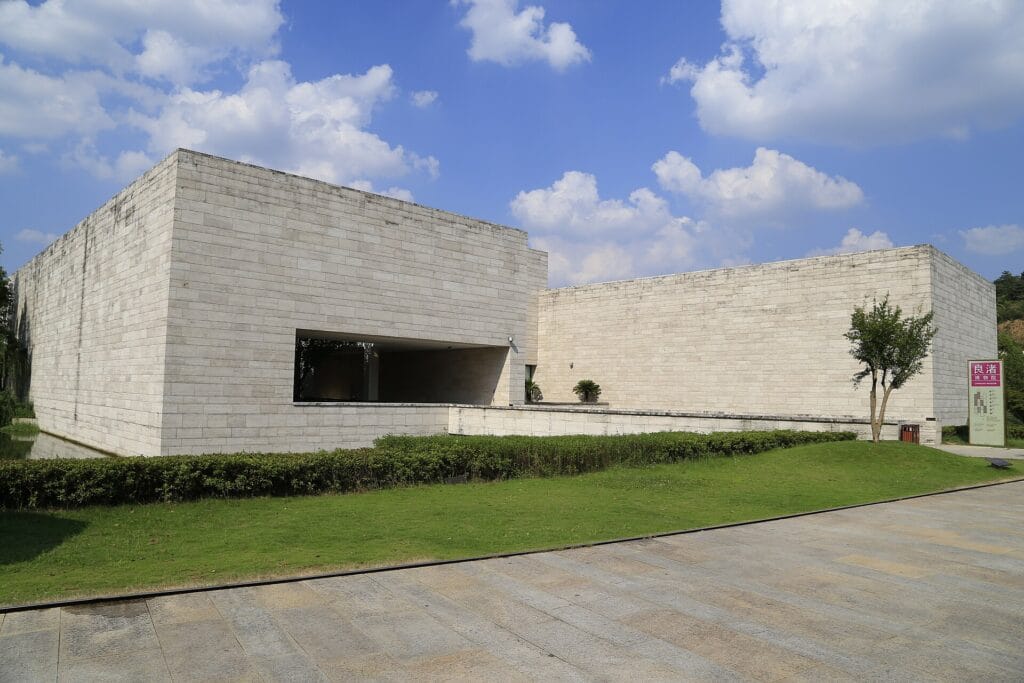
The Liangzhu Museum is purpose-built for archaeological exhibition and research. Its design reflects a modern approach to museum architecture aimed at protecting delicate artifacts while offering open, well-lit gallery spaces. The building is located near key Liangzhu archaeological sites, adding a geographical relevance to the visitor experience.
The surrounding environment includes landscaped areas and may incorporate design elements intended to evoke the early cultural landscape of the Liangzhu civilization. The museum’s setting in Hangzhou provides a contrast between contemporary urban life and ancient cultural heritage, grounding the visit in both local identity and historical continuity.
Practical Information
As details about admission, hours, and visitor services may vary, interested visitors should consult the museum’s official website or contact them directly before planning a visit. This is advisable to obtain the latest information about opening times, ticket availability, guided tours (if any), and accessibility provisions.
Given the archaeological nature of the museum, some exhibits may use text panels and multimedia explanations that benefit from prior or additional reading in order to fully appreciate the cultural and historical nuances on display. Visitors with a special interest in archaeology or Chinese prehistory may find the experience particularly rewarding, while those seeking a more general cultural encounter will still gain valuable insights.
Why Visit
The Liangzhu Museum offers a focused look at one of the earliest known cultures in eastern China, contributing important knowledge about human settlement, social development, and ritual activity during the Neolithic period. For those interested in archaeology, history, or Chinese culture, the museum provides a substantial and well-curated collection that illustrates how ancient communities in this region lived and organized themselves.
The museum serves not only as a place to see artifacts but also as a center for understanding the prehistoric foundations of Chinese civilization. Its displays help reconstruct a time when social complexity and craft specialization were emerging, predating written records but leaving a tangible cultural legacy in jade and pottery.
Potential visitors should be aware that the museum’s narrative is specialized and archaeological. While the exhibitions are informative, the experience may involve detailed descriptive content that assumes some interest in or familiarity with archaeology. It is less likely to cater to audiences seeking broad entertainment or interactive experiences commonly found in some contemporary museums.
In sum, the Liangzhu Museum is suited to those who appreciate cultural heritage and wish to explore how an ancient society shaped the course of history in the Yangtze River Delta area. The museum’s strength lies in the tangible link it offers to one of the critical periods of prehistoric development in China. It stands as a point of reference for understanding the early roots of Chinese civilization beyond what historical texts alone can tell.
For up-to-date information and detailed visitor planning, checking the official website prior to visiting is advised.