Luoyang Museum Review
Archaeology Museums · Luoyang, China. The Luoyang Museum, situated in the city of Luoyang in China’s Henan Province, anchors itself firmly within one of the country’s oldest urban centers. Luoyang is historically notable for having served as a capital…
Archaeology Museums · Luoyang, China. The Luoyang Museum, situated in the city of Luoyang in China’s Henan Province, anchors itself firmly within one of the country’s oldest urban centers. Luoyang is historically notable for having served as a capital…
Best forMuseum lovers, culture travelers, first-time visitors
Review focusCollections, visitor experience, and practical planning
Historical Context
The Luoyang Museum, situated in the city of Luoyang in China’s Henan Province, anchors itself firmly within one of the country’s oldest urban centers. Luoyang is historically notable for having served as a capital for multiple dynasties across more than a millennium, including the Eastern Zhou, Han, and Tang dynasties. This layered political and cultural history informs the museum’s role as both a repository and a narrative space dedicated to regional civilization’s development over thousands of years.
Established in the 20th century with subsequent expansions, the Luoyang Museum reflects China's mid-century initiative to systematize and present cultural heritage in public institutions. The museum’s collections derive largely from local archaeological findings, historical artifacts, and traditional arts of the Central Plains area, an essential cradle of Chinese civilization. Its location in Luoyang itself allows it to leverage proximity to key ancient sites, such as the Longmen Grottoes, providing a contextual backdrop that bolsters its exhibitions. This historical grounding shapes the museum’s focus on material culture and historical documentation pertinent to the area’s rich dynastic past and continuous cultural evolution.
What You See on Arrival
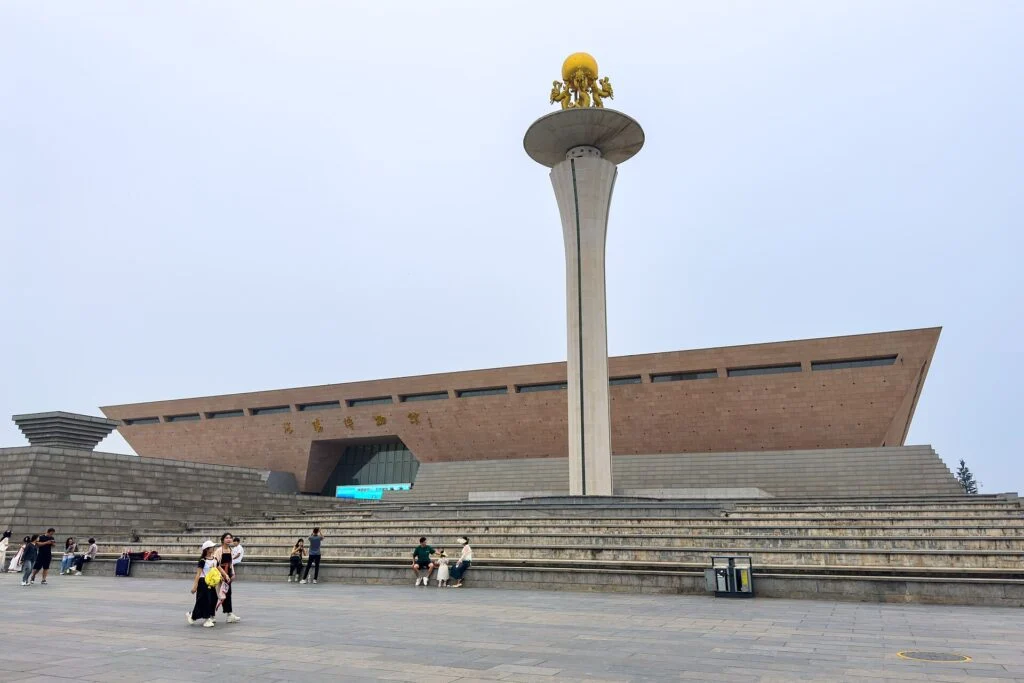
Approaching the Luoyang Museum, visitors are met with an imposing structure that communicates a blend of modern architectural style and traditional Chinese design elements. The museum’s façade and overall building layout emphasize symmetry and order, reflecting the aesthetic legacies of the dynastic periods it represents. This architectural impression sets the tone for the visitor, indicating both the institution’s role as a custodian of ancient heritage and as a contemporary cultural venue.
The museum grounds are typically well-maintained, with gardens and open spaces that frame the main entrance, contributing to a contemplative atmosphere before entry. The front hall and reception areas function as a transition from the outside world to the historical narratives inside, offering orientation materials and basic visitor information. Upon arrival, it becomes clear that the Luoyang Museum positions itself as a center for education and cultural preservation, with a clear emphasis on artifacts and displays that contribute to understanding the local historical identity rather than broader China-wide history.
Highlights and Key Exhibitions
The core appeal of the Luoyang Museum lies in its extensive collection of artifacts spanning several major Chinese dynasties, with particular depth in items from the Han and Tang periods. One of its signature strengths is the display of bronze ware and pottery, including ritual vessels dating back to the Zhou dynasty. These objects reflect the technical sophistication and ceremonial importance of metallurgy and ceramics in ancient Luoyang, showcasing craftsmanship alongside cultural and ritual practices of early Chinese societies.
In addition to bronzes, the museum houses a notable collection of Buddhist sculptures and stone carvings, many of which echo the artistic developments seen in nearby Longmen Grottoes. These sculptures are illustrative of religious and artistic shifts during the Northern Wei through Tang dynasties, offering a narrative of the interplay between faith, art, and imperial patronage. The inclusion of ink rubbings and stone inscriptions further enriches this narrative by providing textual and epigraphic records that complement the visual displays.
Another important section is the collection of silk textiles and ceramics, which communicate the economic and cultural exchanges fostered by ancient Luoyang’s position on the Silk Road and other trade routes. These materials provide insight into day-to-day life, as well as trade networks and technological diffusion, highlighting the city’s role as a hub of interaction between northern and southern China and beyond.
The museum also incorporates archaeological artifacts unearthed locally, ranging from tools and weapons to personal ornaments, which together chart human activity and settlement patterns in the region over millennia. These exhibits tend to be arranged chronologically, allowing visitors to follow a clear historical progression. However, some of the interpretive labels and contextual explanations, while adequate, might benefit from more in-depth commentary or updated research to support visitor understanding, especially for those less familiar with Chinese history.
Furthermore, the Luoyang Museum includes exhibits dedicated to traditional Chinese painting, calligraphy, and folk customs. These sections help broaden the cultural scope beyond monumental archaeological finds, offering a more nuanced picture of regional artistic and social developments. While these displays are valuable for their aesthetic qualities and cultural context, their relatively smaller scale compared to the main archaeological collections limits their overall impact within the museum’s narrative.
Visitor Experience
The museum’s layout generally supports a logical and relatively straightforward circulation path. Visitors can move through galleries that are organized chronologically and thematically, which helps in understanding the historical flow from the Bronze Age through to the medieval periods. This coherence makes the Luoyang Museum accessible to a range of visitors, from general audiences to those with an academic interest in Chinese history and archaeology.
Interpretation within the museum is functional but occasionally leans toward brevity. Labels and panel texts tend to focus on factual details about the objects and their origin, sometimes at the expense of connecting artifacts to broader historical stories or contemporary relevance. For visitors without prior knowledge of Chinese dynastic history, this may pose a mild challenge, as the institution could integrate more comparative or explanatory material to enhance engagement.
The lighting and display methods are conventional and effective in preserving artifacts while allowing for clear visibility. However, the experience might feel somewhat static for visitors seeking interactive or multimedia elements that are common in more recent museum designs. The absence of such features does not detract from the quality of the collections but limits the museum’s appeal to younger audiences or those who prefer more varied presentation formats.
Crowd management appears manageable, reflecting the museum’s profile as a regional cultural institution rather than a major international draw. This tends to allow visitors a quiet viewing experience without the congestion seen in larger metropolitan museums. Nevertheless, facilities such as seating areas and rest points could be limited, which is worth considering for visitors planning a prolonged visit.
Tickets, Access, and Planning
Practical information about admission policies and visiting times for the Luoyang Museum is not consistently documented in widely accessible sources. It is advisable for interested visitors to consult the official museum website or local tourism resources prior to planning a visit. This precaution is particularly important given that operational details in Chinese regional museums can vary due to local holidays, maintenance schedules, or special events.
Accessibility specifics, including provisions for visitors with disabilities, special exhibitions timing, guided tours, and availability of audio guides or multi-language materials, also require confirmation through official channels. While larger national museums in China have increasingly developed such services, regional museums may offer a more limited scope.
Location-wise, the museum benefits from being situated within Luoyang city, which is itself served by public transportation and is accessible for visitors coming from other parts of Henan or neighboring provinces. Nonetheless, the practicality of travel arrangements should be assessed individually, especially for international travelers unfamiliar with regional transit systems.
Final Verdict
The Luoyang Museum holds considerable value for those interested in Chinese antiquity, particularly the material culture of Central Plains dynastic eras. Its collections offer a concentrated view of archaeological and artistic developments tied closely to Luoyang’s historic role as a political and religious center. The museum’s strength lies in its extensive assemblage of bronzes, ceramics, stone sculptures, and textiles that provide tangible connections to the city’s ancient past.
Nevertheless, the institution functions primarily as a regional museum with associated limitations. Those seeking a highly interactive or deeply interpretive experience might find the presentation somewhat traditional and sparse in contextual narratives. The absence of comprehensive modern visitor amenities, such as multilingual information or immersive technology, may restrict accessibility for certain audiences.
In practical terms, prospective visitors should seek current information regarding hours, admission, and available services before planning a visit. The museum’s location in Luoyang presents opportunities to combine it with excursions to local heritage sites, which can enrich understanding of the exhibits on display.
In sum, the Luoyang Museum is a useful and credible resource for appreciating the cultural layers of one of China’s oldest capitals. It serves well as an educational institution focused on archaeological holdings and regional history, though it might not satisfy all expectations for a multi-faceted museum experience in the modern sense. Nonetheless, it remains an important venue for highlighting Luoyang’s enduring place in China’s historical landscape.