Australian Armour and Artillery Museum Review
Military Museums · Cairns, Australia. The Australian Armour and Artillery Museum in Cairns stands as a notable repository of military vehicles, weaponry, and related artifacts, particularly focusing on armoured vehicles from the 20th century. Founded out of private passion…
Military Museums · Cairns, Australia. The Australian Armour and Artillery Museum in Cairns stands as a notable repository of military vehicles, weaponry, and related artifacts, particularly focusing on armoured vehicles from the 20th century. Founded out of private passion…
Best forArt lovers, visual culture, architecture
Review focusCollections, curatorial focus, and visitor planning
Historical Context
The Australian Armour and Artillery Museum in Cairns stands as a notable repository of military vehicles, weaponry, and related artifacts, particularly focusing on armoured vehicles from the 20th century. Founded out of private passion and a determination to preserve military heritage, the museum brings a distinct focus to armoured warfare machinery including tanks, artillery pieces, and support vehicles. Unlike larger national military museums that provide comprehensive narratives across numerous branches or historical periods, this institution centers on armoured and artillery equipment, largely from the two world wars and the Cold War era.
This private collection took shape over several decades, eventually evolving into a public museum that aims to offer both enthusiasts and casual visitors deep access to vehicles and artillery that are often not accessible elsewhere in Australia. Cairns’ location situates the museum outside the major population centers like Sydney or Melbourne, providing regional appeal in Far North Queensland. The museum also reflects a tradition within Australia of preserving and exhibiting military vehicles as a way of maintaining links to both international military history and the country’s own wartime experiences.
While the Australian Armour and Artillery Museum does not attempt to cover the broad scope of Australian military history comprehensively, its tight focus gives the museum a degree of specialization that resonates with collectors and historians interested in armoured warfare. It fills a particular niche within Australia’s museum landscape, which features other institutions focusing on aviation, naval history, or broader military themes.
What You See on Arrival
Approaching the museum, visitors are likely first struck by the sheer scale of the collection visible from the external spaces. Armoured vehicles, artillery guns, and occasionally tanks are displayed in large outdoor or semi-covered areas. The setting is more practical than polished, with functional arrangements rather than elaborate staging, which is in keeping with the museum’s origin as a private collection transitioned to public display.
The entrance experience is straightforward rather than theatrical. The collection’s identity as a custodian of cold war and world war military vehicles is clear, with an emphasis on authenticity rather than glossy presentation. Rather than imposing a heavy narrative on visitors from the outset, the display arrangements tend to let the vehicles and artillery pieces speak for themselves in their design and condition.
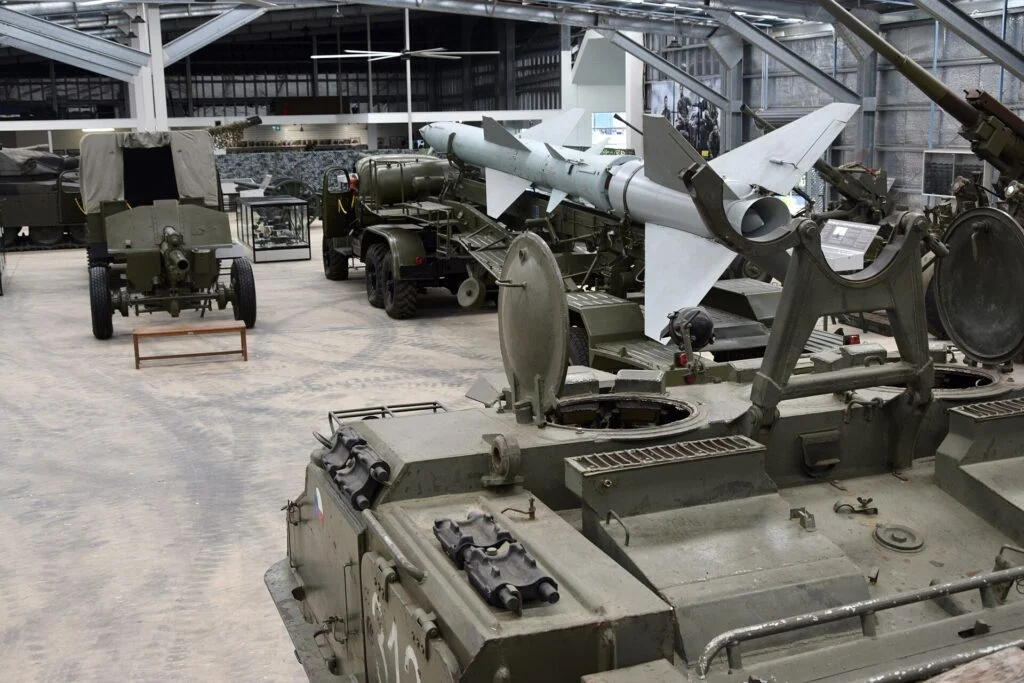
Interior spaces contain additional vehicles and smaller artifacts, with comparatively dense displays that maximize the exhibition of the collection’s breadth. The museum’s layout centers on vehicle groupings by type, origin, and era, assisting in situational understanding without overwhelming the visitor with too much technical detail at once.
The museum’s character as a specialist venue is noticeable immediately. It does not purport to be a large national military museum or war museum with broad societal narratives. Instead, it is a space where enthusiasts can appreciate the technical and historical significance of individual vehicles and artillery pieces, often with detailed captions and explanations. This specificity shapes visitor expectations and sets the tone for a focused, somewhat technical visit.
Highlights and Key Exhibitions
The Australian Armour and Artillery Museum stands out primarily for its extensive collection of armoured vehicles from several countries and eras, many of which are rare or unique in Australia. The collection includes tanks, scout cars, armoured personnel carriers, and self-propelled artillery, with particular emphasis on British Commonwealth and U.S. designs, reflecting Australia’s military alliances and history.
Among the notable highlights are several World War II-era vehicles, where visitors can observe the evolution of armoured warfare technology from early tank models to more developed and combat-tested designs. Vehicles like the Sherman tank hold a place of particular interest due to their wide use among Allied forces and the Australian Army. The Sherman is only one among many examples that demonstrate design changes geared toward battlefield performance, crew ergonomics, and firepower.
The museum also houses Cold War military vehicles and artillery, showing the technological shifts and doctrinal changes post-1945. This includes Soviet and Western bloc vehicles that represent the global reach and variety of armoured warfare during this period. Such a collection allows for direct visual comparison of opposing military philosophies seen in armour development.
In addition to vehicles, the museum possesses a collection of artillery pieces spanning several calibers and roles, from mobile field guns to heavier anti-aircraft artillery. These are typically displayed alongside armoured vehicles to provide context on combined arms operations, important in understanding how artillery and armour supported each other in conflicts.
The museum’s smaller artifacts and display cases contain related materials such as uniforms, small arms, communications equipment, and various vehicle components, adding depth to the technological and human dimension of armoured warfare. This provides a fuller picture of the operational environment, though these displays are secondary to the vehicles themselves.
What is less emphasized in the Australian Armour and Artillery Museum is broader social and cultural context. The exhibits focus tightly on the hardware and its technical and historical significance. While information on vehicle deployment, manufacturing origins, and performance is generally included, there tends to be less on soldier experiences, political background, or detailed battle narratives. This suits an audience interested primarily in military machinery but may limit appeal for visitors seeking a full story of Australian military history or broader wartime implications.
Visitor Experience
The Australian Armour and Artillery Museum offers a paced, self-directed experience that suits visitors with an interest in military vehicles or historical technology. The museum tends to attract collectors, military historians, veterans, modelling enthusiasts, and families interested in tangible history through big machines.
Visitors can expect a largely visual and tactile experience. Many vehicles appear to be well maintained and in some cases operational or capable of demonstration, underlining the preservation focus of the museum. The density of the collection, featuring many sizable vehicles, means that considerable space is occupied by large objects, allowing for close inspection but requiring comfortable walking and some stamina to appreciate fully.
Interpretative materials primarily come in the form of labels and panels affixed to exhibits. These generally offer technical specifications, historical context about the model and manufacture, and service use details. The tone is factual and geared toward an audience with some baseline knowledge of military equipment or interest in technical history.
The museum experience does not emphasize theatrical or multimedia interpretation, which means that visitors who desire more narrative or dynamic engagement may find it lacking. There are limited interactive elements, and the experience is more about observing and absorbing the tangible history of the vehicles and artillery.
The outdoor and semi-open-air setting means weather can affect visitor comfort and the pace of the visit. Cairns’ tropical environment brings heat and humidity factors that visitors should consider in planning. Because the layout is straightforward and the museum lacks a large hospitality or visitor center space, amenities may be limited compared to larger metropolitan museums.
The museum weighs heavily on the tangible—actual vehicles rather than replicas or models dominate. This authenticity appeals strongly to those who value preservation and direct encounters with historical machinery but may be less accessible to visitors with no previous interest or knowledge in military hardware.
Tickets, Access, and Planning
Details on tickets, operating hours, and guided services should be confirmed on the museum’s official website prior to planning a visit as information can vary and is not standardized like larger government museums. Being a privately run institution outside of Australia’s major cities, services and visitor facilities may be more modest, and days or hours of operation could vary seasonally or by demand.
Access to the museum requires some travel logistics consideration. Located in Cairns, visitors arriving from other parts of Australia or internationally will typically connect through the city’s airport. Ground transport options to reach the museum site should be verified in advance as public transport may be limited in the regional setting.
The museum’s open-air and semi-covered exhibits place some dependence on weather conditions for an optimal visit. In wet or hot weather, parts of the collection may be less comfortable to explore fully, so timing visits during milder weather conditions in Cairns is worth considering.
There is no widely published information that strongly suggests extensive guided tours or audio guide options. Prospective visitors interested in deeper contextual or technical information should be prepared to read exhibit labels closely or bring supplementary materials, such as reference books on armoured vehicles or Australian military history.
Visitors planning educational or group visits should also contact the museum directly to inquire about group access policies or possible special arrangements, as private museums occasionally have bespoke requirements or availability constraints.
Final Verdict
The Australian Armour and Artillery Museum offers a focused, tangible look at armoured vehicles and artillery that fills a specific gap in Australia’s military heritage institutions. Its strengths lie in the size and quality of its collection, particularly the representation of 20th-century armoured warfare equipment from multiple international sources. For visitors with an interest in military vehicles, technological history, or Australian military equipment, this museum provides a collection that is both substantial and rare in an Australian context.
However, the museum’s narrow thematic scope and limited interpretative depth may not satisfy visitors looking for comprehensive military history narratives or broader cultural and human stories linked to warfare. It remains firmly a venue for enthusiasts and specialists rather than casual visitors seeking a varied military history experience.
Visitor planning is important due to its location in Cairns and the outdoor nature of much of the collection. Weather and limited visitor services should be anticipated, and all practical details confirmed ahead of time through official channels. The museum’s presentation style prioritizes authenticity and preservation over theatricality, which will appeal to some and leave others wanting more engaging story frameworks.
In sum, the Australian Armour and Artillery Museum represents a well-curated, specialized institution where the vehicles themselves are the star attractions. It performs an important role in preserving and displaying armoured military heritage in Australia, though it is best approached with clear expectations about the type of experience it offers. Those drawn to military hardware and the mechanics of armoured warfare will find much to appreciate here, while others might consider combining their visit with broader military museums in larger Australian cities for a fuller contextual understanding.