Henie Onstad Art Centre Review
Art Museums · Bærum, Norway. The Henie Onstad Art Centre is located in Bærum, a municipality just west of Oslo, Norway. It was established in 1968 through the vision and philanthropy of Sonja Henie and Niels Onstad, a married…
Art Museums · Bærum, Norway. The Henie Onstad Art Centre is located in Bærum, a municipality just west of Oslo, Norway. It was established in 1968 through the vision and philanthropy of Sonja Henie and Niels Onstad, a married…
Best forArt lovers, visual culture, architecture
Review focusCollections, curatorial focus, and visitor planning
Historical Context
The Henie Onstad Art Centre is located in Bærum, a municipality just west of Oslo, Norway. It was established in 1968 through the vision and philanthropy of Sonja Henie and Niels Onstad, a married couple known respectively for her achievements in figure skating and his career in shipping and art collection. The centre’s founding reflects a mid-20th-century movement in Scandinavia to create cultural institutions that blended modern art with public outreach and education. The couple aimed to house and exhibit a significant portion of their private collection, which included European modernist pieces alongside contemporary artworks from Norway and abroad. From the outset, the Henie Onstad Art Centre positioned itself as a site dedicated to modern and contemporary art, with an emphasis on international perspectives as well as Nordic art production.
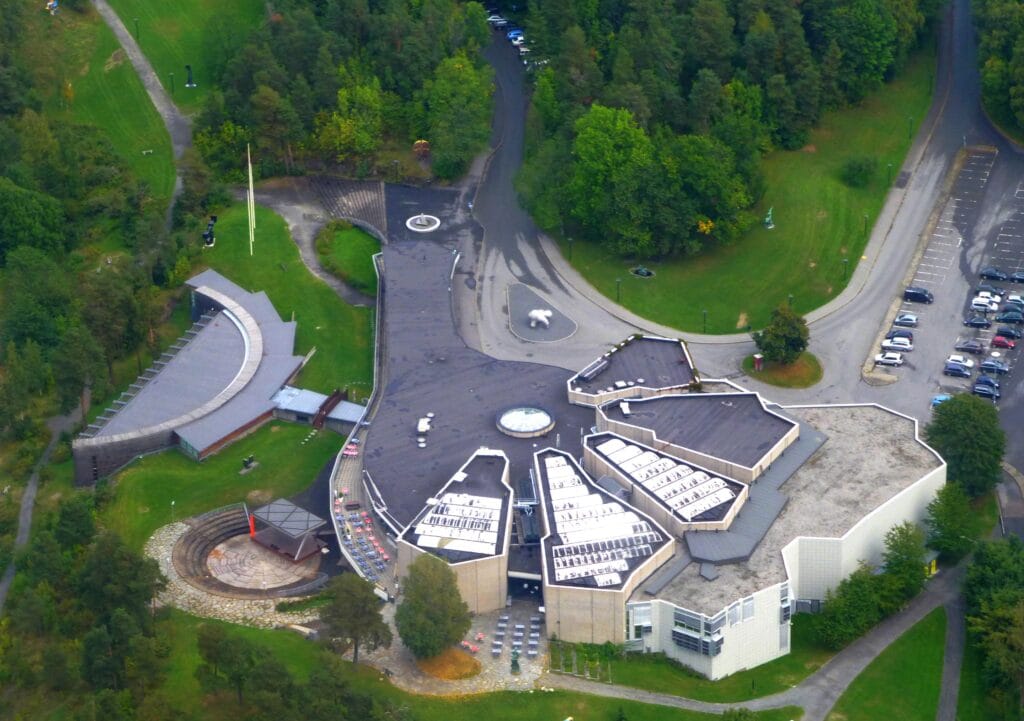
The architecture itself is part of the institution’s identity, designed by the Norwegian architect Johan Kresnfeldt. The building integrates with the surrounding natural landscape on the Oslofjord, an approach that emphasized the dialogue between nature and modernist architecture in the postwar period. Over the decades, the Centre has expanded its scope beyond just the permanent collection, embracing performance art, film, dance, and experimental art forms, reflecting broader trends in contemporary art museums that seek to diversify art experiences beyond traditional painting and sculpture. Although the Henie Onstad Art Centre is not in central Oslo, its position in Bærum situates it as a regional cultural hub that complements the capital’s museum scene.
What You See on Arrival
Visitors approaching the Henie Onstad Art Centre encounter an architectural ensemble set in a scenic environment beside the Oslofjord. The building’s modernist design expresses clean lines and transparent spaces, typically associated with mid-century Scandinavian modernism. This setting offers a calm, contemplative atmosphere that contrasts with both urban museum environments and more crowded tourist sites. The Centre’s exterior and immediate landscape prepare visitors for an art experience rooted in both natural light and the interplay of art and environment.
Upon entering, there is a sense of openness and accessibility. The museum is not overwhelming in scale but rather invites measured exploration. The entrance areas and lobby present information about current shows, and there is an effort to frame the museum’s identity around modern and contemporary art practices. The balance between indoor galleries and views of the surrounding nature encourages a reflective mindset in visitors. While the museum communicates its focus on modern art clearly, the overall environment suggests a relaxed pace rather than a frenetic gallery tour.
Highlights and Key Exhibitions
The Henie Onstad Art Centre’s permanent collection reflects the collecting interests of Sonja Henie and Niels Onstad, particularly in twentieth-century modernism and contemporary art. The collection includes works by European avant-garde artists such as Pablo Picasso, Paul Klee, and Wassily Kandinsky, alongside significant pieces by Norwegian artists like Edvard Munch and contemporary figures in the Scandinavian tradition. This duality offers visitors access to a cross-section of major art movements, from Expressionism and Cubism to Abstract and Conceptual Art, seen through a Nordic lens.
Particular strengths in the collection lie in its holdings of international modernist painters and graphic artists. For example, the Centre is known to have works by artists affiliated with the Bauhaus school and Russian Constructivism, offering insight into pivotal twentieth-century art developments with political and cultural significance. Alongside these established figures, Henie Onstad actively collects and exhibits works by living artists, often spotlighting experimental media including video art, installation, and performance documented through audiovisual means.
In addition to the permanent collection, the Centre’s program often foregrounds interdisciplinary exhibitions that explore the boundaries between visual art, dance, and music. The building houses a theater and spaces designed for performance, which is an important facet of the museum’s identity. This means visitors interested in the contemporary art scene may find dynamic presentations that link static exhibitions with more temporal artistic expressions, extending the traditional museum experience.
While the collection is strong in modernist and post-war art, the museum does not focus heavily on ancient art, ethnographic collections, or classical sculpture, which might disappoint visitors seeking a wide historical sweep. It is a venue primarily for modern art study and contemporary experimentation. The curatorial choices underline a preference for art that communicates through abstraction, formal innovation, or conceptual engagement rather than representational or narrative traditions.
Visitor Experience
The Henie Onstad Art Centre appears to accommodate a visitor profile interested in thoughtful engagement with modern and contemporary art rather than casual sightseeing. The layout and scale suggest that the museum experience is more intimate than the larger institutions in Oslo, which can be advantageous for visitors wanting to avoid sensory overload or crowds. The integration of the site’s natural surroundings also adds a dimension to the visit that supports quiet contemplation and a measured pace through the galleries.
Interpretive materials at the Centre are an important factor in framing the exhibitions. Without specific details on signage and catalogues regularly offered, it is reasonable to assume that the museum’s presentation style aligns with Scandinavian museum norms, which tend toward clarity and accessibility in explanation without excessive text. For visitors less familiar with modernist and contemporary art movements, some artworks might require closer attention or external reading to fully appreciate. However, the museum’s focus on internationally recognized artists alongside Norwegian figures offers a useful comparative perspective.
The multidisciplinary layout, including spaces dedicated to performance, film screenings, and lectures, means the visitor experience can vary depending on current programming. Individuals planning their visit with only the permanent collection in mind might have a quieter experience, whereas those attending performances or timed events will encounter a more active environment. This flexibility suits a range of interests but might present a challenge for visitors with limited time who want to see all aspects of the Centre in one trip.
While the museum is situated outside Oslo’s city center, it is generally well-connected by public transit, though visitors should plan for some travel time and check local transport options. The contained scale of the Centre means it is easy to navigate physically once inside, though expectations should be adjusted for a more focused collection rather than a large encyclopedic museum.
Tickets, Access, and Planning
Potential visitors intending to explore the Henie Onstad Art Centre are advised to consult the museum’s official website or direct contact points before planning their visit. Information regarding opening hours, ticketing policies, guided tours, audio guides, and accessibility provisions can change seasonally or due to programming needs, so direct confirmation is the safest approach.
Because the Centre is located outside the urban core of Oslo, travel arrangements require a bit more attention. Public transit is available, but schedules and connections may not be as frequent as in the city. Driving is an option, though parking availability and costs should be verified in advance given the museum’s setting on a protected site along the fjord. There may be limited facilities for visitors with mobility issues due to the building’s modernist structure and site considerations, so those requiring special accommodations should make inquiries ahead.
Regarding ticket purchases, no fixed rates or discount schemes can be cited definitively without current data from the institution. Visitors interested in combined access to temporary exhibitions and performances should check whether separate tickets are needed or if some events require advance reservation. The museum’s smaller scale suggests that peak-time crowding may be limited, but verifying any special events or closures is prudent.
Final Verdict
The Henie Onstad Art Centre serves as a focused institution dedicated primarily to twentieth-century and contemporary art, with a particular foundation in the collection originally amassed by Sonja Henie and Niels Onstad. Situated in the municipality of Bærum beside the Oslofjord, the Centre offers a distinctive experience that integrates modernist architecture, Scandinavian landscape, and a curated selection of art spanning European modernism through to experimental contemporary practices.
Its strengths lie in the coherence of its collection, which highlights significant modernist movements through major international and Norwegian artists. The Centre’s additional engagement with performance art and media-based works broadens the scope beyond traditional gallery displays, presenting visitors with a variety of art forms in a relatively intimate setting. This can be attractive for those with a deeper interest in the development and ongoing dialogues within modern and contemporary art.
On the other hand, the museum’s specialized focus means it is not the place to see comprehensive historical art anywhere beyond the twentieth century. Visually or thematically, visitors looking for decorative arts, ancient artifacts, or large-scale blockbuster exhibitions will need to manage expectations or seek other venues. The location outside Oslo also introduces a minor logistical hurdle for those based in the city, though its placement can be rewarding for visitors willing to engage with the museum’s specific offer.
Overall, the Henie Onstad Art Centre is likely best suited to art enthusiasts, students of modern and contemporary art, and those intrigued by interdisciplinary practice that connects the visual arts with performance. Prospective visitors should prepare by checking current practical details directly with the Centre and plan their journey accordingly to make the most of what this institution presents. It holds a respected place in the Norwegian cultural landscape, contributing to a nuanced understanding of 20th-century art and its ongoing evolution.