Galleria Nazionale d’Arte Moderna e Contemporanea Review
Art Museums · Rome, Italy. The Galleria Nazionale d'Arte Moderna e Contemporanea in Rome holds a distinctive place in Italy’s cultural landscape. Founded in the late 19th century, the museum developed as a repository for Italy’s artistic production from…
Art Museums · Rome, Italy. The Galleria Nazionale d'Arte Moderna e Contemporanea in Rome holds a distinctive place in Italy’s cultural landscape. Founded in the late 19th century, the museum developed as a repository for Italy’s artistic production from…
Best forArt lovers, visual culture, architecture
Review focusCollections, curatorial focus, and visitor planning
Historical Context
The Galleria Nazionale d'Arte Moderna e Contemporanea in Rome holds a distinctive place in Italy’s cultural landscape. Founded in the late 19th century, the museum developed as a repository for Italy’s artistic production from the 19th century onward, at a time when the country was reasserting its national identity through cultural preservation and promotion. Since its inception, the museum has aimed to document the complex trajectory of modern and contemporary art in Italy, intersecting with both Italian and international artistic developments.
Over the decades, the collection has expanded, reflecting changing tastes and critical debates about modernity and contemporary aesthetics. The institution represents a bridge between Italy's storied classical heritage and the turbulent, sometimes experimental impulses of modern and contemporary art. Its location in Rome—a city better known for art and architecture of previous eras—gives the gallery a unique position as a space dedicated specifically to the art of the modern age. It builds on Italy’s tradition of supporting the arts but shifts the focus to more recent creative expressions, encompassing the 19th century through to the present day. The Galleria Nazionale has undergone various renovations and curatorial reorientations, seeking to balance the display of Italian masters with international artists who played a role in broader art history movements.
What You See on Arrival
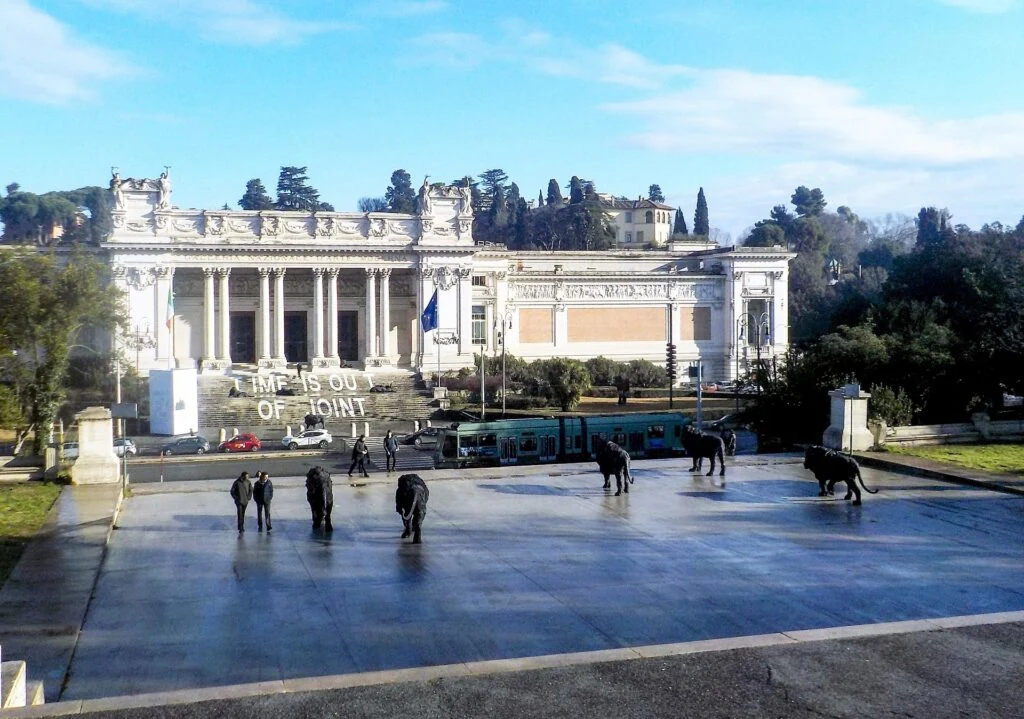
The museum presents itself primarily as a national institution focused on modern and contemporary visual art, setting expectations for visitors interested in art produced from about the 1800s to the present. Visitors approaching the Galleria Nazionale d’Arte Moderna e Contemporanea encounter a structure that speaks to both its institutional purpose and its urban context. Located in the Villa Borghese area, the museum occupies a building with early 20th-century architectural style that combines classical elements with more straightforward twentieth-century design forms. The setting hints at the institution’s dual focus: it’s at once a serious venue for modern art and part of Rome’s broader cultural fabric, surrounded by one of the city’s large green spaces and near landmarks that draw a wide audience to the area.
This framing prepares visitors for an art experience that is formal but approachable. The museum’s identity as a national gallery dedicated to modern and contemporary practices is clear in signage and museum branding. The spaces inside maintain a balance between welcoming the general public with accessible displays and catering to art enthusiasts and specialists seeking a comprehensive view of Italy’s artistic trajectory through the last two centuries. The atmosphere is likely one of quiet reflection rather than commercial hustle, where artworks are the primary focus, and the public comes mainly for education and cultural enrichment.
Highlights and Key Exhibitions
The Galleria houses one of the most substantial collections in Italy for modern and contemporary art, with a focus that includes Italian painters and sculptors alongside notable international contributors to 19th- and 20th-century art movements. Visitors can expect to encounter comprehensive surveys of Impressionism’s Italian variants, Symbolism, Divisionism, and Futurism, a movement for which Italy played a central role internationally.
The Futurist collection is a particular highlight, offering a window into a radical early 20th-century response to modernity through art that embraces speed, technology, and urban experience. Pieces by Umberto Boccioni, Giacomo Balla, and Gino Severini capture this movement’s drive and aesthetic innovation. The museum’s strength lies in presenting Futurism not as a closed chapter but as part of a larger conversation about Italy’s cultural responses to changing society.
Beyond Futurism, the collection includes works by Giorgio de Chirico, whose metaphysical paintings have influenced both surrealism and contemporary art discourse. His works contribute an extended meditation on time, memory, and space.
The museum also showcases the developments following World War II, including post-war figurative and abstract tendencies. The presence of Arte Povera artists and conceptual works reflects Italy’s engagement with 20th-century avant-garde trends and political art. This segment provides a thoughtful context for examining the relationship between art, politics, and society in Italy’s post-war period.
International figures such as Henri Matisse and Claude Monet feature alongside Italian artists, offering visitors a dimension of comparison and underscoring how Italian modern art was part of broader currents in Europe. This helps place the local within a global perspective.
Visitor Experience
The Galleria Nazionale d’Arte Moderna e Contemporanea is best suited for visitors who have a clear interest in 19th- and 20th-century art and wish to explore Italy’s specific contribution. Its presentation requires some prior knowledge or willingness to engage with art history, as the thematic arrangement emphasizes artistic movements and developments over a purely chronological narrative.
The pacing is likely measured, as the collection’s size and thematic scope allow visitors to absorb complex ideas through carefully hung paintings and sculptures. Spaces are arranged to avoid overcrowding, which should help maintain a contemplative mood despite the museum’s location in a busy tourist district.
Interpretation materials tend to offer clear yet sophisticated information, emphasizing historical context and artistic impact. Labels and wall texts encourage visitors to understand each artwork within its artistic movement and ideological background. However, those seeking highly interactive or purely entertainment-focused presentations may find the experience somewhat traditional. The focus here remains on the artworks themselves rather than multimedia storytelling or broad popular engagement.
The museum respects the complexity of modern and contemporary art by resisting the urge to simplify. This can be intellectually rewarding but may also require visitors to prepare by consulting exhibition guides or secondary sources for full appreciation. The balance between Italian artists and their international counterparts enriches the collection, but the overall interpretation naturally centers on the national narrative.
Tickets, Access, and Planning
Currently, the most reliable approach for prospective visitors is to consult the museum’s official website or contact the institution directly for the latest information on opening hours, admission fees, and any necessary booking procedures. The museum’s location within Rome offers reasonable access by public transport, but anyone planning a visit should consider their preferred mode of travel ahead of time, particularly during Rome’s busy seasons.
Access for people with mobility issues or other specific requirements should be verified in advance, as older buildings occasionally pose challenges despite updates. The museum’s cultural status suggests it will have made efforts toward accessibility, but confirmation is advisable.
Considering the density and scope of the collection, those with limited time might plan their route selectively. Without details on guided tours or audio guides, visitors should prepare to navigate the exhibitions using printed or digital materials they find useful. Group visits or educational projects may benefit from direct inquiry at the museum for special arrangements.
Visitors should also remain aware that, like most cultural institutions, the museum may impose certain visitor protocols or restrictions at times depending on public health advice or administrative regulations. These measures are subject to change and must be checked close to the planned visit date.
Final Verdict
The Galleria Nazionale d’Arte Moderna e Contemporanea in Rome stands as an essential institution for those interested in modern and contemporary Italian art. Its concentration on Italian artistic developments from the 19th century onward offers a detailed and focused study, complemented by selective inclusion of international artists who influenced or intersected with Italian art. This particular national focus makes it a valuable resource for art historians, students, and visitors with a serious interest in the progression of Italian modern art.
While the museum’s presentation may feel conventional compared with more experimental contemporary venues or those targeting mass tourism, it excels in providing a coherent and art-historically informed narrative. This approach benefits visitors who seek depth and clarity rather than spectacle. The facility’s location near Villa Borghese situates it well for cultural exploration but can also mean the area is quite busy, calling for some logistical preparation.
Some may find the museum’s scope challenging if approaching without prior knowledge of modern art movements, especially given the emphasis on art-historical context. However, for those willing to engage, the Galleria offers well-arranged, substantial collections that do not shy away from the complexities of 19th- and 20th-century Italian art and its dialogues with Europe.
In sum, the Galleria Nazionale d’Arte Moderna e Contemporanea is a serious art institution contributing meaningfully to the presentation and preservation of modern and contemporary Italian art. It rewards thoughtful visitors with insights into the evolving narratives of Italy’s artistic identity and its intersections with broader European artistic trends. For those planning a visit, careful preparation and consultation of official sources are recommended to fully benefit from what this museum has to offer.