Museo del Traje Review
Fashion Museums · Madrid, Spain. The Museo del Traje, located in Madrid, Spain, occupies a distinctive niche among European fashion and textile museums. Emerging from a lineage that traces back to early 20th-century institutions dedicated to costume and textile…
Fashion Museums · Madrid, Spain. The Museo del Traje, located in Madrid, Spain, occupies a distinctive niche among European fashion and textile museums. Emerging from a lineage that traces back to early 20th-century institutions dedicated to costume and textile…
Best forMuseum lovers, culture travelers, first-time visitors
Review focusCollections, visitor experience, and practical planning
Historical Context
The Museo del Traje, located in Madrid, Spain, occupies a distinctive niche among European fashion and textile museums. Emerging from a lineage that traces back to early 20th-century institutions dedicated to costume and textile conservation, the current museum was established in a purpose-built facility in the 20th century to centralize and professionalize the study and display of Spanish dress history. It forms part of Spain’s State Museums network under the Ministry of Culture, reflecting the country’s effort to preserve a significant element of cultural patrimony linked closely to textile craftsmanship, regional identities, and changing social customs.
The museum’s origins are tied to the broader development of fashion history as a scholarly discipline in Spain, as well as to the preservation movement responding to the vulnerability of antique garments and traditional costumes. By combining the collections of earlier costume and textile institutions, the Museo del Traje seeks to offer a comprehensive panorama of Spanish clothing and its place within wider European and global fashion dialogues. Its historical remit extends beyond mere aesthetic appreciation to include sociological, anthropological, and technical dimensions of dress. Though focused on Spanish materials, the museum also documents cross-cultural influences and sartorial shifts driven by political, economic, and cultural changes spanning several centuries.
What You See on Arrival
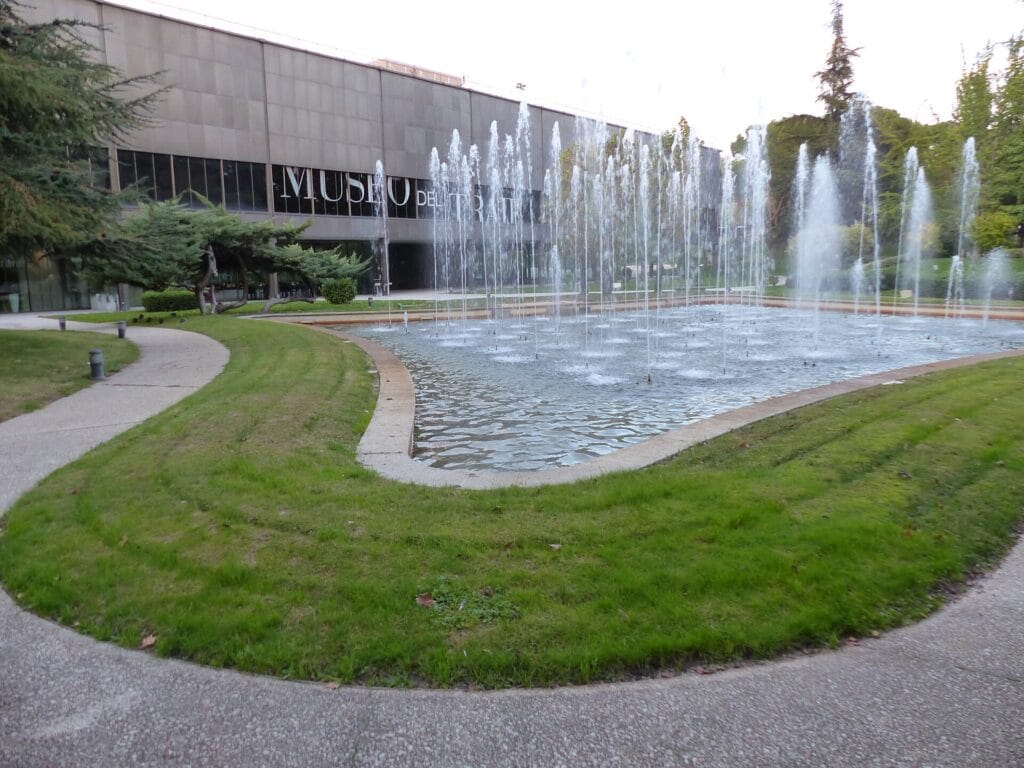
Approaching the Museo del Traje provides an initial framing for what the visitor can expect inside. The museum’s architecture, sited in the Ciudad Universitaria district of Madrid, is relatively modern and functional, refraining from overt decorative styling that might otherwise distract from the collection itself. This clean, somewhat minimalist exterior sets a tone of scholarly intent and allows visitors to anchor their expectations on the material on display rather than the building’s architecture.
The entrance area is designed as a transitional space, providing orientation through signage and introductory panels that outline the museum’s mission and scope. This immediate framing helps clarify the museum’s identity as a dedicated site for the study and exhibition of clothing history. Rather than presenting fashion as purely commercial or ephemeral, the museum situates garments as artifacts with historical, cultural, and technical significance. Early displays near the entrance often include pieces that highlight the continuity of Spanish dress traditions or showcase exemplary craftsmanship, establishing thematic threads that visitors can follow throughout their visit.
Overall, the entrance experience balances formal clarity with understated presentation. It prepares visitors for a comprehensive engagement with the subject rather than spectacle or entertainment. This framing indicates a museum more aligned with academic and cultural heritage institutions than with fashion retail or trend-focused venues.
Highlights and Key Exhibitions
The museum’s permanent collection is built around a thorough chronological and thematic survey of Spanish dress, textile production, and associated cultural practices. It ranges from historical garments dating back several centuries to contemporary clothing, with an emphasis on pieces that illuminate the technical and social history of fashion in Spain.
One of the strongest elements of the collection is the variety and quality of regional costumes. These ensembles provide insight into how geography, climate, social status, and local customs influenced dress. They typically feature elaborate embroidery, weaving techniques, and use of color that communicate identity markers, often associated with particular communities or festivities. These traditional costumes do more than preserve aesthetic detail; they document a way of life and social structures that have partly receded but continue to resonate within Spanish cultural memory.
The museum also holds significant examples of the evolution of urban fashion worn by the Spanish nobility and bourgeoisie across centuries. Some pieces reflect changing tastes in silhouette, fabric, and decoration, illustrating the impacts of trade, court protocol, and European haute couture influences filtered through local traditions. More recent clothing highlights the shift from handcrafted to industrial production methods and the democratization of fashion consumption.
In addition to garments themselves, the museum pays attention to accessories and textile techniques. This includes lace, embroidery, hats, and footwear that complement the outfits and deepen comprehension of the complexity involved in traditional tailoring and ornamentation. A particular strength is the way these objects are displayed alongside interpretive materials explaining their manufacture, materials, and symbolic meaning.
The collection is augmented by tools, sketchbooks, and archival photographs that document both the production and use of clothing. These materials offer a broader contextual understanding of fashion’s relation to identity, labor, and cultural expression. The museum’s ethnographic approach, seen in detailed contextualization, solidifies its role as a center for the study of dress not only as art but as social practice.
Visitor Experience
Visitors to the Museo del Traje can expect a measured, contemplative pace rather than a fast-moving, entertainment-driven experience. The curatorial approach favors a layered interpretation, well-suited to those interested in history, craft, and cultural studies over visitors seeking immediately striking or flashy displays. Signage and text panels typically provide detailed explanations, often bilingual (Spanish and English), which support informed engagement but require some time investment to digest fully.
The museum suits a range of audiences, particularly those who appreciate material culture, ethnography, and fashion as historical evidence. It can be valuable for students, researchers, or visitors with a serious interest in textile arts. Conversely, casual visitors or those expecting a purely visual and sensational fashion presentation might find the mood more subdued and the focus more academic than commercial.
Layout and flow accommodate a logical progression from historical to contemporary exhibitions, but the spatial arrangement sometimes demands deliberate navigation, especially for visitors less accustomed to museums of this type. While the lighting and conservation conditions are generally appropriate for delicate costume displays, some galleries may feel tightly arranged when accommodating both large garments and accompanying artifacts, which can influence comfort in moving around.
Interpretive technology is limited; the museum relies mainly on traditional display methods rather than multimedia or interactive approaches. This can be a limitation for audiences who engage better with dynamic or participatory formats. Yet this restraint reinforces the museum’s archival and research mission, privileging direct encounters with original objects.
Tickets, Access, and Planning
Information on practical visit matters should always be confirmed on the museum’s official website, as operational details can vary seasonally or due to special programming. Potential visitors will need to consider current opening hours, ticketing options, and any requirements for advance booking. Since the Museo del Traje is part of a state-supported network, it may offer periods of free or reduced admission, but such policies should be verified in real time.
The museum’s location in the Ciudad Universitaria district places it within reach of central Madrid via public transportation, which is typically recommended over private vehicles given the city’s traffic and parking constraints. Shareable maps and digital guides may be available online but are not noted here definitively.
Regarding accessibility, official sources or visitor information channels will provide the most current and detailed statements about accommodations for visitors with limited mobility or other needs. Visitors should also note that the museum’s emphasis on textile preservation means there could be controlled environmental conditions affecting photography, touching, and the presence of food or drink inside galleries.
Final Verdict
The Museo del Traje offers a comprehensive, carefully curated look at Spanish clothing history, emphasizing ethnographic context and textile craftsmanship. Its strengths lie in the breadth and depth of its permanent collection, which thoughtfully traces the social and technical dimensions of dress across centuries. For those interested in cultural heritage, costume studies, or material culture, the museum serves as a valuable resource and a repository of significant artifacts shaped by regional diversity and historical change.
At the same time, the museum’s focus and presentation style may limit its appeal to visitors expecting a highly interactive or fashion-focused spectacle. The atmosphere is reflective, scholarly, and designed for attentive viewing rather than quick impressions. Spatial layout and interpretive tools adhere largely to conventional museum practices, which may feel conservative compared to some contemporary fashion exhibitions elsewhere.
Visitors are advised to prepare for a visit by reviewing current practical details through official channels, as information on tickets, accessibility, and facilities can evolve. The museum occupies a distinct place among Madrid’s cultural offerings and will reward those with a specific interest in the complexities of historical dress, textiles, and identity.
In summary, the Museo del Traje is an institution that privileges historical inquiry and preservation over trend-based display. It stands as a specialized museum where the art and anthropology of clothing intersect in a manner that is detailed, educational, and anchored in Spanish culture, making it a rich destination for those invested in the study of costume within a broader historical framework.