Yunnan Provincial Museum Review
Archaeology Museums · Kunming, China. The Yunnan Provincial Museum, located in Kunming, China, serves as a principal institution dedicated to preserving and exhibiting the rich cultural and natural heritage of Yunnan Province. Established in the mid-20th century and subsequently…
Archaeology Museums · Kunming, China. The Yunnan Provincial Museum, located in Kunming, China, serves as a principal institution dedicated to preserving and exhibiting the rich cultural and natural heritage of Yunnan Province. Established in the mid-20th century and subsequently…
Best forMuseum lovers, culture travelers, first-time visitors
Review focusCollections, visitor experience, and practical planning
Historical Context
The Yunnan Provincial Museum, located in Kunming, China, serves as a principal institution dedicated to preserving and exhibiting the rich cultural and natural heritage of Yunnan Province. Established in the mid-20th century and subsequently expanded, the museum reflects the region’s remarkable ethnic diversity and its significant archaeological, historical, and ecological importance. Yunnan, situated in the southwest of China, borders multiple countries and has been a crossroads for trade and cultural exchange for centuries. This unique geographical placement underpins much of the museum's curatorial focus, which often highlights the province’s place as a cultural melting pot within a broader Southeast Asian context.
Beyond its ethnographic and historical displays, the museum’s collections are also notable for their natural history components, offering insights into the distinct flora and fauna of the region. The institution has emerged over time as a repository not only for traditional artifacts but also for material that documents the complex interactions between humans and environment, as well as the legacies of local minority groups that are central to understanding the province’s identity. It occupies a position that allows it to bridge local storytelling with broader narratives relevant to Chinese provincial history and cultural anthropology.
What You See on Arrival
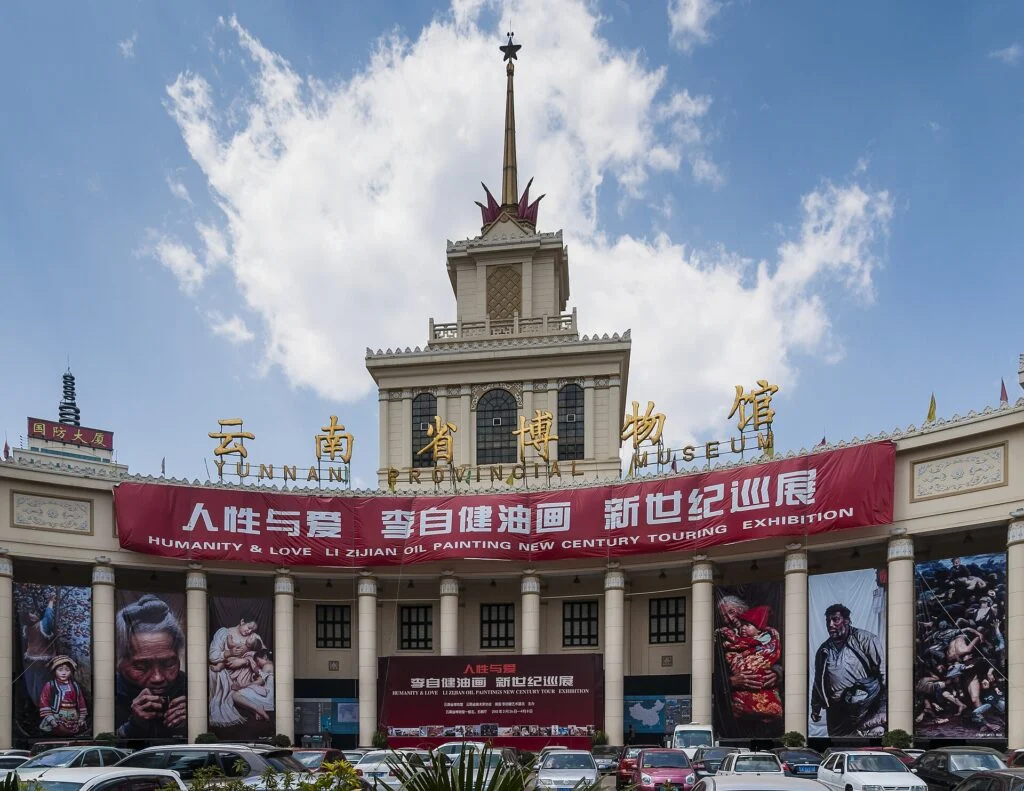
Approaching the Yunnan Provincial Museum, visitors are met with a facade reflecting contemporaneous architectural norms, which may contrast with the antiquity of many items inside. The building is designed to accommodate substantial visitor flow and to separate different types of exhibits by theme or period. The exterior and immediate entryway establish an institutional identity that signals the museum’s regional focus and educational mission rather than a singular emphasis on spectacle or entertainment.
Upon entry, the visitor is likely to encounter an introductory space that sets the stage for understanding Yunnan’s geographic, cultural, and ecological diversity. The layout tends to organize materials in a logical progression—from prehistory and archaeology, through ethnic cultures, to natural history—allowing the museum to present a layered understanding of Yunnan’s past and present. This initial framing effectively positions the museum as a place for study and reflection on the multiplicity of local narratives rather than just a collection of curiosities.
Highlights and Key Exhibitions
The heart of the museum lies in its multidisciplinary take on Yunnan’s cultural heritage, centered on archaeology, ethnography, and natural history. One of the primary draws is the archaeological section, which showcases artifacts unearthed in the province spanning from Neolithic tools to items associated with Bronze Age and Iron Age cultures. These pieces not only illuminate technological developments over millennia but also trace early trade links and settlement patterns.
The ethnographic collections deserve particular attention because Yunnan is home to numerous minority groups, and the museum dedicates substantial resources to representing this diversity. Exhibits include traditional costumes, household items, religious artifacts, and crafts from various communities such as the Yi, Bai, Naxi, and Hani peoples. These displays offer nuanced perspectives on lifestyles, rituals, and social structures, highlighting the complexity of minority cultural identities within a rapidly modernizing provincial context.
In addition to cultural artifacts, the museum contains notable natural history exhibits, useful for understanding native species and ecological zones within Yunnan. Specimens, dioramas, and explanatory materials here provide valuable information on biodiversity, conservation challenges, and the province’s unique environmental circumstances, which include mountainous terrain, subtropical forests, and river systems.
Throughout its permanent exhibitions, the museum integrates multimedia elements and textual panels, predominantly in Chinese, though limited English translations may be available. This linguistic approach underlines its primary role as a regional educational resource, although it also shapes accessibility for international visitors.
Visitor Experience
The Yunnan Provincial Museum offers a contemplative experience suited to visitors with interest in ethnology, history, and nature, especially those prepared to engage with materials presented primarily in Chinese. The exhibition arrangement encourages a linear flow, which supports earning a gradual and layered understanding of Yunnan’s composite identity. The pace is typically unhurried, allowing adequate time to explore both detailed cases and broader thematic galleries.
Interpretation tends toward factual presentation more than elaborate storytelling or interactive engagement. While informative, the displays may feel static to visitors expecting dynamic or heavily interactive experiences common in larger contemporary museums. The strengths lie in the depth of material culture on display rather than in advanced visitor technologies or theatrical reconstructions.
This museum fits well for scholars, cultural enthusiasts, and regional history buffs, including those with a professional or academic interest in China’s minority ethnic groups or provincial ecology. Visitors with limited language skills or those seeking more digitized or entertainment-driven museums might find the experience less accessible.
Tickets, Access, and Planning
Information on admission fees, opening hours, or ancillary services such as guided tours and audio guides tends not to be consistently publicized internationally. Prospective visitors should consult the official Yunnan Provincial Museum website or trusted local sources for the most current and precise details before planning a visit.
The museum’s location in Kunming makes it readily accessible by public transport and urban infrastructure, although practical access considerations for visitors with mobility impairments might require verification in advance. Amenities like cafes or souvenir shops are often modest or absent, reinforcing the institution’s focus on educational rather than commercial objectives.
Final Verdict
The Yunnan Provincial Museum stands as a significant custodian of one of China’s most ethnically diverse and ecologically distinct provinces. It offers a well-structured, if straightforward, presentation of Yunnan’s archaeological finds, minority cultures, and natural environments. Its role is more educational and scholarly than entertainment-oriented, lending it particular appeal to researchers, regional historians, and visitors with a specific interest in the province.
While lacking the gloss and interactivity of some modern museums, its collections provide substantive material that is not easily found elsewhere outside the region. Limitations include language barriers and relatively minimal visitor-focused technology, factors that may reduce accessibility for international tourists or families seeking a highly engaging museum visit.
For those with patience and curiosity about Yunnan’s complex cultural mosaic, the museum can serve as an invaluable resource. However, a visit might be less satisfying for casual travelers expecting a highly varied or interactive experience. Careful advance planning and realistic expectations will contribute to a more productive and informative visit. Anyone considering the museum should seek out the latest visitor information the official channels provide to ensure their visit aligns with their interests and practical needs.