Bahrain Fort Museum Review
Manama, Bahrain. The Bahrain Fort Museum is dedicated to presenting the archaeological, architectural, and historical narrative of Bahrain Fort (Qal’at al-Bahrain), a UNESCO World Heritage Site located on the northern coast of Bahrain. This fort is…
Manama, Bahrain. The Bahrain Fort Museum is dedicated to presenting the archaeological, architectural, and historical narrative of Bahrain Fort (Qal’at al-Bahrain), a UNESCO World Heritage Site located on the northern coast of Bahrain. This fort is…
Best forMuseum lovers, culture travelers, first-time visitors
Review focusCollections, visitor experience, and practical planning
Historical Context
The Bahrain Fort Museum is dedicated to presenting the archaeological, architectural, and historical narrative of Bahrain Fort (Qal’at al-Bahrain), a UNESCO World Heritage Site located on the northern coast of Bahrain. This fort is a layered cultural landmark whose origins date back to the Dilmun civilization, one of the ancient trade hubs in the Gulf region. Over millennia, it evolved through successive eras—Hellenistic, Portuguese colonial expansion, and Islamic periods—reflecting Bahrain’s strategic maritime importance.
The site itself has been subject to extensive archaeological investigation since the late 20th century, revealing remains that date back to around 2300 BCE, emphasizing its role as a trading nexus in the ancient world. Artifacts from these excavations have provided insight into trade, daily life, and ritual practices of early Gulf societies, highlighting Bahrain's link to Mesopotamia, the Indus Valley, and later Mediterranean cultures.
The museum was established as a means to consolidate these finds and present a coherent narrative that situates the fort within a broader history of regional encounter and exchange. It attempts to show how different cultural influences layered upon one another in Bahrain, while emphasizing the fort’s continuing symbolic and historical significance for the nation.
What You See on Arrival
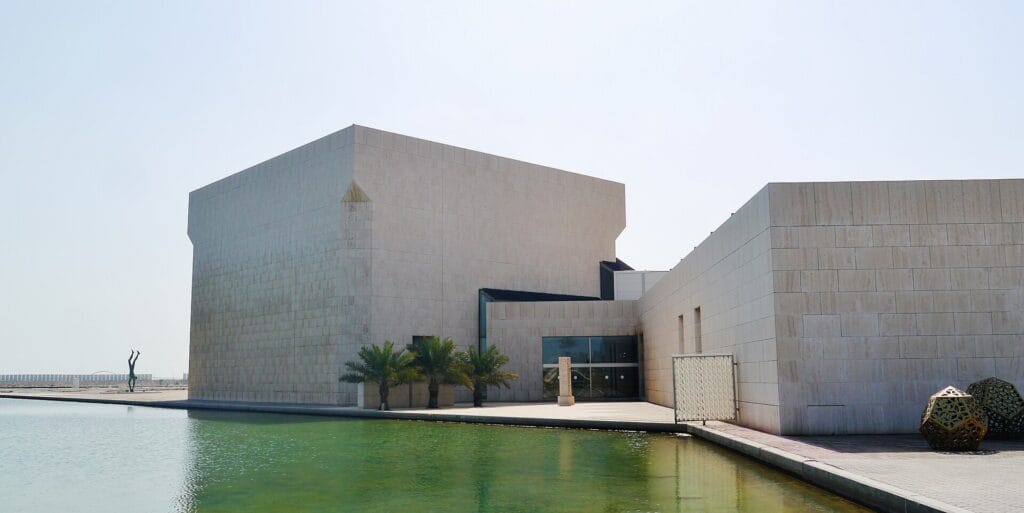
Upon approach, the Bahrain Fort Museum situates visitors close to the fort ruins themselves, at the edge of the archaeological zone. The museum structure is designed to serve as an interpretive gateway, positioning the fort not only as an architectural monument but also as an archaeological and historical site with multiple temporal layers.
Visitors are first presented with a series of introductory panels and visuals that outline the historical timeline of Bahrain Fort. These initial displays aim to orient visitors with the fundamental significance of the site, including its geographic context along historic trade routes and its role across different civilizations.
The museum’s setting directly juxtaposes the modern exhibition spaces with views of the fort’s coastal ramparts, reinforcing the visible connection to the fort’s physical and strategic importance. However, this outdoor proximity also reminds visitors of the broader sprawling archaeological landscape beyond the contained museum spaces. The design keeps the fort and the museum as complementary rather than fully merged experiences, maintaining a clear distinction between the material remains in situ and the curated interpretation inside.
Overall, arrival establishes a frame that balances the fort’s monumentality with the detailed archaeological stories that the museum seeks to tell.
Highlights and Key Exhibitions
The core of the Bahrain Fort Museum’s offering is its archaeological collection, which brings to light material from the site’s long occupational history. The exhibits are organized thematically and chronologically, guiding visitors through major phases relevant to the fort and its surroundings.
One notable aspect is the display of artifacts from the Dilmun period. This includes pottery fragments, shell and stone tools, seals, and jewelry, which collectively illustrate the sophistication of early trade networks and material culture in Bahrain. These objects are accompanied by panels explaining Dilmun’s role as a hub connecting Mesopotamia with the Indus Valley, an unusual focus that contrasts with more conventional narratives centered solely on Mesopotamia or Arab history.
Moving forward, the museum outlines the Hellenistic and Persian influences evident in the later layers at the fort. Pottery, coins, and architectural fragments demonstrate the fort’s changing role in the classical and late antique world. For instance, there are displays relating to the Seleucid and Parthian control of the Gulf, highlighting Bahrain’s incorporation into wider imperial spheres.
A substantial section focuses on the Portuguese period in the 16th and 17th centuries. This era is showcased through maritime weaponry, cannonballs, and reconstructions of fortifications, emphasizing the military significance of Bahrain Fort in regional geopolitics. This part of the exhibition includes contextual information about Portugal’s naval empire and its competition with local powers for control of Gulf seas.
The Islamic periods are represented by ceramics, coins, and inscriptions, underscoring the continuity of the fort’s strategic importance after the Portuguese exit. These objects document the gradual Islamization and shifts in Bahrain’s political landscape through the centuries, complementing the earlier archaeological narrative.
Throughout, the exhibitions employ a variety of display techniques such as models, maps, and multimedia tools that explain the fort’s architectural phases and excavation methods. Information panels are bilingual, with Arabic and English texts, making the content accessible for both local populations and international visitors. The integration of archaeological details about stratigraphy and site layout helps contextualize objects within the site’s excavation history—not just as standalone artifacts but as parts of a larger historical puzzle.
Highlights include larger architectural fragments recovered from the site, such as inscriptions and remains of defensive walls, giving a tangible sense of the fort’s scale and construction techniques. The museum also draws attention to lesser-known types of artifacts, such as ceramics from distant origins, contributing to a more nuanced understanding of Bahrain’s global connections.
Visitor Experience
The visitor flow in the Bahrain Fort Museum tends to follow a linear path that moves through time, from early occupation to later historical periods. The space layout supports this by grouping related material chronologically, which assists comprehension but may feel somewhat conventional for those familiar with archaeological museums.
The museum can appeal to a variety of audiences, including archaeology enthusiasts, students of Middle Eastern history, and travelers interested in Gulf heritage. The pace of exhibits encourages deliberate reading and observation, making it more suitable for visitors prepared to engage with detailed archaeological and historical content rather than those seeking a quick overview.
Interpretative materials balance text and imagery, though some panels may require prior knowledge to fully appreciate technical terms related to excavation or ancient trade. The bilingual presentation is useful but uneven in places, with some labels more thorough than others, which could slightly hinder visitors unfamiliar with archaeological vocabulary.
The museum is more focused on the fort’s material culture and less on interactive or dramatic elements. It relies primarily on objects and explanatory texts, rather than multimedia installations or theatrical recreations, which means the experience is grounded in scholarship but might not fully capture the imagination of younger or casual visitors accustomed to sensory-rich environments.
In terms of limits, the museum’s confined space can sometimes make the exhibits feel compressed, especially during peak visitation times. It also does not attempt to cover wider aspects of Bahraini history unrelated to the fort or archaeology, so those looking for a broad history of Bahrain will need complementary resources. The museum’s emphasis remains firmly on the archaeological site itself and its direct historical context.
Tickets, Access, and Planning
Information on ticketing, opening hours, and visitor services for the Bahrain Fort Museum is subject to official updates. Prospective visitors should consult the museum’s website or contact Bahraini cultural authorities for up-to-date details on admission policies and visitor arrangements.
The museum’s location adjacent to the fort facilitates a visit combined with exploration of the open-air remains. Accessibility in terms of public transport, parking, or provisions for visitors with reduced mobility should be verified in advance, as regional museums sometimes reflect infrastructure variations.
Visitors planning a trip that focuses on Bahraini maritime and archaeological history may find the Bahrain Fort Museum relevant, but should weigh this against the museum’s focus and the broader tourism itinerary. Due to the limited size and nature of the exhibitions, it is suitable as a specialized stop rather than a major destination.
Final Verdict
The Bahrain Fort Museum delivers a focused and detailed archaeological narrative aligned with one of Bahrain’s most important heritage sites. It foregrounds the fort’s layered history, from Bronze Age trade centers through colonial conflicts to Islamic periods, presenting a carefully curated set of artifacts and interpretative panels that underscore the site’s long-standing regional significance.
Its strength lies in the depth of historical context provided for the fort and its role as a maritime and military site. The museum avoids broad generalizations, instead emphasizing careful archaeological evidence and scholarly interpretation. This approach will satisfy visitors interested in the technical and chronological details of the site’s excavations and its role within Gulf history.
On the other hand, the museum’s scope is narrowly focused. Visitors seeking a wider cultural or contemporary look at Bahrain may find the content somewhat limited. The presentation style, while informative, is traditional and may not engage all audiences equally, particularly those expecting audiovisual aids or interactive elements common in larger contemporary museums.
In conclusion, the Bahrain Fort Museum holds significant value for those wishing to understand the archaeological and historical layers of one of Bahrain’s key landmarks. It complements the experience of visiting the fort itself, providing essential context and material detail. However, prospective visitors should plan carefully, considering their particular interests and the museum’s specific focus, to make the most of their visit. Checking the museum’s official resources prior to travel will ensure the latest visitor information is obtained.