Xi’an Beilin Museum Review
Archaeology Museums · Xi'an, China. The Xi’an Beilin Museum, also known as the Stele Forest Museum, is an institution dedicated primarily to the preservation and exhibition of Chinese epigraphy and calligraphy. Situated in Xi’an, a city often recognized for…

Archaeology Museums · Xi'an, China. The Xi’an Beilin Museum, also known as the Stele Forest Museum, is an institution dedicated primarily to the preservation and exhibition of Chinese epigraphy and calligraphy. Situated in Xi’an, a city often recognized for…
Best forMuseum lovers, culture travelers, first-time visitors
Review focusCollections, visitor experience, and practical planning
Historical Context
The Xi’an Beilin Museum, also known as the Stele Forest Museum, is an institution dedicated primarily to the preservation and exhibition of Chinese epigraphy and calligraphy. Situated in Xi’an, a city often recognized for its role as the ancient capital of several Chinese dynasties, the museum holds a unique position within China’s cultural landscape. Established in the early 20th century, the museum originated from a collection of stone steles—inscribed slabs bearing texts such as classic literature, historical accounts, and official decrees—that span several centuries, with significant emphasis on the Tang and Song dynasties. The museum reflects both the historical importance of Xi’an as a cultural and political center and the enduring relevance of calligraphy and epigraphy in Chinese art and scholarship.
The collection is not just significant for its age but for its breadth and scholarly value, tracing developments in script styles, philosophical ideas, and historical records. While the museum’s roots date back to the Qing dynasty’s efforts to gather steles that might otherwise be lost or destroyed, it has since evolved to encompass broader collections that contextualize these works. For scholars of Chinese history, literature, and art, the Xi’an Beilin Museum serves as a key resource in the material history of written culture. Its role contrasts with other museums primarily focused on artifacts or artworks, centering instead on written culture preserved in a durable medium over centuries.
What You See on Arrival
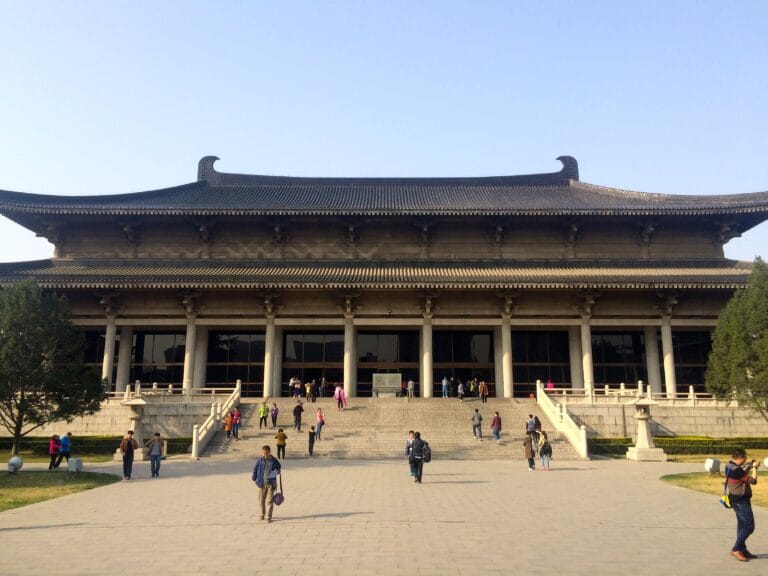
Approaching the Xi’an Beilin Museum, visitors encounter a traditional Chinese architectural ensemble that signals the museum’s cultural and historical focus. The complex is built in a classical style, featuring courtyard layouts, tiled roofs, and red-painted wooden columns. This physical environment offers an immediate connection to the heritage on display: it situates the steles and calligraphic works within a setting that respects and amplifies their traditional origins rather than isolating them in a modernist shell.
Upon entry, the visitor is introduced to a sprawling array of stone steles, many housed under protective pavilions that filter natural light while allowing a close view. The outdoor setting of the steles is notable; rather than being confined exclusively indoors, a portion of the collection exists amid open galleries, giving a tangible sense of scale and solidity to the inscribed surfaces. The museum’s identity is thus firmly tied to this physical artifact type: stone slabs, a medium that connects art, literature, and history in one. The layout underscores the museum’s focus on epigraphy while welcoming visitors into a space where nature and culture coexist.
Inside some of the halls, stone tablets are supplemented with rubbings, calligraphy samples on paper, and explanatory material, bridging the gap between the carved original and the more familiar medium of ink on paper. Visitors quickly grasp that the museum offers not a conventional art show but a deep dive into the textual and formal tradition of Chinese writing, inviting examination not only of content but of the artistry in carving and script style.
Highlights and Key Exhibitions
Central to the Xi’an Beilin Museum is its collection of more than 3,000 stele that document the history of calligraphy, literature, and official writing in China. The collection’s strengths lie in its chronological range and the variety of dynasties represented, though the Tang dynasty (618–907) is frequently highlighted as a period of exceptional calligraphic achievement.
Among the best-known pieces are steles bearing the works of celebrated calligraphers such as Ouyang Xun, Yan Zhenqing, and Liu Gongquan. These exemplars reveal the evolution of script styles from the formal, structured Regular Script to more fluid and expressive forms. The steles serve as primary sources, allowing visitors and researchers to inspect the techniques behind classical Chinese writing with concrete examples of carved stone – a materially permanent medium infrequently seen in that form outside China.
One major aspect of the museum’s collection is its thematic diversity. Beyond pure calligraphy, the steles include records of political history, commemorative inscriptions, Buddhist sutras, and Confucian classics—demonstrating how texts of various functions were commemorated and preserved across centuries. There are also grave epitaphs and legal decrees, each providing insights into the social and political environment of their time.
Supplementary exhibitions within the museum often feature ancient rubbings made from the original stones. These rubbings serve both as an interpretative aid and as artifacts in their own right since they spread the calligraphic styles beyond the stone medium and preserve subtle details lost to weathering. Some galleries explore the techniques of calligraphy, exposing visitors to the brushstroke methods that underlie the engraved characters.
The museum also houses related objects, such as brush and ink implements, which help frame calligraphy within its broader material culture. Though these items may occupy a smaller share of the exhibition, they contribute context for the creation of the steles themselves.
Visitor Experience
The Xi’an Beilin Museum appeals primarily to those with an interest in Chinese history, literature, and art, especially calligraphy enthusiasts and scholars. Its appeal lies in the tangible engagement with ancient texts and the unique presentation of stone-carved calligraphy as an art form. Visitors with grounding in the Chinese language or calligraphy will appreciate the opportunity to view such original artifacts firsthand, though those less familiar may find some of the content difficult to fully appreciate without background knowledge.
Interpretative materials are generally clear but can sometimes rely heavily on text panels that presuppose a degree of familiarity with the subject matter. English translations and descriptions are present but might be uneven, which could pose a limitation for non-Chinese-speaking visitors hoping for a fully accessible experience. However, the visual impact of the steles, combined with translations of select inscriptions, often suffices to maintain interest.
The spatial layout is conducive to a moderate pace: the outdoor courtyard offers a pleasant environment for slower, contemplative viewing, and the indoor galleries provide more structured, didactic displays. The physical scale and density of steles encourage browsing rather than rushing, although the placement of some pieces can demand a close gaze in dimmer, more sheltered pavilions.
For families or casual tourists without a strong interest in calligraphy or textual history, the museum may feel specialized or even inaccessible in parts. The experience is best suited to those prepared to engage with the medium beyond a superficial glance. Yet, those with an interest in cultural heritage or Chinese civilization will find the museum an informative complement to visits to archaeological sites or more general Chinese history museums.
Tickets, Access, and Planning
The museum is located in Xi’an, a city well connected by public transport and a frequent destination for domestic and international travelers interested in Chinese history. Being a major museum in the city, it is generally straightforward to reach, though readers should confirm current details via the museum’s official website.
Planning a visit requires checking updated visitor information directly with the museum. This includes opening hours, admission fees, and any requirements or procedures related to ticket purchase. The museum’s central role in Chinese cultural preservation suggests that special exhibitions or events might occasionally impact access or display arrangements, meaning it is advisable to confirm galleries’ availability before visiting.
Visitors should also inquire about accessibility provisions if mobility or other needs are a concern. The museum’s historic architecture and outdoor stele galleries may pose challenges for some visitors, though specifics vary and official sources should clarify the situation.
Given the nature of the museum’s collection, visitors interested in spending time with the exhibition should anticipate a visit that involves walking and standing, often examining inscriptions from a short distance. Comfortable footwear and consideration of weather conditions for the outdoor sections are practical points to keep in mind. In sum, careful planning and consultation of official resources will enhance the visitor experience.
Final Verdict
The Xi’an Beilin Museum stands as a distinctive institution dedicated to Chinese epigraphy and calligraphy, fields often overlooked in museums centered on material culture or fine arts. Its substantial collection of stone steles, spanning many dynasties and including examples of eminent calligraphy, offers one of the most concentrated presentations of this writing tradition in China. This makes it invaluable for scholars, students, and enthusiasts of Chinese calligraphy, literature, and history.
The museum’s setting in Xi’an aligns naturally with its contents, embedding the artifacts in a culturally resonant environment that echoes the city’s long historical significance. The architectural presentation and partially open-air galleries complement the material nature of the steles, enhancing the encounter with these ancient inscriptions.
Potential visitors should be aware that the museum’s appeal is somewhat specialized. Those without background enthusiasm or knowledge of calligraphy or Chinese textual culture might find parts of the presentation challenging or opaque. Interpretative support is present but not always comprehensively multilingual or explanatory for novices.
As a repository of stone-carved texts rather than a conventional art collection or archaeological exhibition, the Beilin Museum offers insight into a unique and enduring medium of cultural expression. Its focus on calligraphy as an artistic and historical form—expressed through the most durable material left by past centuries—is distinctive. For those prepared to engage on those terms, it rewards with a tangible connection to China’s literary and artistic legacy.
Careful planning, including consulting the museum’s official website for current operational details, is advisable for all prospective visitors. The museum is unlikely to serve as a casual tourist stop but will offer depth and specificity for those with a passion for the written cultural heritage of China. Its collections stand as both an artistic achievement and a scholarly resource, making the Xi’an Beilin Museum a notable institution within China’s network of cultural heritage sites.