Western Australian Museum Boola Bardip Review
Intro The Western Australian Museum Boola Bardip in Perth is one of the more successful recent examples of a state museum trying to explain a very large.
Intro The Western Australian Museum Boola Bardip in Perth is one of the more successful recent examples of a state museum trying to explain a very large.
Best forMasterpieces, architecture, cultural history
Review focusCollection highlights, building, visitor flow
Intro
The Western Australian Museum Boola Bardip in Perth is one of the more successful recent examples of a state museum trying to explain a very large place through a single institution. Western Australia is geographically immense and historically complex, with strong Aboriginal heritage, distinctive geology and biodiversity, and a modern identity shaped by resource industries, migration, and urban growth. A museum that tries to account for all of that risks becoming diffuse. Boola Bardip avoids much of that problem by organizing its subject around connection: between land, people, science, and historical change.
This is what gives the museum its strongest quality. It is not simply a collection of separate galleries on nature, indigenous culture, and settlement. At its best, it shows how these subjects depend on one another.
How the Site Works
The museum is arranged through thematic galleries that combine state history, natural history, Aboriginal culture, and scientific interpretation. Visitors move across topics rather than along a single strict timeline. This approach works because the subject is not only chronological. Understanding Western Australia requires movement between different scales and kinds of evidence: landscape, biodiversity, indigenous history, and later colonial and urban development.
The museum’s layout supports that kind of movement. A visitor can follow broad narratives while still spending time with particular subjects that stand out as personally important or unfamiliar. This flexibility makes the institution accessible without making it feel simplistic.
Exhibitions and Collection
The collection is strongest where the museum allows natural history and human history to illuminate each other. Geological and environmental displays explain the scale and distinctiveness of Western Australia, while Aboriginal cultural material provides the long historical grounding that any serious state museum here requires. Settlement, industry, and civic development are then placed within that wider context rather than presented as if history began with colonial administration.
This structure gives the museum intellectual coherence. It also makes the Aboriginal collections especially important. They are not inserted as a separate ethical requirement. They form part of the museum’s main argument about place, continuity, and identity. That helps the institution avoid the compartmentalization that weakens many large museums.
Architecture / Space
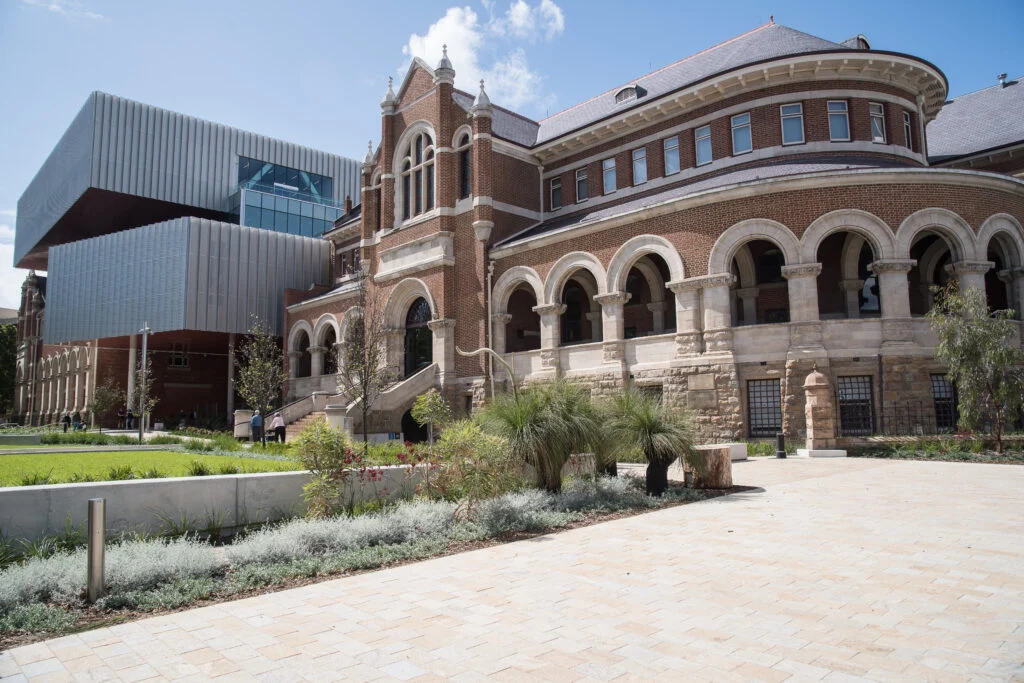
The museum’s setting in a redeveloped heritage precinct is one of its strengths. Older civic and institutional buildings have been incorporated into a contemporary museum complex, producing a space that feels both public and modern. This combination works well for a state museum because it links historical continuity with updated interpretation. The galleries are varied enough in scale to handle different subjects without forcing them into a single display model.
The city-center location also matters. Boola Bardip feels anchored in Perth rather than isolated from it, which is important for a museum trying to explain the state through both regional history and urban identity.
Visitor Experience
The experience is contemporary, visually clear, and generally well paced. The museum uses interpretive media confidently, but it still depends on original objects and specimens enough to remain grounded. This balance makes it suitable for a broad audience, from families and tourists to visitors with stronger interests in history or science. Because the subject range is broad, most visitors will naturally find some galleries more compelling than others, but the museum’s overall structure helps maintain coherence.
Another advantage is that the museum seldom feels trapped within a single discipline. Moving between natural and cultural galleries keeps the experience varied and makes the wider argument about Western Australia easier to understand. The museum also benefits from tone: it presents difficult histories and large subjects with clarity rather than overstatement, which helps the institution remain readable across many themes.
Historical Context
Western Australia’s history cannot be reduced to colonial settlement alone. It is inseparable from much longer Aboriginal histories, from environmental conditions that shaped patterns of life, and from modern economic and demographic change. Boola Bardip is strongest where it recognizes these long continuities and frames the state as a place formed by layered histories rather than by one founding story.
This wider context is what makes the museum more than a civic attraction. It becomes a practical introduction to the state itself, especially for visitors unfamiliar with Western Australia’s scale and diversity.
Practical Information
The museum is located in central Perth and can be reached easily within a city itinerary. Most visitors should allow around two hours for a general visit, and longer if they want to spend serious time in both science and history sections. Temporary exhibitions and practical arrangements may vary, so current details should be checked before arrival.
Final Verdict
Boola Bardip is one of the strongest large museums in Australia because it succeeds in giving a broad but coherent introduction to Western Australia. Its integration of Aboriginal heritage, natural history, and modern state identity gives it more depth than many institutions built around narrower themes. For visitors in Perth, it is a highly worthwhile museum visit.
Plan your visit
Visit with enough time to see the museum as a whole rather than limiting the visit to a single gallery type. The institution works best when its environmental, cultural, and historical sections are understood together. Around two hours is a good starting point for a first visit, with longer useful if you want to move slowly through the interpretive galleries.
It is also worth noting that the museum avoids presenting Western Australia as a purely modern success story. By maintaining indigenous history and environmental scale as core parts of the experience, it gives visitors a more honest and more useful introduction to the state. This makes the visit stronger intellectually and ensures that the museum remains more than a visually impressive civic project. It functions as a serious interpretive museum as well as a major public attraction.