Nexø Museum Review
Nexø, Denmark. Nexø Museum, located in the coastal town of Nexø on the Danish island of Bornholm, offers a focused tribute to the town’s maritime and cultural heritage. Established to preserve and present the unique local…
Nexø, Denmark. Nexø Museum, located in the coastal town of Nexø on the Danish island of Bornholm, offers a focused tribute to the town’s maritime and cultural heritage. Established to preserve and present the unique local…
Best forMuseum lovers, culture travelers, first-time visitors
Review focusCollections, visitor experience, and practical planning
Historical Context
Nexø Museum, located in the coastal town of Nexø on the Danish island of Bornholm, offers a focused tribute to the town’s maritime and cultural heritage. Established to preserve and present the unique local history, it sits within a region well-known for its fishing industry, crafts, and pivotal role during various periods of Denmark’s history. Nexø, like much of Bornholm, experienced a complex historical trajectory marked by economic shifts, wartime occupations, and the evolution of coastal life.
The museum’s roots are connected to local efforts to maintain a collective memory of the town’s past, especially in relation to the maritime economy that defined not only Nexø’s development but also its social fabric. Nexø's history includes its recovery after damages sustained in World War II and its place within broader regional transformations in the mid-20th century. These contexts are important to understanding the museum’s purpose: to document a community’s endurance and adaptation within a changing world. By focusing primarily on local history, Nexø Museum positions itself less as an expansive national institution and more as a place dedicated to regional identity and memory.
What You See on Arrival
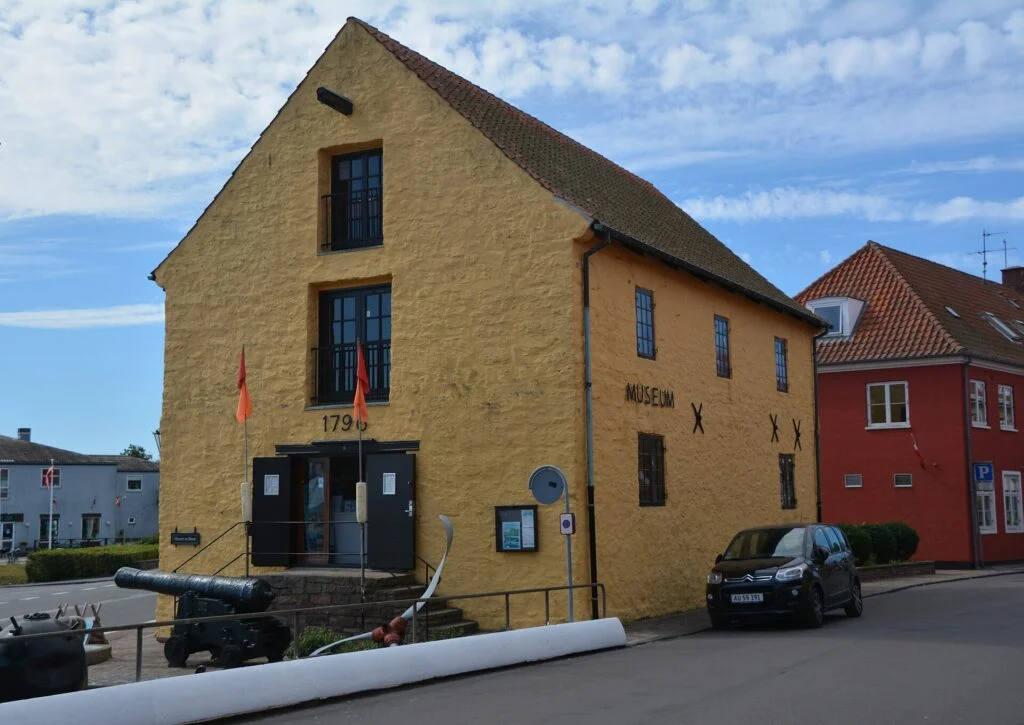
Approaching Nexø Museum, visitors encounter a modest building situated near the harbor, reflecting the town’s close connection to the sea. The architecture is functional rather than ornate, consistent with the practical nature of the exhibits inside. The museum establishes its identity from the outset by highlighting its local grounding. Signage and outdoor displays often emphasize the fishing heritage and the town’s wartime history, setting a clear expectation of the themes explored within.
The spatial layout surrounding the museum contributes to framing the visitor’s understanding. Being near the waterfront aligns the museum physically and thematically with its subject matter. Visitors are reminded that this institution, unlike larger urban museums, serves a close-knit community and those interested in the particularities of Nexø and Bornholm rather than broad national stories. This local orientation is evident in the initial visitor materials, which usually provide context on the town’s maritime economy alongside narratives about World War II impacts, without overstating or generalizing these themes.
Highlights and Key Exhibitions
At the core of Nexø Museum’s offerings is an in-depth presentation of the town’s maritime history. This includes detailed exhibits on traditional fishing methods, the types of vessels used over the centuries, and the life of fishermen and their families. Models of fishing boats, historical tools, and equipment draw a clear picture of the practical realities shaping the community. While these objects might seem specialized, they speak to a heritage that influenced social structures, daily rhythms, and the economy on Bornholm for generations.
The museum further explores the resilience of Nexø’s residents, especially through its wartime narrative. Nexø was the only Danish town bombed during World War II, which marks a pivotal event in local memory. Exhibits related to this period include photographs, personal accounts, and artifacts recovered or preserved from the time. These do not simply recount facts but offer insights into the ways the town rebuilt and came to terms with the trauma of war. The wartime exhibits are presented with sober reflection rather than sensationalism, providing context useful for understanding broader Danish history from a localized standpoint.
Another significant dimension of the museum is its focus on cultural traditions and daily life beyond fishing and war. This includes displays on local crafts, traditional attire, and domestic items from different eras. These sections help round out the picture, reminding visitors that maritime communities have diverse lives that extend into folk culture and community practices. The inclusion of such material reflects the museum’s commitment to showcasing the full spectrum of Nexø’s social history.
The museum’s collection does have limitations in its national breadth. It is not intended to compete with larger institutions in Copenhagen or Aarhus in terms of art or archaeology. Rather, its emphasis on local materials means that international or thematic comparisons are minimal. Visitors looking for wide-ranging Danish cultural history might find this narrow focus less satisfying; however, for those particularly interested in Bornholm’s maritime environment and town history, the detailed attention is valuable.
Visitor Experience
Nexø Museum is tailored to visitors who appreciate regional history presented in a straightforward manner. The exhibitions tend to be well-organized and clearly labeled, with textual explanations that avoid jargon. This makes the museum accessible to a broad audience including families, local residents, and tourists with a specific interest in coastal Denmark. The narrative style is generally chronological and thematic, which helps visitors trace development through key historical phases without confusion.
While the museum does incorporate some multimedia and contemporary interpretive tools, the overall tone remains traditional. This can be seen as a strength or a limitation depending on visitor expectations. Those looking for interactive or high-tech engagement might find Nexø Museum more conventional. Yet, this classic approach suits the sober and respectful treatment of community memory it aims to achieve.
The pace through the museum is likely to be moderate. Exhibits contain a mix of objects, photographs, and text panels, allowing visitors to spend more or less time based on interest. The focus on local stories means the experience is somewhat specialized. It may resonate more strongly with regional visitors or those who have researched the area beforehand. Casual tourists will find the museum informative but should be prepared for an experience centered on specifics rather than sweeping narratives.
There is limited evidence that the museum caters heavily to international audiences in terms of translation and supplementary materials. English is often present but not always comprehensive, which might affect non-Danish speakers. Visitors planning to engage deeply with the content may benefit from bringing reference materials or prior knowledge of Bornholm’s context.
Tickets, Access, and Planning
Information regarding tickets, opening hours, and visitor facilities is best confirmed through the Nexø Museum’s official website or local tourist resources. This is important because smaller institutions like Nexø Museum often have seasonal schedules or vary services depending on the time of year.
Potential visitors should verify admission costs as these can change, and check for any group discounts or concessions if relevant. Practical details such as accessibility for those with mobility challenges are also subjects to confirm, as smaller museums may not have comprehensive adaptations. Additionally, if guided tours or audio guides are essential to plans, these services should be verified in advance, given that regional museums may have limited offerings.
The museum’s location near the harbor suggests reasonable access via local transport or on foot if staying in Nexø. However, detailed information about parking or public transit connections is not centrally advertised, so some advance planning may be advisable. Given Nexø’s compact size, the museum forms one part of a broader itinerary on Bornholm, and visitors should consider it alongside other town and island attractions.
Final Verdict
Nexø Museum is a focused institution that serves an important role in preserving and presenting the particular history of a Danish fishing town with a distinctive wartime experience. Its strength lies in its detailed and respectful documentation of local maritime traditions, community memory, and cultural practices. This specificity offers valuable insights for those interested in regional history and the ways small communities have shaped and responded to historical challenges.
The museum’s straightforward presentation style favors clarity and accessibility, although it may not satisfy visitors expecting a more expansive or highly interactive experience. The limitations in international-language support and broad-Danish context mean that it best suits those who come with either prior knowledge or a particular curiosity about Nexø and Bornholm. For regional visitors and those engaged with fishermen’s histories or World War II impacts on Denmark, the museum provides meaningful content framed with quiet dignity.
Those planning a visit should consult the museum’s official resources to confirm operational details and plan accordingly. While not part of the larger national museum network, Nexø Museum stands as a solid example of how local history organizations maintain community heritage with care and precision. It may not attract every visitor drawn to Danish history, but within its niche, it delivers a well-grounded, coherent narrative that enriches understanding of Denmark’s maritime and coastal identity.