Vasa Museum Review
Maritime History · Stockholm, Sweden A Ship Raised from Disaster The Vasa Museum is one of those rare institutions where a single object is enough to.
Maritime History · Stockholm, Sweden A Ship Raised from Disaster The Vasa Museum is one of those rare institutions where a single object is enough to.
Best forArchitecture, royal history, heritage
Review focusArchitecture, history, visitor experience
Maritime History · Stockholm, Sweden
A Ship Raised from Disaster
The Vasa Museum is one of those rare institutions where a single object is enough to justify the entire visit. On the island of Djurgården in Stockholm, the museum houses the seventeenth-century warship Vasa, a vessel that sank on its maiden voyage in 1628 and lay beneath the harbor for more than three centuries before being raised and preserved. The result is one of the most memorable museum experiences in Scandinavia and one of the strongest object-centered museums anywhere in Europe.
The first encounter with the ship is the defining moment. The Vasa dominates the interior with overwhelming physical presence. It is not simply large; it feels improbable. Visitors are confronted not with a fragment, reconstruction, or scale model, but with an almost complete warship rising through the building’s central space. That immediacy gives the museum unusual force. You are not being asked to imagine the past from scattered remains. You are standing beside it.
Architecture & Spatial Design
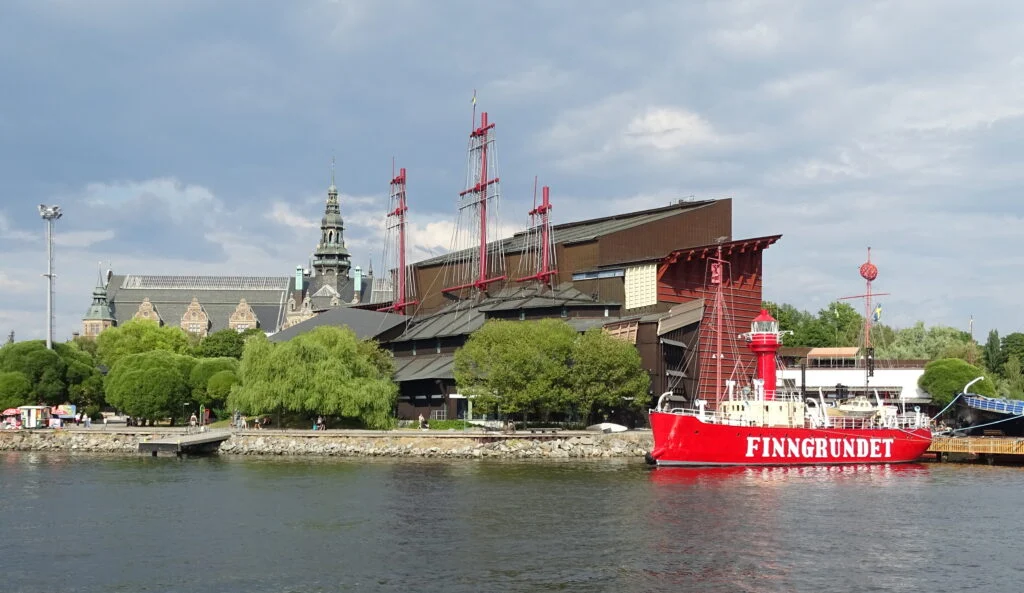
The museum building was designed around the ship, and that decision shapes the visit in the best possible way. Multiple viewing levels allow visitors to study the vessel from different heights and distances. From below, the hull’s scale and weight become clear. From upper levels, the carvings, proportions, and engineering details come into sharper focus.
This multi-level design keeps the experience dynamic. The ship is never reduced to a single viewpoint. Instead, the museum lets visitors return to it repeatedly from new angles while surrounding exhibitions gradually deepen the historical narrative. The layout is thoughtful and easy to follow, making the museum accessible even when it is busy.
Lighting is controlled to protect the vessel, but the atmosphere never feels gloomy. Instead, the dimmer interior gives the ship a sense of gravity and heightens the drama without becoming theatrical. The building respects the object rather than competing with it.
The Collection: One Ship, Many Histories
The Vasa is obviously the center of attention, but the museum succeeds because it builds many parallel stories around the ship. It is at once a story of royal ambition, naval warfare, shipbuilding, human error, archaeology, and modern conservation.
The ship itself was built as a statement of Swedish power during the reign of Gustavus Adolphus. Its size, decoration, and firepower were designed to project military prestige across the Baltic. Yet that ambition produced the flaw that defined its fate. Poor balance and excessive top-heaviness made the ship unstable, and shortly after leaving port it capsized and sank in full view of Stockholm.
That dramatic failure gives the museum narrative tension. The Vasa is both triumph and disaster, engineering achievement and engineering mistake. Few museum objects carry that level of contradiction so vividly.
Recovered artefacts from the wreck add human scale to the story. Tools, clothing, personal belongings, shipboard equipment, and sculptural fragments reveal the world of the sailors, craftsmen, and officers connected to the vessel. These displays stop the ship from becoming an abstract technical marvel. They remind visitors that it was a working environment filled with people and expectations.
The conservation story is equally compelling. The recovery of the ship in 1961 and the decades-long effort to stabilize and preserve it are among the museum’s strongest interpretive themes. Visitors come away not only understanding the seventeenth century more clearly, but also appreciating the scientific and curatorial work required to keep such an object alive in the present.
Visitor Experience & Rhythm
The museum handles visitor flow well because the ship remains visible throughout much of the visit. Even when moving into side galleries, you never lose the sense that everything leads back to the vessel itself. That gives the experience coherence.
It is also a surprisingly manageable museum. You can have a satisfying visit in two to three hours, but the museum also rewards slower attention. Families tend to find it accessible because the central object is immediately gripping. More historically focused visitors will appreciate the depth of the surrounding exhibitions.
One of the museum’s greatest strengths is that it never wastes the emotional force of the ship. Every display, text panel, and viewing platform supports the main narrative rather than distracting from it. That discipline keeps the museum focused and memorable.
Atmosphere & Intellectual Tone
The Vasa Museum feels serious without becoming heavy. It presents a dramatic story, but it does not exaggerate it. The artifact itself provides enough power. Interpretation is clear, controlled, and grounded in evidence. That gives the museum a tone of confidence and credibility.
There is also something unusually moving about the experience. The ship is not preserved because it succeeded, but because it failed. That alone gives it a different emotional charge from many military or maritime museums. Visitors are drawn not only to the scale of the vessel, but to the vulnerability revealed by its sinking and recovery.
Who Will Appreciate It Most
The Vasa Museum is ideal for:
• Visitors interested in maritime history and shipbuilding
• Travelers who enjoy museums centered on a single major artifact
• Families looking for a highly visual and accessible museum in Stockholm
• Visitors interested in archaeology, conservation, and seventeenth-century history
Those looking for a broad encyclopedic museum may find the focus narrower than expected, but that narrowness is exactly what makes the museum so strong. It goes deep rather than wide.
Practical Considerations
Allow at least two hours, and more if you want to read closely through the conservation and archaeological displays. The museum combines well with other Djurgården institutions, but it is substantial enough to stand on its own.
Final Verdict
The Vasa Museum succeeds because it understands the power of its central object and builds everything around it with discipline. The ship is astonishing, but the museum’s real accomplishment is turning that astonishment into understanding.
Handled thoughtfully, the visit becomes more than a look at a famous wreck. It becomes an encounter with ambition, failure, recovery, and preservation across four centuries.
It is a museum built around one of Europe’s great surviving objects.