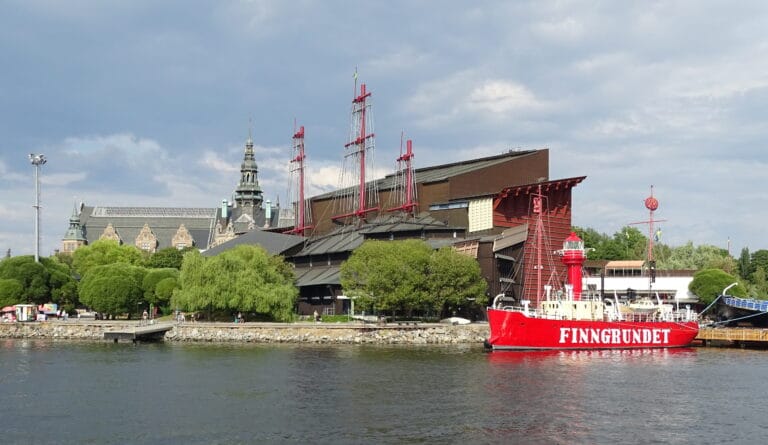
Vasa Museum
About: Start with the main ship hall before moving into the surrounding exhibitions. The ship is best understood gradually, so use the upper walkways as.

Best forArchitecture, royal history, heritage
Setting / nearbyEurope
Overview
The Vasa Museum in Stockholm is one of Scandinavia’s most famous museums and one of the most remarkable maritime museums in the world. Its entire identity is built around a single object: the warship Vasa, which sank on its maiden voyage in 1628 and was salvaged in 1961 after 333 years on the seabed. That alone would make the museum unusual, but what makes it truly exceptional is the condition of the ship. The Vasa is often described by the museum itself as the world’s best preserved seventeenth-century ship, and seeing it in person explains immediately why the museum has such an international reputation. 0
What makes the museum so effective is that it does not treat the ship as an isolated spectacle. Instead, it builds a full historical world around it. Visitors are introduced not only to the ship’s dramatic sinking, but also to the political ambitions behind its construction, the technical problems that led to disaster, the rediscovery of the wreck, and the decades of preservation work required after salvage. This gives the museum real depth. It is not simply a place to admire a rare survival from the seventeenth century; it is a place to understand how war, monarchy, shipbuilding, archaeology, and conservation all meet in one extraordinary object. 1
The museum also works well because the story is so clear and compelling. Vasa was built as a powerful symbol of Swedish royal ambition, yet it sank only moments into its first journey. That mixture of grandeur and failure gives the museum an unusual dramatic force. Visitors are confronted not only with the impressive scale of the ship, but with a story of overconfidence, instability, and historical survival. Few museums can offer such a complete narrative in a single visit.
For travelers in Stockholm, the Vasa Museum is often one of the most essential stops in the city. It appeals to maritime history enthusiasts, but also to general visitors because the subject is so visually strong and immediately understandable. You do not need specialist knowledge to be impressed. The ship itself does most of the work, and the museum’s exhibitions build outward from that central impact.
Collection Highlights
The overwhelming highlight is, of course, the ship itself. Vasa dominates the museum space in a way that few museum objects can. Its scale, dark timber surfaces, and surviving carved decoration make it feel both monumental and strangely intimate. Because so much of the ship has survived, visitors can appreciate not only its dimensions but also the craftsmanship that went into its construction. The museum emphasizes that its exhibitions tell the story of how the ship was built, sank, and was salvaged, and that broad interpretive approach gives the central object far more meaning than a simple display would. 2
Another major strength is the set of exhibitions surrounding the ship. These explain the disaster itself, including how the vessel heeled over and took on water through its open gunports before sinking. That kind of detail matters because it turns the ship from a static relic into evidence of a specific historical failure. The museum also explores the rediscovery and salvage of the vessel, from Anders Franzén’s search in the 1950s to the engineering work that brought the ship back to the surface in 1961. 3
The preservation story is another highlight. Many visitors arrive expecting only a maritime museum, but the conservation aspect adds a second layer of fascination. The official exhibitions explain that preserving Vasa remains an ongoing scientific and technical challenge. That gives the museum a contemporary dimension, because the ship is not only a historical object from 1628. It is also something still being studied, protected, and interpreted in the present. 4
The museum also benefits from its supporting interpretation on life aboard, the historical context of seventeenth-century Sweden, and the people connected to the ship. These displays make the visit richer by showing that Vasa was not only a royal project or a naval machine. It was also a working vessel meant to carry people, weapons, and political meaning. That broader human dimension helps balance the visual power of the ship itself. 5
Building and Setting
The museum building is designed around the ship, and that is exactly the right approach. Rather than competing architecturally with the object, the structure creates a controlled environment in which the Vasa can be viewed from multiple levels. This is one of the museum’s biggest strengths. Visitors do not see the ship only from one angle or one floor. They move around it, gradually building an understanding of its scale, proportions, and detailing. That layered viewing experience makes the encounter much more powerful than a single hall display would have been.
The atmosphere inside the museum is also important. The lighting is kept relatively subdued, which helps with preservation but also adds drama. The ship emerges from the dim interior with enormous physical presence, and the galleries around it feel focused rather than distracting. This controlled setting supports both the historical material and the conservation needs of the object.
Its location on Djurgården also strengthens the visit. This area of Stockholm is already one of the city’s main museum and leisure districts, so the Vasa Museum fits naturally into a broader cultural day. At the same time, the museum is strong enough to stand entirely on its own. Many visitors come primarily for Vasa, and the museum fully justifies that focus.
Practical Information
The Vasa Museum is open every day. The official hours listed by the museum are daily from 10:00 to 17:00 from September to May, with Wednesdays open until 20:00, and daily from 08:30 to 18:00 from June to August. The museum also offers daily guided tours, and the official site states that the guided tour around the ship lasts about 25 minutes and is included in the entrance fee. 6
Ticket information can change seasonally. Current official ticketing shows adult admission and notes that visitors aged 0–18 have free admission, with combination tickets also available with Vrak Museum. Because pricing and special exhibitions can change, it is sensible to check the museum’s official site before visiting. 7
The museum works well for different types of visitors. It is accessible for general tourists because the main story is so clear, but it also rewards visitors who want to spend time reading the exhibitions more closely. A short visit can still be memorable because the ship itself is such a powerful object, but a longer visit is better if you want to understand the sinking, salvage, and preservation in full.
Why Visit
The Vasa Museum is worth visiting because it offers something genuinely rare: a museum centered on one object that is strong enough to carry an entire institution. The ship is visually overwhelming, historically important, and supported by exhibitions that deepen rather than dilute its impact. Few museums achieve that kind of unity.
It is also one of the best places in Stockholm to experience how history, archaeology, engineering, and conservation can come together in one story. The museum is not only about a shipwreck. It is about ambition, failure, rediscovery, and preservation across centuries. That gives the visit unusual depth.
If you want one museum in Stockholm that feels iconic, memorable, and fully deserving of its reputation, the Vasa Museum is one of the clearest choices. It is not only one of the city’s essential museums, but one of the most distinctive museum visits in Europe.