Tuol Sleng Genocide Museum Review
Prison Museums · Phnom Penh, Cambodia. The Tuol Sleng Genocide Museum, situated in Phnom Penh, Cambodia, occupies a grim chapter in the nation’s 20th-century history. The site was originally a high school before it was repurposed by the Khmer Rouge…
Prison Museums · Phnom Penh, Cambodia. The Tuol Sleng Genocide Museum, situated in Phnom Penh, Cambodia, occupies a grim chapter in the nation’s 20th-century history. The site was originally a high school before it was repurposed by the Khmer Rouge…
Best forScience, technology, hands-on learning
Review focusExhibits, interpretation, visitor flow
Historical Context
The Tuol Sleng Genocide Museum, situated in Phnom Penh, Cambodia, occupies a grim chapter in the nation’s 20th-century history. The site was originally a high school before it was repurposed by the Khmer Rouge regime between 1975 and 1979 as Security Prison 21 (S-21). During this period, it functioned as a detention and torture center where thousands of Cambodians were incarcerated under suspicion of political dissent or perceived disloyalty to the regime. The museum stands as a poignant and sobering reminder of the brutalities inflicted during the Cambodian genocide, a horrific chapter where an estimated 1.7 to 2 million people perished under Pol Pot’s rule. It serves as a memorial to the victims and a testament to the resilience of the Cambodian people. The museum’s exhibitions and preserved cells aim to educate visitors on the extent of the atrocities committed while fostering reflection on the horrors of authoritarianism and political violence worldwide.
What You See on Arrival
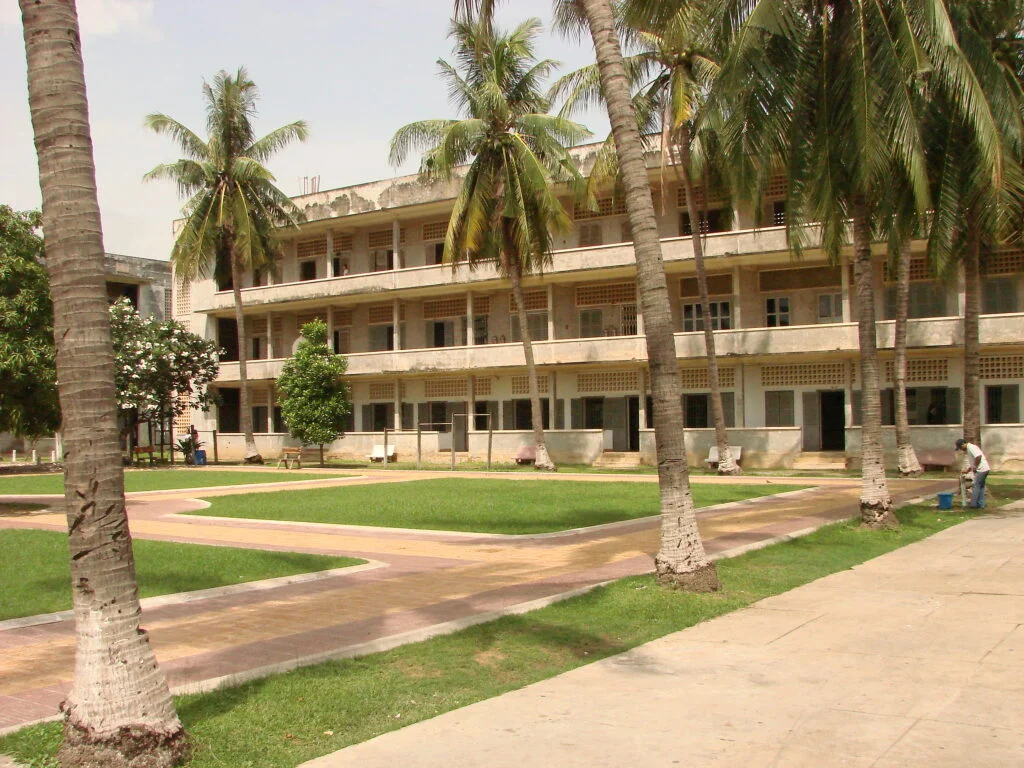
Approaching the Tuol Sleng Genocide Museum immediately sets a solemn tone. The museum itself is housed in what was once the Tuol Svay Prey High School. The building’s stark, utilitarian architecture has been retained deliberately to evoke the oppressive atmosphere of its time as a prison. Visitors are greeted by a guarded security checkpoint, lending a chilling authenticity to the experience. The pervasive presence of barbed wire fences and spatial confinement serves as a vivid visual cue of imprisonment and control. Near the entrance, plaques and informational boards offer a brief historical introduction, preparing guests for the gravity of what lies within. The outdoor grounds contain preserved structures and memorial gardens that contrast the somber interior with silent spaces for contemplation, featuring sculptures that honor the victims. The initial visual impact is one of restraint and severity, indicating the museum’s role not as a celebratory institution, but as a memorial site comprehensively dedicated to remembrance and education.
Highlights and Key Exhibitions
The core of the Tuol Sleng Genocide Museum’s exhibitions revolves around meticulously preserved prison cells, interrogation rooms, and torture chambers, furnishing an unfiltered window into the day-to-day horrors endured by the detainees. The starkness of these spaces, with visible rusting beds, shackles, and crude equipment, is profoundly moving. The museum also displays thousands of black-and-white photographs taken by the Khmer Rouge documenting prisoners’ arrival, a haunting catalog of faces forever frozen in time. These portraits are central to the museum’s narrative, emphasizing the personal identities behind the otherwise anonymous statistics of victims. Another significant exhibition includes comprehensive written testimonies from survivors, providing chilling firsthand accounts that contextualize the visceral environment. Additionally, the museum houses a large collection of documents—confessions, bureaucratic records, and lists—that illustrate the regime’s systematic approach to repression. While the exhibitions are sober and arrestingly raw, the museum also incorporates educational panels discussing Cambodia’s history before and after the Khmer Rouge era, allowing visitors to better understand the motivations and consequences of this brutal period.
Visitor Experience
The visitor experience at the Tuol Sleng Genocide Museum is profoundly emotional and thought-provoking. The layout encourages a self-guided tour through the haunting corridors, though official audio guides and printed materials are available to enhance understanding. The absence of multimedia distractions helps maintain a solemn atmosphere, allowing visitors to absorb the gravity of the exhibits without unnecessary interruption. The narrative is presented with respect and commitment to factual accuracy, avoiding sensationalism, which affirms the museum’s integrity. It is important to note that the nature of the content—detailing torture, death, and human suffering—is intense and can be deeply unsettling for some visitors. Those unprepared for graphic historical content may find certain areas distressing. However, the museum also provides space for visitors to sit and reflect, which facilitates emotional processing. Staff members and volunteers are discreet yet available for questions, contributing to an environment that balances rigorous education with compassionate sensitivity.
Tickets, Access, and Planning
The Tuol Sleng Genocide Museum is centrally located in Phnom Penh, making it accessible by various modes of local transport, including tuk-tuks and taxis. It remains open to the public throughout the week, although specific opening hours can vary seasonally, so checking in advance is advisable. Entry is ticketed, with fees that are considered reasonable and often contribute directly to the ongoing preservation of the site and educational missions. Discounted rates are typically available for students, children, and seniors. The museum’s proximity to other important historical sites, such as the Killing Fields Memorial, allows visitors to plan a comprehensive day of remembrance and learning. Visitors should allocate ample time—generally two to three hours to engage thoughtfully with the exhibits. There are limited amenities on-site, such as a small café and a gift shop offering books and memorabilia, emphasizing the educational focus. The museum is wheelchair accessible, but due to the building’s age, some areas may present mild challenges; visitors with mobility concerns should inquire ahead for assistance.
Final Verdict
The Tuol Sleng Genocide Museum serves as a vital institution in commemorating one of the darkest periods in Cambodian history. It stands out for its unflinching presentation of the facts without resorting to sensationalism, offering visitors a deeply immersive encounter with the realities of genocide. Its preservation of original prison spaces coupled with extensive photographic documentation and survivor testimonies create a compelling and educative environment that demands both intellectual engagement and emotional reflection. While the intensity of the material may not suit all audiences, the museum’s respectful curatorial approach and supportive atmosphere underscore its mission as an essential site of memory and education. For those interested in world history, human rights, and the resilience of the human spirit, the Tuol Sleng Genocide Museum is an indispensable visit. It challenges visitors to confront the darkest facets of political extremism, ensuring that lessons of the past remain powerful and present.