Tretyakov Gallery Review
A National Collection Built on Conviction The Tretyakov Gallery does not feel accidental. It feels intentional — almost ideological in its clarity.
A National Collection Built on Conviction The Tretyakov Gallery does not feel accidental. It feels intentional — almost ideological in its clarity.
Best forMasterpieces, architecture, cultural history
Review focusCollection highlights, building, visitor flow
Historical Context
The Tretyakov Gallery in Moscow is one of the most important institutions dedicated to Russian art, offering a comprehensive view of the country’s artistic development across centuries. Founded in the mid-nineteenth century by Pavel Tretyakov, a merchant and patron of the arts, the gallery began as a private collection with a clear purpose: to create a national museum that would represent Russian culture through painting and visual art. This vision was significant at a time when Russian artists were striving to establish their own identity, distinct from Western European traditions.
Tretyakov’s collection focused on contemporary Russian artists of his time, particularly those associated with movements that emphasized realism and social themes. These artists sought to depict everyday life, historical events, and moral questions in a way that resonated with a broader public. Over time, the collection expanded to include earlier works, as well as later developments in Russian art, creating a continuous narrative that spans from religious icon painting to modern and Soviet-era works.
The gallery itself has grown into a major cultural institution, with multiple buildings and an extensive collection. Its historical roots remain central to its identity. Unlike many museums that are built on royal collections, the Tretyakov Gallery reflects a more personal and national initiative. This gives it a unique character, grounded in the idea of preserving and presenting a shared cultural heritage.
What You See on Arrival
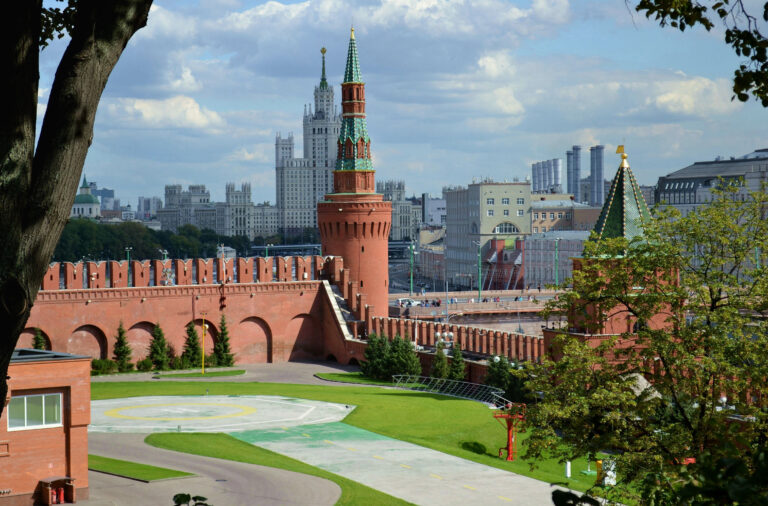
Arrival at the Tretyakov Gallery offers a more traditional museum experience compared to many contemporary institutions. The main building’s façade, with its distinctive decorative elements, reflects a historical aesthetic that immediately signals its connection to Russian cultural heritage. Located in central Moscow, the museum is integrated into the urban fabric, making it both accessible and prominent.
Entering the gallery, visitors are guided into a structured sequence of rooms. Unlike open-plan modern museums, the Tretyakov Gallery follows a more classical layout, with galleries arranged in a progression that reflects historical development. This creates a clear narrative path, helping visitors understand the evolution of Russian art over time.
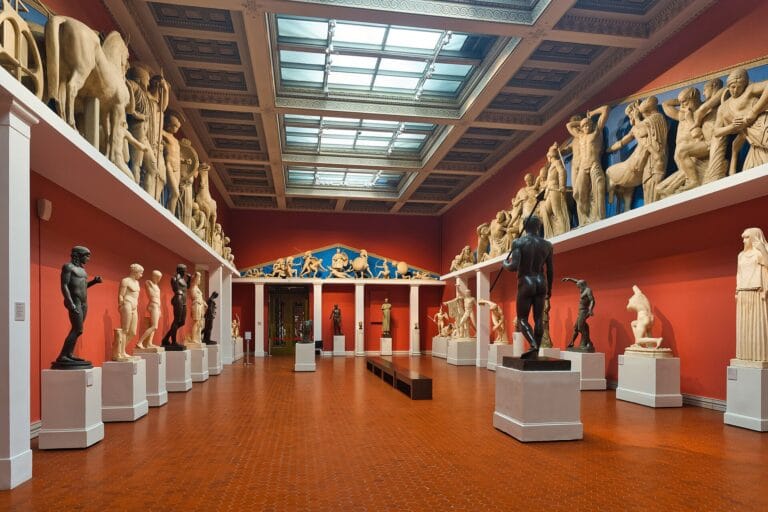
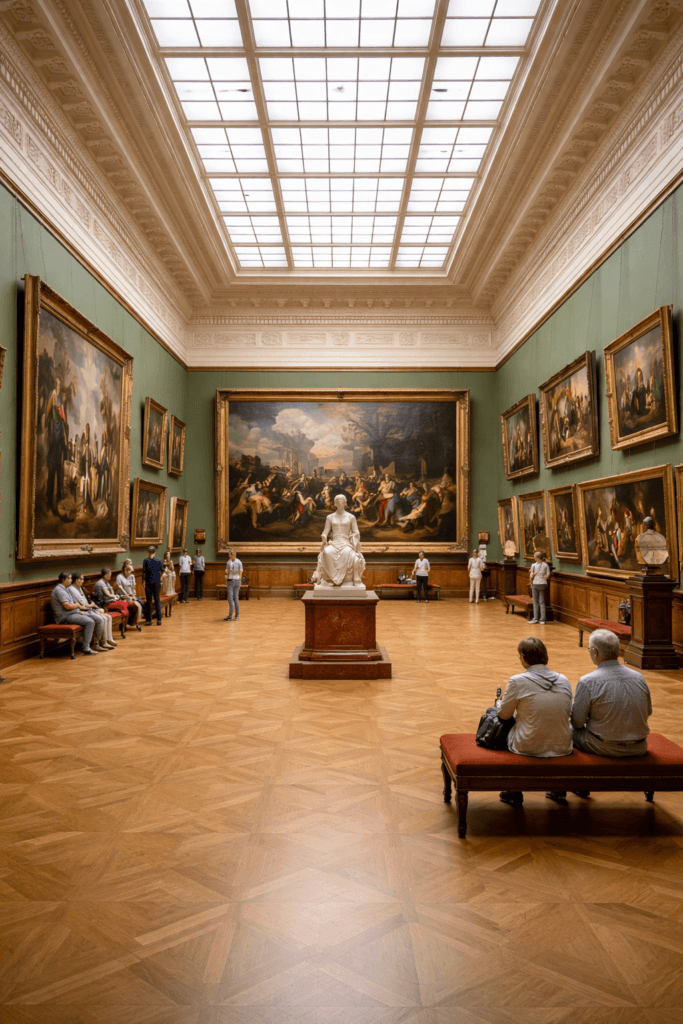
The first impression inside is one of density and richness. Walls are filled with paintings, often arranged in a traditional style that emphasizes continuity and comparison. The atmosphere is quieter and more formal than in many contemporary museums, encouraging focused observation.
Lighting and spatial arrangement are designed to highlight the artworks without distraction. The rooms vary in size, creating a rhythm that moves between more intimate spaces and larger galleries. This structure supports a gradual immersion into the collection, allowing visitors to engage with different periods and styles in sequence.
Highlights and Key Exhibitions
The Tretyakov Gallery’s collection is its defining strength, offering an unparalleled overview of Russian art. One of the most significant areas is the collection of icon paintings, which represents the religious and artistic traditions of early Russia. These works are not only visually striking but also culturally important, reflecting the spiritual foundations of Russian society.
Moving into later periods, the gallery’s nineteenth-century collection is particularly strong. Artists associated with the Peredvizhniki movement, or “Wanderers,” play a central role. Their works focus on realism, social issues, and national identity, capturing scenes of rural life, historical events, and everyday experiences. These paintings are essential for understanding how Russian art developed its own voice.
Portraiture is another key feature. Many of the works depict important figures from Russian history, as well as ordinary individuals, offering insight into different layers of society. The attention to detail and psychological depth in these portraits make them especially engaging.
The gallery also includes works from the early twentieth century, reflecting periods of artistic experimentation and change. While the focus remains on Russian art, the diversity within the collection demonstrates how artists responded to both internal developments and external influences.
What stands out overall is the coherence of the collection. Rather than presenting isolated masterpieces, the Tretyakov Gallery offers a continuous narrative that allows visitors to see connections between different periods and styles.
Visitor Experience
The visitor experience at the Tretyakov Gallery is shaped by its traditional layout and extensive collection. The structured progression of rooms provides a clear path, which can be helpful for visitors seeking to understand the historical development of Russian art.
Pacing can be challenging due to the density of the collection. With so many works on display, it is easy to become overwhelmed. Visitors may benefit from focusing on specific sections or taking breaks between galleries to maintain engagement.
Signage is generally informative, providing context for the artworks and helping visitors navigate the space. However, the emphasis remains on the objects themselves, with interpretation supporting rather than dominating the experience.
Crowds can be significant, particularly in the more well-known sections of the museum. This can affect the pace of the visit, but the number of rooms and the overall size of the gallery help distribute visitors to some extent.
The atmosphere is formal and contemplative. The museum encourages careful looking and reflection, rather than quick movement through the space. This makes it particularly suitable for visitors who appreciate a more traditional museum experience.
Tickets, Access, and Planning
Planning a visit to the Tretyakov Gallery requires some preparation, given the size and scope of the collection. Checking opening hours and ticket options in advance is recommended, as the museum can be busy.
The gallery’s central location makes it accessible by public transport and easy to include in a broader visit to Moscow. Once inside, navigation follows a logical progression, but visitors may still benefit from consulting a map to identify key areas of interest.
Time management is important. The museum is extensive, and a full visit can take several hours. Visitors with limited time should consider prioritizing specific sections, such as the icon collection or nineteenth-century paintings.
Facilities are integrated into the museum, supporting longer visits. Taking breaks between sections can help maintain focus and improve the overall experience.
Final Verdict
The Tretyakov Gallery is one of the most important museums for understanding Russian art and cultural history. Its comprehensive collection and clear narrative structure provide a deep and coherent view of artistic development over time.
Who should visit? The museum is ideal for visitors interested in art history, particularly those who want to explore Russian culture through its visual traditions. It is especially suited to those who appreciate a structured and traditional museum experience.
Why visit? Because the Tretyakov Gallery offers a unique opportunity to engage with a national artistic tradition in depth. Its collection, presentation, and historical significance make it an essential destination for anyone seeking to understand the cultural identity of Russia through art.