Tenement Museum Review
Immigration Museums · New York City, United States. The Tenement Museum in New York City stands as a poignant tribute to the immigrant experience that shaped much of the United States during the late 19th and early 20th centuries. Established on the…
Immigration Museums · New York City, United States. The Tenement Museum in New York City stands as a poignant tribute to the immigrant experience that shaped much of the United States during the late 19th and early 20th centuries. Established on the…
Best forMemory, history, reflective visits
Review focusHistorical context, interpretation, atmosphere
Historical Context
The Tenement Museum in New York City stands as a poignant tribute to the immigrant experience that shaped much of the United States during the late 19th and early 20th centuries. Established on the Lower East Side of Manhattan—a district historically known as the epicenter of immigrant settlement—the museum preserves and interprets the living conditions of working-class families who resided in tenement buildings that were often overcrowded and under-resourced. These structures housed waves of immigrants who arrived seeking economic opportunity and a better life, yet faced immense challenges including poverty, language barriers, and social marginalization. The Tenement Museum’s work is deeply rooted in social history, focusing on the personal stories of residents whose lives embody the broader narratives of immigration, adaptation, and community formation. This emphasis on storytelling highlights the complexities of American identity and the enduring legacy of migration, while provoking reflection on contemporary social issues linked to immigrant experiences.
What You See on Arrival
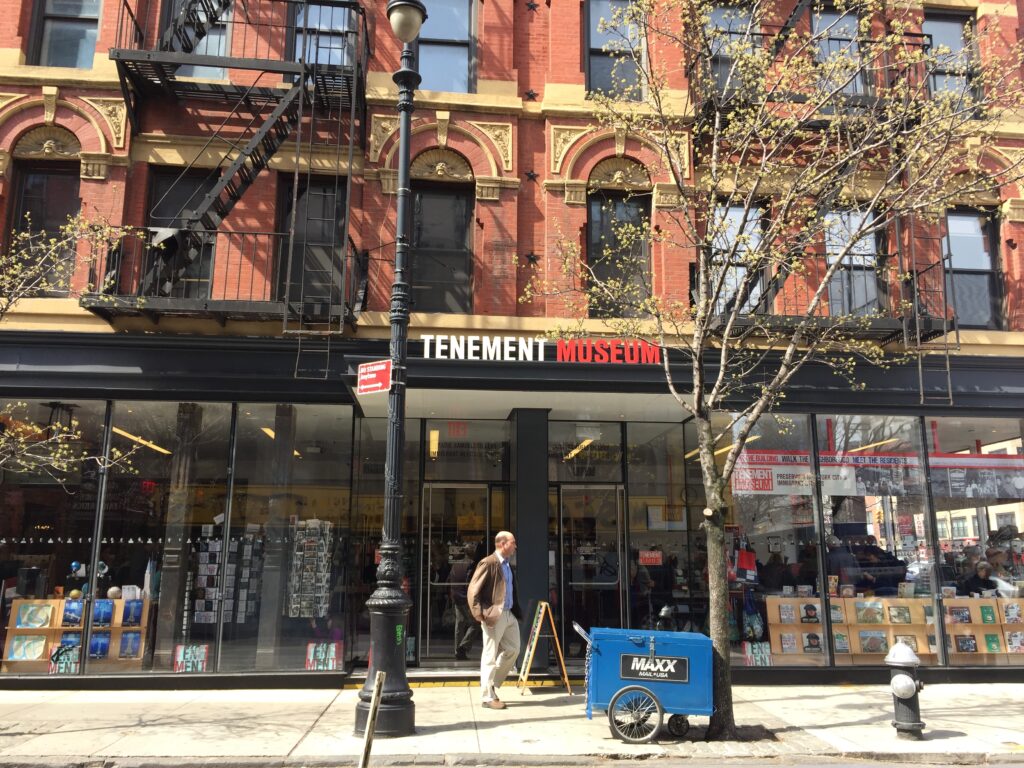
Upon approaching the Tenement Museum, visitors encounter a row of preserved brick buildings located at 97 and 103 Orchard Street, which maintain the unassuming, austere appearance typical of late 19th-century tenements. The facade itself serves as a visual marker of the neighborhood’s past, exhibiting the utilitarian architecture designed to house the city’s influx of working-class residents. The entrance is modest, reflecting the everyday life of the people who once lived there but the museum’s signage is clear and welcoming, inviting curiosity rather than spectacle. Inside, the museum’s layout contrasts between carefully restored apartments and interpretative spaces that balance historical authenticity with modern museological design. The intimate scale of the rooms, with low ceilings, narrow hallways, and cramped spaces, immediately conveys the sense of confinement and density that was a pervasive aspect of tenement living. The overall ambiance is one that respects the dignity of the former residents while inviting visitors to step back in time and experience a slice of history that is often overlooked in larger historical narratives.
Highlights and Key Exhibitions
The core of the Tenement Museum’s appeal lies in its immersive tours of restored apartments that belonged to specific families, each representing diverse ethnic and cultural backgrounds. These reconstructions are painstakingly detailed, using artifacts, photographs, and documents to recreate the atmosphere of different time periods, typically spanning from the 1860s to the 1930s. Among the most compelling are the German-Jewish, Italian, Irish, and Puerto Rican families whose stories highlight both common challenges and unique cultural contributions. The exhibits emphasize not just hardship but the resilience and resourcefulness of immigrant households—balancing tales of adversity with moments of community, celebration, and upward mobility.
The museum excels in its use of narrative-driven interpretation, often led by knowledgeable guides who engage visitors through storytelling and dialogue. This method transforms static displays into living histories, deepening visitor connection to the characters' lived experiences. Supplementary materials such as photographs depicting changing neighborhood streetscapes and contextual information about immigration policies enhance understanding of the broader social and political environment. While the museum does not have rotating exhibitions in the traditional sense, its focus on specific families and neighborhoods allows for rich thematic exploration of topics like labor, gender roles, housing reform, and cultural identity over time.
Visitor Experience
The Tenement Museum’s strengths include its highly personalized approach to history and the intimate scale of the tours, which foster a sense of empathy and engagement. The guided tours are typically small, helping maintain an atmosphere of respect and focused attention. The interpretative style is adept at encouraging visitors to reflect on the immigrant experience in a nuanced way, highlighting both struggles and accomplishments without romanticizing or sanitizing the past.
However, the necessity of guided tours may limit spontaneous exploration and some visitors seeking a self-directed or more visual museum experience might find the format less flexible. The tours require booking in advance, and while this ensures quality, it can also deter last-minute or casual visits. Additionally, as the museum deals with deeply emotional and sometimes difficult subject matter, it demands thoughtful engagement from its audience; those expecting purely celebratory or lighthearted cultural exhibits may need to recalibrate their expectations.
The museum’s staff are generally regarded as knowledgeable and passionate, contributing positively to the overall visitor experience. Efforts to include varied narratives of different ethnic groups reflect a commendable commitment to diversity and social justice, underscoring the museum’s role as a site of education and reflection, as well as preservation.
Tickets, Access, and Planning
Ticketing for the Tenement Museum requires advance purchase, primarily due to the guided nature of its tours and the effort to keep groups manageable. Prices are reasonable and there are often reduced rates for students, seniors, and children. Given the popularity of the museum, especially during peak tourist seasons and holidays, early planning is advised to secure preferred tour times and avoid disappointment. Online booking is straightforward and provides clear information about available tours and times.
Accessibility is acknowledged as an area of challenge due to the historic nature of the tenement buildings, which feature narrow staircases and cramped rooms. While the museum has made efforts to provide alternative formats and some accessible programming, physical access may be limited for visitors with mobility impairments. Potential visitors with special needs should inquire ahead to plan accordingly and explore any available accommodations. The museum’s Lower East Side location is well served by public transportation, including subway lines and bus routes, making it convenient for visitors traveling within New York City.
Additional logistical considerations include a modest gift shop that offers books, historical reproductions, and educational materials, enriching the visitor experience without overwhelming it. While the onsite amenities are limited compared to larger institutions, nearby neighborhood cafés and restaurants can supplement the day’s itinerary.
Final Verdict
The Tenement Museum offers an invaluable window into a foundational era of American urban history, providing a platform for underrepresented voices and personal stories that resonate across generations. Its strength lies in the authentic preservation of its physical space matched with carefully researched narratives that animate the lives of immigrants who lived within its walls. The museum’s emotionally powerful storytelling and commitment to contextually rich interpretation make it a unique and essential museum destination, particularly for those interested in social history, immigration, and urban studies.
While its guided-tour-only format and some access limitations may pose challenges for certain visitors, these factors also contribute to the museum’s focused and respectful atmosphere. The Tenement Museum’s ability to confront difficult histories while celebrating human resilience places it among the most compelling cultural institutions in New York City. It serves not only as an educational resource but as a catalyst for conversations about identity, belonging, and social justice that remain urgent in contemporary discourse. For travelers and local audiences alike, the museum offers a deeply enriching experience that connects historical realities with ongoing societal themes.