Tasmanian Museum and Art Gallery Review
Art Museums · Hobart, Australia. The Tasmanian Museum and Art Gallery (TMAG) holds a distinct position in Australia’s cultural and historical landscape, being one of the oldest museums in the country, with its origins dating back to the early…
Art Museums · Hobart, Australia. The Tasmanian Museum and Art Gallery (TMAG) holds a distinct position in Australia’s cultural and historical landscape, being one of the oldest museums in the country, with its origins dating back to the early…
Best forArt lovers, visual culture, architecture
Review focusCollections, curatorial focus, and visitor planning
Historical Context
The Tasmanian Museum and Art Gallery (TMAG) holds a distinct position in Australia’s cultural and historical landscape, being one of the oldest museums in the country, with its origins dating back to the early 19th century. Founded in 1843, it developed from the establishment of a collection of natural history specimens and cultural artifacts during Tasmania’s colonial period. This genesis places the museum within a complex historical backdrop: Tasmania itself carries the deep legacy of Aboriginal culture, European colonization, convict history, and natural sciences. TMAG's evolution reflects the changing interests and perspectives in museology and regional identity over nearly two centuries.
The museum was initially located in different sites before settling into its current premises in Hobart, the island state’s capital. The building’s architecture, while diversified by extensions and modern refurbishments, retains a connection to its historical foundation. Over time, TMAG expanded its scope beyond natural history to include art and applied arts, representing Tasmania’s local artists alongside broader Australian and international works. The museum, beyond a repository of objects, functions as a custodian of Tasmanian heritage, aiming to articulate a narrative that balances Indigenous and colonial histories, scientific inquiry, and creative arts.
What You See on Arrival
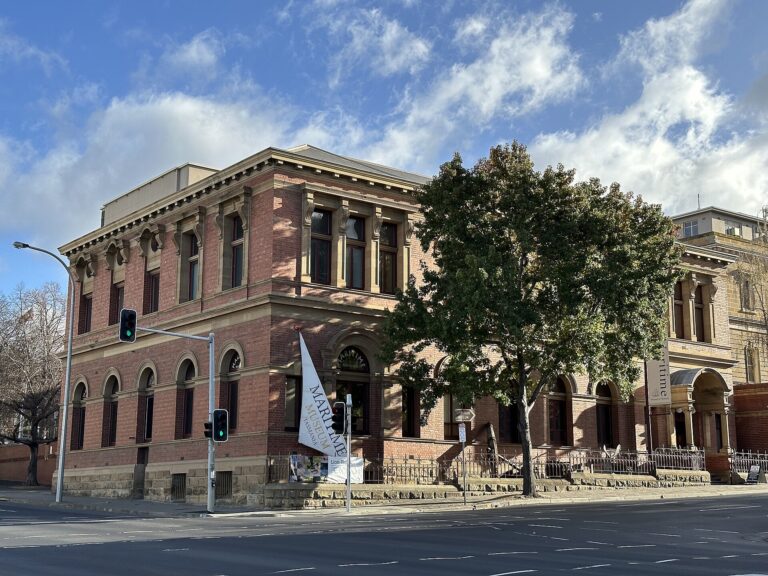
Presented within a Victorian-era stone building complemented by contemporary additions, TMAG’s façade offers an initial impression that is both historically resonant and invitingly institutional. Situated in central Hobart, adjacent to key government and cultural precincts, it situates itself as an accessible cultural landmark for visitors and locals alike. The external architecture, with its blend of sandstone walls and large windows, suggests a traditional museum environment, reinforcing a quiet gravitas that one might expect from a long-established state museum.
Upon approach, visitors likely gather a sense of the museum’s dual focus: art on one side and natural history and cultural heritage on the other. Signage and wayfinding tend to emphasize accessibility to different collection domains, marking out the museum’s multifaceted nature. The entrance and lobby areas generally prepare visitors to navigate between exhibitions that cover everything from Tasmanian Indigenous history through colonial artifacts to contemporary art pieces, ensuring the visitor knows the breadth of stories housed within.
Highlights and Key Exhibitions
TMAG’s collection is notable for its depth in both natural history and human history, with specific strength in narratives that pertain directly to Tasmania and its diverse heritage. The natural history sections hold significant collections of flora and fauna, with a particular focus on Tasmanian species, some of which are unique to the island. Exhibits often highlight the ecological diversity of Tasmania and include the Tasmanian Tiger (thylacine), an extinct species that has become one of the museum’s emblematic subjects. These natural history displays serve scientific, educational, and conservationist functions, underlining the museum’s role in documenting Tasmania’s environmental story.
Equally important are the Aboriginal collections, which represent the cultural and spiritual life of Tasmania’s Indigenous peoples. These include artifacts, tools, and artworks that reflect Tasmanian Aboriginal culture and history. TMAG has made efforts to engage with Indigenous custodians in curating these collections, striving toward respectful representation and ongoing dialogue. The Indigenous exhibits are crucial for understanding Tasmania’s original inhabitants and the profound impacts of colonization.
The colonial and convict history of Tasmania is a contrasting theme that permeates many galleries. Artefacts, documents, and installations recount the island’s era as a British penal colony and later as a colonial society. This segment of the museum contextualizes Tasmania’s role within the broader imperial enterprise, exploring themes of settlement, displacement, and penal discipline. Material culture from this period offers insight into the daily lives of convicts and settlers, emphasizing social, economic, and political transformations.
On the artistic front, TMAG features a range of artworks spanning from colonial-era painting and decorative arts to contemporary works by Tasmanian and Australian artists. The art collection includes portraits, landscapes, and pieces that engage with Tasmania’s unique environment and history. The display of Indigenous artists alongside settler and non-Indigenous artists provides a dialogue within the art galleries, encouraging visitors to consider multiple perspectives on identity and place.
The museum also curates applied arts and design objects, including decorative arts that relate to Tasmanian craft traditions and material culture. For those interested in the intersection of art and everyday life, these exhibits demonstrate the island’s cultural evolution beyond purely fine art narratives.
Visitor Experience
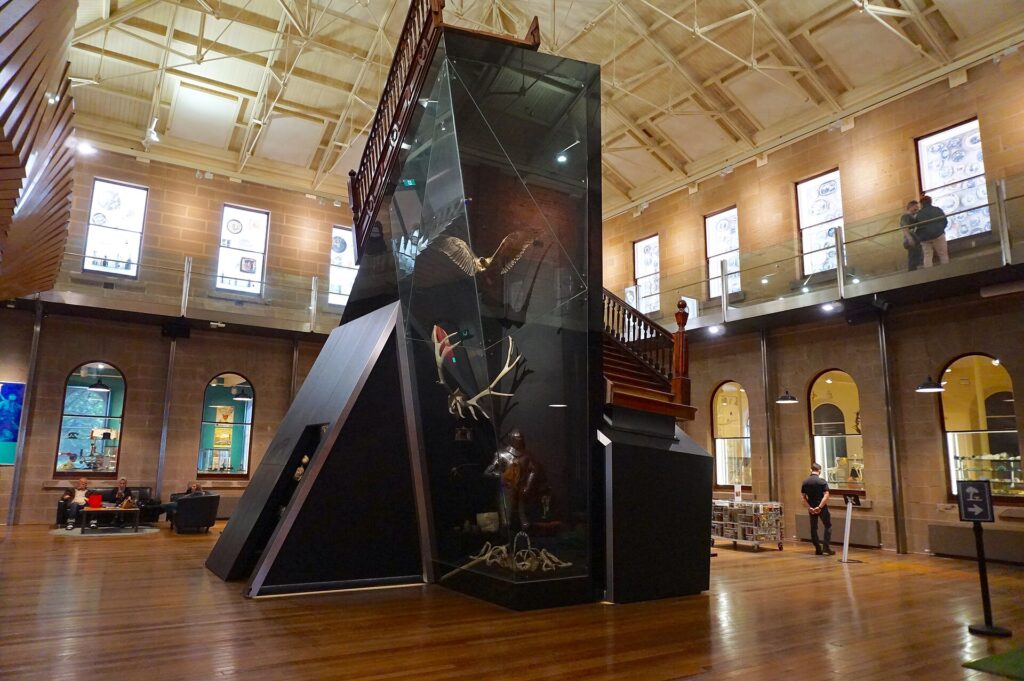
The Tasmanian Museum and Art Gallery is constructed in a way that encourages a measured, contemplative visit rather than a rapid walkthrough. The museum’s layout, combining a series of interconnected galleries, works largely to filter visitors through thematic zones, allowing time for interpretation and reflection. For visitors with a specific interest in natural history or Tasmanian colonial history, the museum fulfills an educational role, presenting material in a detailed and research-grounded manner.
Interpretation throughout the museum tends to balance textual descriptions and visual displays, providing clear, concise explanations alongside carefully selected objects. Labeling is generally informative, though visitors seeking in-depth scholarly context might find the information introductory rather than exhaustive. For casual visitors, this level of detail usually suffices to grasp the significance of the objects and their histories, but more specialized visitors might wish to supplement their experience with additional research or guided resources.
The museum’s approach to Aboriginal collections demonstrates sensitivity to cultural issues, though the layout and integration of Indigenous displays can sometimes feel segmented compared to the narrative flow in other galleries. This is a challenge faced by many institutions attempting to honor Indigenous perspectives within colonial museum frameworks, and it remains an area where ongoing development is visible.
TMAG suits a broad audience, including families, students, researchers, and tourists with an interest in Tasmania’s unique heritage. Visitors should be prepared for a multifaceted experience where art, history, and science intertwine. The museum’s atmosphere encourages quiet engagement over the social bustle seen in larger city institutions.
Tickets, Access, and Planning
Practical information about tickets, opening hours, discounts, or special access may vary. Prospective visitors should consult the official Tasmanian Museum and Art Gallery website for the latest details. The museum’s central location in Hobart makes it straightforward to reach using public transport or by foot from the city center. However, parking and access arrangements may warrant prior checking depending on the visitor’s mode of travel.
In terms of internal navigation, TMAG offers reasonably clear signage and pathways but may demand moderate stamina due to the building’s multiple floors and various gallery spaces. The museum does not operate as a large-scale institution with extensive visitor facilities commonly found in metropolitan contexts, so visitors should plan accordingly. Those with specific accessibility needs should verify arrangements through the museum’s official channels.
Final Verdict
The Tasmanian Museum and Art Gallery performs a vital role in preserving and presenting Tasmania’s cultural and natural heritage. Its collections are comprehensive in their coverage of local natural history, Aboriginal heritage, colonial history, and visual arts, making it a substantive institution for those seeking to understand Tasmania’s identity in depth. The museum’s enduring presence and evolution reflect an ongoing commitment to balancing multiple histories and cultural expressions within Tasmania’s unique context.
While not a large or heavily commercial museum, TMAG delivers a thoughtful and well-curated experience suited to visitors with an interest in history, environment, and art. It may not offer sweeping exhibitions of global scale but provides solid material for those engaged with regional stories. Its limitations are largely those common to older museums adapting to contemporary museological standards, including spatial constraints and the complex task of representing Indigenous histories within traditional frameworks.
Ultimately, TMAG is best approached with clear interests in Tasmania’s specific cultural and environmental narratives. Its collections reward focused engagement, and its historic foundations give visitors a sense of place and time that few other institutions in Australia can replicate as effectively. For anyone exploring Hobart or the island state more generally, the museum offers a grounded, instructive experience that situates Tasmania in its multifaceted historical and artistic dimensions.