Saint Louis Art Museum Review
Art Museums · St. Louis, United States. The Saint Louis Art Museum (SLAM) traces its origins to the 1904 Louisiana Purchase Exposition, commonly known as the St. Louis World’s Fair. Originally established to house the fair’s extensive art collection, the museum…
Art Museums · St. Louis, United States. The Saint Louis Art Museum (SLAM) traces its origins to the 1904 Louisiana Purchase Exposition, commonly known as the St. Louis World’s Fair. Originally established to house the fair’s extensive art collection, the museum…
Best forArt lovers, visual culture, architecture
Review focusCollections, curatorial focus, and visitor planning
Historical Context
The Saint Louis Art Museum (SLAM) traces its origins to the 1904 Louisiana Purchase Exposition, commonly known as the St. Louis World’s Fair. Originally established to house the fair’s extensive art collection, the museum evolved over the 20th century into a major regional institution dedicated to presenting an extensive range of visual arts. The current building, located in Forest Park, was designed by the notable architect Cass Gilbert and opened to the public in 1909 as the Palace of Fine Arts. Over the years, the museum has expanded physically and curatorially, adapting to changes in collecting trends and audience expectations.
SLAM’s collection spans thousands of years and multiple continents, reflecting a commitment to diversity in art historical perspectives long before such inclusivity became standard in American museum practice. This breadth owes much to benefactors and acquisitions during the 20th century, alongside partnerships with local and international institutions. The museum's role in St. Louis’ cultural landscape is significant, serving as a historic repository for classical and contemporary art and hosting educational programs that aim to engage the community. As a civic institution, it balances scholarly responsibility with public accessibility.
What You See on Arrival
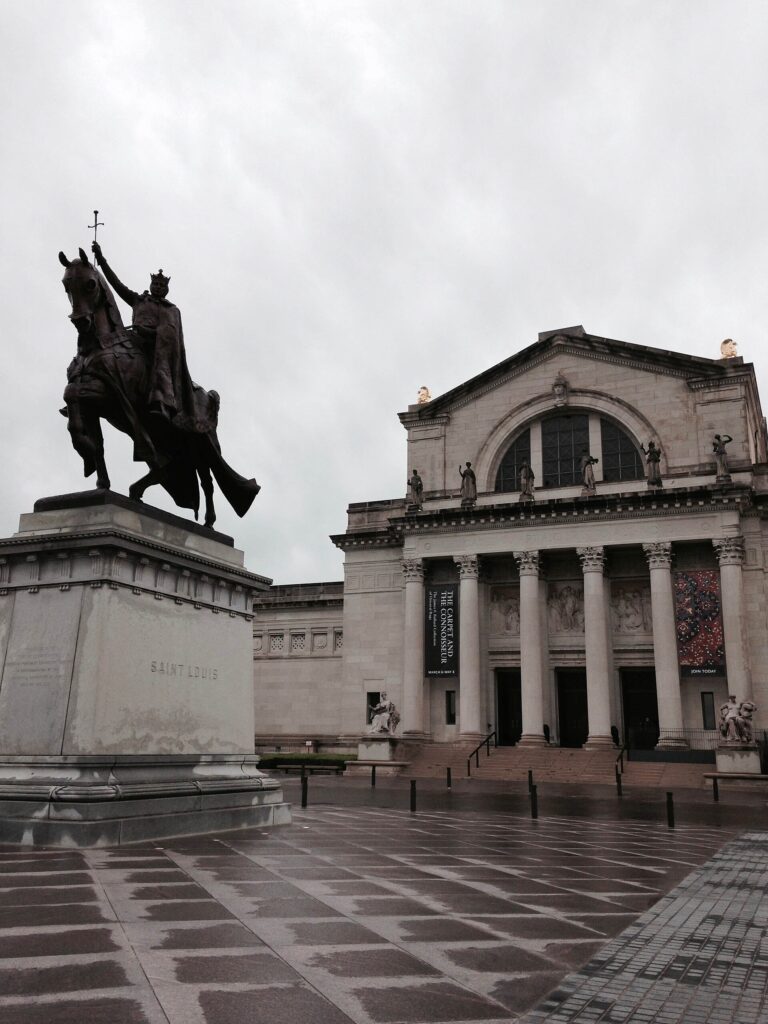
Approaching the museum in Forest Park, visitors encounter a striking neoclassical façade that signals the institution’s early 20th-century origins. The building’s symmetrical design, with imposing columns and grand steps, sets a formal tone that connects to its legacy from the 1904 Exposition. This architectural framing suggests the museum as a temple of art, intended to elevate cultural experience through its presence alone.
Inside, the initial galleries open up a transition from the grandeur of the exterior to a more intimate encounter with artworks. The spatial layout generally favors broad, well-lit rooms, many with natural light from skylights, creating a calming atmosphere for viewing. The entry experience frames SLAM as a museum where historical and global art traditions meet on even terms. The museum’s signage and wayfinding aim for clarity but reflect the challenges of an institution with a diverse, chronology-spanning collection; navigation can demand some effort, especially for those new to the site.
Highlights and Key Exhibitions
The Saint Louis Art Museum’s collecting strategy is broad yet coherent, with certain areas standing out for their depth and quality. The Ancient Art collection provides visitors with artifacts from Egypt, Greece, Rome, and the Near East. Significant pieces such as Greek pottery, Roman sculpture, and Egyptian funerary objects underscore the museum’s capacity to trace art’s early development beyond Western traditions, giving context to later artistic evolutions. While the ancient holdings are important, they are not on the scale of some East Coast or European institutions but suffice for a meaningful overview.
One of the museum’s strongest suits is its collection of Asian art, which encompasses Chinese ceramics, Japanese prints, Korean paintings, and South Asian sculptures. The Asian galleries allow visitors to explore artistic practices spanning several millennia, highlighting cross-cultural influences and craftsmanship. Notable in this section are Buddhist sculptures and Chinese porcelain, which form a substantial and well-presented assemblage that benefits from careful curatorial attention.
European art in SLAM covers a wide temporal range, with respectable holdings from the Middle Ages to the early 20th century. Paintings from the Renaissance and Baroque periods, including works by notable masters, are paired with prints and decorative arts, providing a layered understanding of European traditions. The 19th and early 20th-century collections include French Impressionists and modernists, although some pieces may be overshadowed by larger institutions elsewhere in the U.S. Still, these galleries serve as a valuable introduction to art movements that shaped the Western canon.
Perhaps most distinctive is the museum’s commitment to American art, which constitutes a significant part of the permanent collection. The museum holds a variety of landscapes, portraiture, and still lifes that trace American artistic development from the colonial period through the 20th century. This section includes notable modernist and regionalist works, reflecting the museum’s role in documenting both national and local visual culture. The American art galleries highlight issues related to identity, history, and place in a manner accessible to diverse audiences.
The museum also maintains strong collections in decorative arts and contemporary art. Decorative arts cover a wide array of objects—furniture, ceramics, glassware, textiles—often elucidating social histories alongside aesthetic considerations. The contemporary art collection, while smaller compared to older holdings, indicates SLAM’s interest in current artistic practices, emphasizing regional artists linked to St. Louis alongside national trends. This portion of the collection is more experimental and provides a contrast to the museum’s historic works.
Visitor Experience
The Saint Louis Art Museum caters to a broad constituency, from school groups and families to scholars and art enthusiasts. While the museum’s layout attempts to accommodate various visitor styles, the breadth of the collection can pose challenges for first-time visitors who may find it difficult to locate specific artworks or thematic areas without prior planning.
Interpretive materials, including wall texts, labels, and gallery guides, lean towards clarity and accessibility. Most texts succinctly explain an artwork’s context, medium, and significance without excess jargon. Still, those seeking in-depth analysis will need to supplement with catalogues or external sources, as the museum favors concise rather than encyclopedic interpretation.
The museum’s physical flow moves from ancient to contemporary, geographical to thematic, allowing for both chronological and thematic exploration. This can support a diversified visit, but the large scale may also cause fatigue, particularly without breaks in designated resting areas. Visitor amenities inside the museum are typical of institutions of its size but should be confirmed on official channels regarding their availability and current status.
SLAM’s audience is likely to appreciate the variety of artistic traditions placed in dialogue, though the range can dilute focus for visitors seeking deep expertise in a particular field. The museum’s educational programming and public events help bridge this gap by offering targeted engagement, though these offerings fluctuate and are best checked through official communication.
Tickets, Access, and Planning
The Saint Louis Art Museum operates as a public institution with varying policies regarding admission, access, and ancillary services. Potential visitors should consult the museum’s official website before planning a visit to confirm current opening hours, admission fees or free-entry days, and any requirements for advance bookings. Similarly, information about accessibility accommodations, guided tours, audio guides, and visitor services should be verified closer to the intended visit date.
Given the museum’s location in a major urban park, access by public transportation or car is possible but may involve logistical considerations regarding parking and transit schedules. Observers should take note that amenities such as cafés or shop locations within the museum can change and are best verified in advance to avoid inconvenience on the day of the visit.
Planning a visit with attention to one’s specific interests—whether in Asian art, American painting, or contemporary works—can enhance the museum experience. The museum’s size and scope mean that attempting to cover all areas thoroughly in a single visit may be overwhelming. Selective focus, supported by pre-visit research, is advisable.
Final Verdict
The Saint Louis Art Museum stands as a significant cultural institution within the Midwest, presenting a large and varied collection that bridges historical periods and geographies. It serves a broad public by combining classical art objects with modern and contemporary artworks, providing a rounded experience of the visual arts. The museum’s strengths lie in its diverse holdings, particularly in Asian and American art, and its accessible interpretive approach.
However, the institution’s breadth may present a challenge in terms of focus and navigation, especially for new visitors unfamiliar with its layout or collections. While some areas might not rival specialist museums elsewhere in depth or scale, the overall collection reflects thoughtful curation and balanced representation. Practical details related to admission and access are fluid and should be confirmed to accommodate individual requirements.
For those interested in an art museum experience that encompasses a wide spectrum of artistic traditions without overwhelming specialization, SLAM offers a solid and worthwhile option. It has established itself as a resource for cultural education and visual art appreciation in St. Louis, with something to offer a range of visitor interests and backgrounds. Careful planning will help maximize the visit’s potential and mitigate the inherent challenges posed by such an extensive collection.