National Blues Museum Review
St. Louis, United States. The National Blues Museum in St. Louis, Missouri, occupies a distinctive place in the landscape of American music history institutions. Founded in 2016, it addresses the blues—a deeply influential and formative genre of American…
St. Louis, United States. The National Blues Museum in St. Louis, Missouri, occupies a distinctive place in the landscape of American music history institutions. Founded in 2016, it addresses the blues—a deeply influential and formative genre of American…
Best forMuseum lovers, culture travelers, first-time visitors
Review focusCollections, visitor experience, and practical planning
Historical Context
The National Blues Museum in St. Louis, Missouri, occupies a distinctive place in the landscape of American music history institutions. Founded in 2016, it addresses the blues—a deeply influential and formative genre of American music that laid the groundwork for numerous other styles, including rock, jazz, and soul. Blues music traces its roots back to African American communities in the Deep South during the late 19th and early 20th centuries, evolving from spirituals, work songs, field hollers, and folk traditions.
St. Louis, while not the genre’s birthplace, holds considerable historical significance as a hub in the blues’ geographic and cultural spread. It served as an important urban stop for blues musicians traveling north during the Great Migration and fostered its own local styles and artists. The museum seeks to capture these connections, giving visitors insight into the blues' evolution, cultural underpinnings, and ongoing influence in American music and society.
The institutional context also matters. Established in the 21st century, the National Blues Museum entered a crowded field of music museums but has attempted to distinguish itself by combining traditional museum techniques with interactive elements. It aims to explicate both the musical structures of the blues and its intangible social and emotional narratives, accommodating a broad audience from scholars to casual music fans.
What You See on Arrival
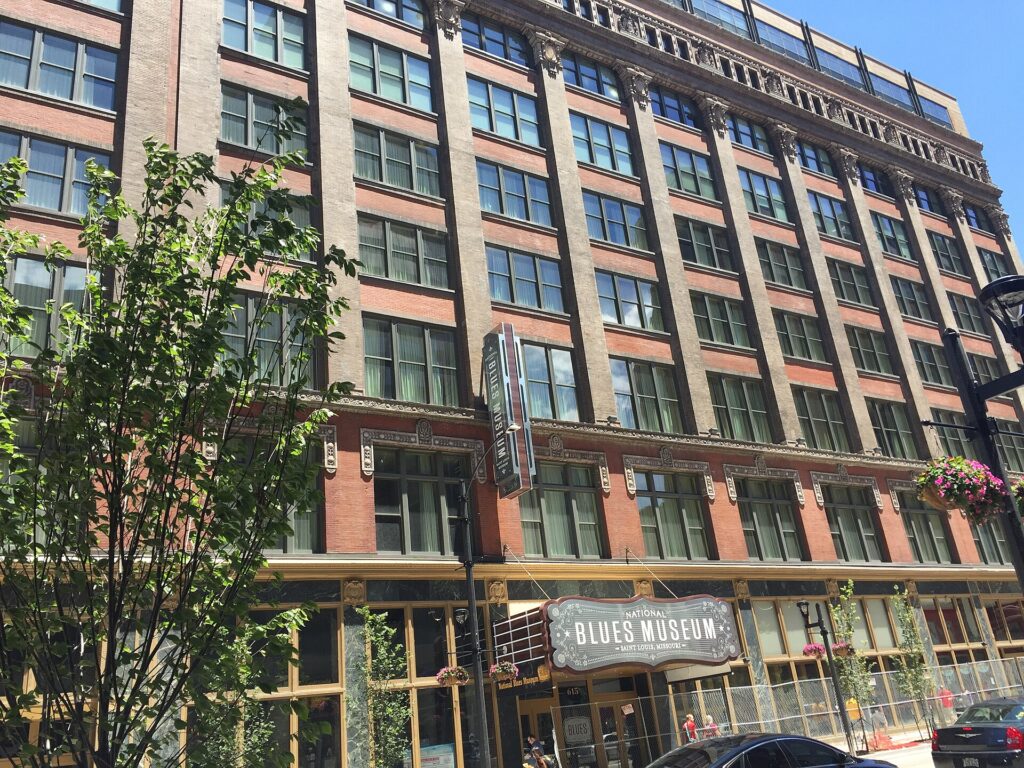
Approaching the National Blues Museum, visitors encounter a modern, purpose-built facility located in downtown St. Louis. The building's design and frontage are unassuming yet contemporary, steering clear of overly ornate or theatrical presentations. The entrance conveys a clear institutional identity focused on musical history without resorting to kitsch or nostalgic clichés often associated with genre-themed museums.
Inside, the initial spaces prepare visitors for the museum’s narrative arc. The entrance area typically offers contextual framing around the blues: its origins, cultural relevance, and significance as an American art form. Graphic panels and introductory displays aim to set the visitor’s expectations, outlining the scope and scale of the collection and key interpretive themes. This initial encounter underscores the museum’s emphasis on storytelling—linking the musical tradition to historical circumstances, life experiences, and technological developments.
Large-scale photographs of notable blues figures, alongside archival materials and quotes, serve to establish a human connection with the genre’s pioneers early on. This framing work helps anchor visitors’ understanding before they move into the more specialized galleries that methodically unfold the blues’ narrative.
Highlights and Key Exhibitions
The heart of the National Blues Museum lies in its permanent exhibitions, which trace the genre’s historical development alongside personal stories, instruments, recordings, and multimedia installations. The collection is not vast in terms of volume, but it is curated with attention to balance and breadth.
One of the museum’s central interpretive threads is the exploration of the blues’ origins in the Mississippi Delta and other Southern regions. Exhibits often feature cultural artifacts such as early guitar models, handcrafted bottlenecks, and personal effects belonging to influential artists. Through these objects, visitors gain insight into both the musical techniques and everyday realities faced by blues musicians, including issues of racial segregation, economic hardship, and migration.
Technological evolution is a clear focus; displays cover how the advent of recording technology and radio broadcasting facilitated the blues’ national reach. Historic recordings and interactive listening stations allow visitors to hear the stylistic transitions over decades, highlighting figures like Robert Johnson, Bessie Smith, Muddy Waters, and Howlin’ Wolf. This not only reinforces the museum’s educational mission but also provides engagement through sound—an essential element given the genre’s auditory character.
Another significant component is the attention given to the blues’ influence on later music movements. Exhibits contextualize how blues elements surfaced in rock ’n’ roll, soul, and contemporary genres, sometimes spotlighting specific artist trajectories. This helps visitors appreciate the genre’s continuing relevance beyond its early years and the ways it permeated American and global culture.
Biographical displays are given considerable space, presenting detailed accounts of key artists’ lives. These include personal history narratives, photographs, and memorabilia, providing a nuanced human dimension that prevents the music from being abstracted purely as sound. Themes of struggle, resilience, and creativity recur throughout these stories.
The museum also incorporates multimedia features such as film clips, oral histories, and video interviews with musicians and scholars. These elements enhance the visitor’s understanding by offering diverse perspectives and first-hand accounts, although the scope of these installations is calibrated to complement, not overwhelm, the physical artifact displays.
Visitor Experience
The National Blues Museum aims to be accessible to a diverse audience, including music enthusiasts, academics, tourists, and locals. Its layout encourages a relatively linear progression, guiding visitors through the historical flow of the blues while allowing moments for reflection and deeper engagement with specific topics.
Interpretive texts are generally clear and well-edited, balancing historical facts with narrative storytelling. This tone will likely suit visitors who appreciate context but are not specialists. The museum avoids excessive jargon, which makes the information approachable, though those seeking thorough academic detail might find it somewhat introductory.
The integration of sound and video is an especially strong aspect of the museum’s interpretive design. Listening stations give direct access to blues recordings, which helps to maintain attention and complement textual information. Given the centrality of listening to understanding the blues, this feature is appropriately emphasized.
The museum is family-friendly, with some interactive components geared towards younger visitors or those less familiar with the music genre. While this broad appeal is a strength, it may mean that individuals looking for in-depth archival research resources or highly specialized exhibits might consider supplementing their visit with other institutions or online scholarship.
Visitor flow is generally well-managed in available reports, with the scale suitable for moderate crowd sizes. The museum is neither sprawling nor crowded, which helps keep the experience from feeling overwhelming or rushed. However, peak times could see some bottlenecks at popular listening stations or film areas.
Tickets, Access, and Planning
Information on ticketing and hours should be double-checked on the museum’s official website before planning a visit. Details such as current operating hours, admission fees, concession policies, available discounts, and access services can vary seasonally or due to special circumstances.
Similarly, facilities such as parking, public transportation options, accessibility features, guided tours, and audio guides are best confirmed directly with the museum. While the National Blues Museum is situated in a downtown area that is generally accessible by public transit, visitors should verify transit connections and parking availability, especially if traveling from outside St. Louis.
For visitors with mobility considerations or other special needs, official sources will provide the most reliable information on accommodations and any potential limitations. Likewise, any specific programming or event schedules will be indicated on the museum’s own communication channels.
Final Verdict
The National Blues Museum in St. Louis aims to articulate the history and culture of the blues through a focused, well-curated presentation. It offers visitors a thoughtfully arranged survey of the genre’s origins, key figures, stylistic developments, and cultural significance without venturing into over-explanation or spectacle. The strength of the museum lies in its balance of cultural narrative and musical exploration, presenting the blues as both art form and lived experience.
The institution’s modest scale and clear organization make it suitable for a wide range of visitors, from curious novices interested in American music history to fans eager to deepen their understanding of blues roots and influences. Its use of sound and multimedia brings essential auditory dimensions to the experience, though the museum remains primarily artifact- and narrative-based rather than heavily interactive.
There are limitations. Those seeking extensive archival research materials or comprehensive academic analysis may find the offerings somewhat introductory. Temporary exhibitions are not a prominent feature, so repeat visits may depend on special programming or personal interest in revisiting core content.
For anyone planning a visit, consulting the official National Blues Museum website is recommended to confirm practical details. Overall, the museum offers a solid, clear overview of an important American musical tradition, grounded in its historical and cultural realities rather than mythologizing or over-commercializing its subject. As a specialized institution devoted to the blues, it succeeds in telling a story that remains vital to the American cultural tapestry.