Red Star Line Museum Review
Intro The Red Star Line Museum in Antwerp is one of the most effective migration museums in Europe because it understands that movement is not only a.
Intro The Red Star Line Museum in Antwerp is one of the most effective migration museums in Europe because it understands that movement is not only a.
Best forMaritime history, ships, harbour heritage
Review focusCollection, setting, visitor experience
Intro
The Red Star Line Museum in Antwerp is one of the most effective migration museums in Europe because it understands that movement is not only a matter of ships and destinations. It is also a matter of paperwork, waiting, inspection, uncertainty, and memory. Built around the history of the Red Star Line shipping company and housed in former company buildings, the museum tells the story of transatlantic migration from Antwerp in a way that is grounded in place and disciplined in method. It does not reduce migration to either heroic uplift or anonymous statistics. Instead, it presents departure as a structured human process.
This review considers how the museum uses site, narrative, and historical evidence to interpret one of the major migratory movements of modern Europe, and why it stands out among museums dealing with transport, port history, and migration memory.
How the Site Works
The museum is organized as a journey through stages of migration. Visitors encounter the administrative, medical, and logistical procedures that emigrants faced before departure, followed by material that places those procedures within broader social and transatlantic history. This narrative structure is one of the museum’s great advantages. It helps the visitor understand that migration was not a single act of embarkation but a sequence of checks, choices, delays, and institutional encounters.
Interpretation is delivered through documents, objects, testimony, visual material, and architectural space. The museum generally handles these layers well. Individual biographies make the story legible, but they do not completely displace the larger systems of transport and control. Likewise, the company history is present but not allowed to dominate the experience. The Red Star Line matters here because it provided the infrastructure, not because the museum is celebrating corporate identity.
Circulation through the galleries supports this approach. The visitor moves forward through procedures and stories rather than wandering through a neutral thematic survey. That sense of progression is especially effective in a museum about departure, because the physical act of moving through the building echoes the historical movement being described.
Exhibitions and Collection
The museum’s collection is not centered on a single monumental object. Its strength lies in the accumulated power of documents, letters, tickets, luggage, photographs, company records, and personal testimonies. These are exactly the right materials for the subject, because migration is often recorded in paper traces and ordinary possessions rather than in grand artifacts. When well interpreted, such objects can be more revealing than larger and more dramatic displays.
Personal narratives are used effectively to show different social backgrounds, motives for departure, and trajectories after arrival. This prevents the museum from flattening emigrants into a single category. Some left for economic reasons, some for political or social ones, and many faced unpredictable futures. The museum also emphasizes the institutional nature of migration: health inspections, identity controls, waiting rooms, shipping schedules, and regulation. These practical realities keep the interpretation historically grounded.
The shipping-company dimension is handled with reasonable balance. The museum provides enough information about routes, logistics, and commercial structures to explain how migration functioned at scale, but it does not turn the visit into a narrow industrial history. The best galleries are those where company infrastructure and individual vulnerability meet. In those spaces the museum shows how mobility depended on systems that were efficient, commercial, and often impersonal.
Architecture / Space
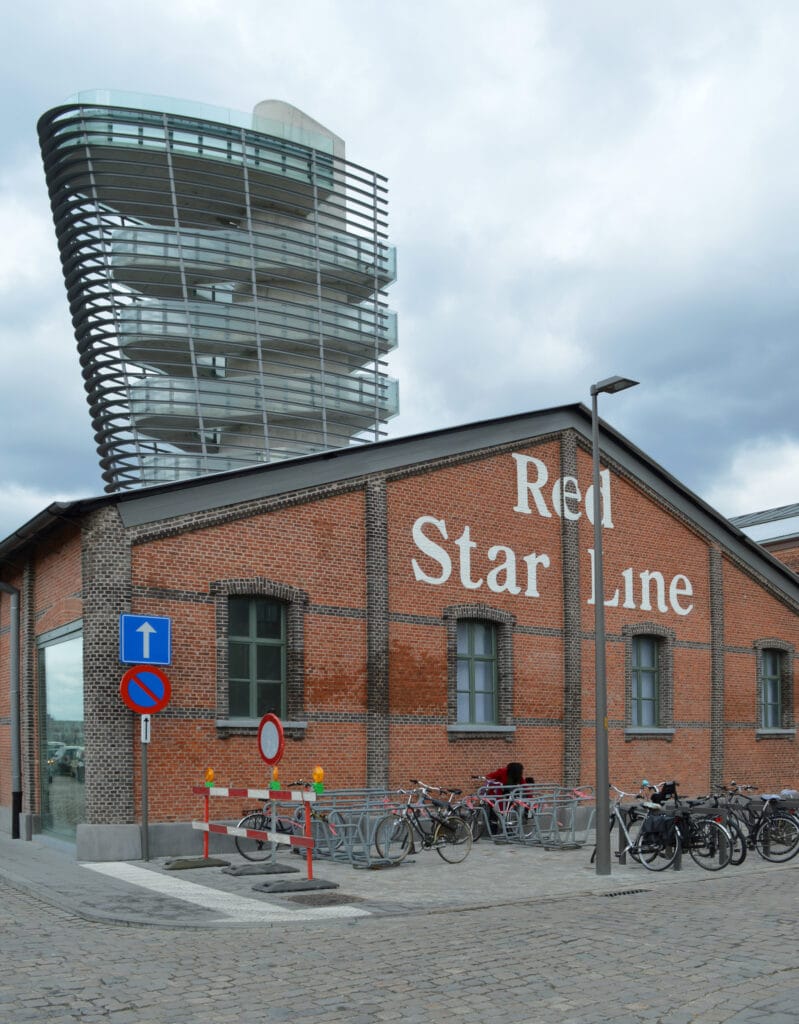
The architecture is fundamental to the museum’s success. Housed in restored Red Star Line buildings in Antwerp’s old port area, the museum benefits from occupying an actual migration site rather than a generic exhibition shell. This historical authenticity is not decorative. It shapes the entire visit. Brick industrial spaces, circulation routes, and preserved structural elements make it easier to imagine that the procedures described in the galleries once happened here in real time.
The museum uses the building intelligently. Spatial transitions support the narrative of departure, and the industrial character of the site reinforces the procedural nature of migration. This was not a romantic threshold. It was a managed, inspected, and organized process. The building communicates that fact more powerfully than text alone could do.
The surrounding district of Antwerp also adds interpretive value. Port cities are cities of movement, exchange, labor, and absence, and the museum remains visibly linked to that environment. Visitors leaving the museum are not cut off from the wider historical setting. The city itself continues the story.
Visitor Experience
The visitor experience is carefully controlled in the best sense. The museum wants you to understand migration as a series of human decisions constrained by institutions, and nearly every design choice serves that aim. The tone is serious, but it is not cold. Biographical stories provide emotional access while the documentary material preserves historical precision.
One of the museum’s strengths is that it can reach multiple audiences without diluting the subject. Visitors interested in family migration stories, social history, Jewish history, port history, or Atlantic mobility will all find useful points of entry. General visitors can follow the narrative without specialized background. More experienced readers will appreciate the way the museum keeps personal testimony anchored to administrative and commercial structures.
The pacing of the visit is good. There is enough variety in media and object type to maintain attention, but not so much that the museum becomes fragmented. Because the subject is inherently human, the museum rarely feels static. Even when the objects themselves are modest, the stories attached to them carry interpretive force.
Historical Context
The Red Star Line operated during an era when mass migration from Europe to North America reshaped families, cities, labor markets, and national identities. Antwerp functioned as one of the principal departure ports in that process, linking inland Europe to the Atlantic world. The museum explains this context effectively by showing how a local departure point was embedded in a much larger system of movement.
It also does something more valuable: it places migration within the history of control. Emigrants were not simply travelers. They were processed, inspected, classified, and documented. This administrative dimension is central to modern migration history, and the museum does well to keep it visible. It helps visitors see migration not only as a personal aspiration but also as an encounter with institutions, health regimes, state borders, and transport companies.
The museum’s subject is historical, but it inevitably resonates with present-day debates about mobility, exclusion, identity, and belonging. To its credit, the museum generally allows those connections to emerge through historical evidence rather than forcing contemporary analogy too aggressively. That restraint preserves its seriousness and gives visitors room to think rather than telling them exactly how to respond.
Practical Information
The museum is located in Antwerp and fits well into a city itinerary focused on port history, urban history, or migration themes. Visitors should confirm current opening hours, admission information, and any temporary exhibition schedules before arrival because these details can change. A careful visit usually takes between ninety minutes and two hours, though readers interested in testimony, documents, and family-history dimensions may wish to spend longer.
The site can be combined effectively with time in the surrounding port districts and with other museums in Antwerp. Because the subject invites reflection, it is worth avoiding an overly rushed schedule. The museum is strongest when visitors allow time to read rather than moving through it only as a visual experience.
Final Verdict
The Red Star Line Museum is a serious and well-executed museum that explains migration through place, process, and evidence. Its authority comes from its setting in former migration buildings and from the discipline with which it combines personal stories with institutional history. It avoids sentimentality without becoming detached, and it avoids abstraction by grounding large historical questions in ordinary documents and lived experience.
For anyone interested in migration history, Antwerp, transatlantic routes, or the social realities behind modern mobility, it is one of the most worthwhile museums in Belgium. Its lasting strength is that it makes departure comprehensible not as a symbolic gesture, but as a real historical process with emotional, bureaucratic, and material dimensions.
Plan your visit
Plan to give the museum enough time for reading, not only viewing. It works especially well as part of a wider day in Antwerp focused on the port and the city’s commercial history. Two hours is a sensible minimum for most visitors, and longer is useful if you want to follow multiple personal narratives closely. The museum is best approached in a reflective frame of mind, since its interpretation depends on sustained attention to documents, voices, and procedure.