Queen Victoria Museum and Art Gallery Review
Art Museums · Launceston, Australia. The Queen Victoria Museum and Art Gallery (QVMAG), based in Launceston, Tasmania, occupies a notable position among regional Australian museums. Established in the late 19th century and named after the reigning British monarch of…
Art Museums · Launceston, Australia. The Queen Victoria Museum and Art Gallery (QVMAG), based in Launceston, Tasmania, occupies a notable position among regional Australian museums. Established in the late 19th century and named after the reigning British monarch of…
Best forArt lovers, visual culture, architecture
Review focusCollections, curatorial focus, and visitor planning
Historical Context
The Queen Victoria Museum and Art Gallery (QVMAG), based in Launceston, Tasmania, occupies a notable position among regional Australian museums. Established in the late 19th century and named after the reigning British monarch of the era, the institution was originally conceived to collect, preserve, and exhibit objects of natural history, technology, and fine art relevant to Tasmania and beyond. It reflects the 19th-century impulse to create public cultural stores that aimed to educate and inspire local populations in what was then a fairly remote colonial outpost.
Over the decades, QVMAG has evolved into an institution with a dual-site operation, maintaining premises at Royal Park and at Inveresk, near the University of Tasmania and the redeveloped Launceston inner harbor precinct. This expansion reflects a broadening of its mission to encompass social history, maritime collections, scientific artifacts, and art, with an emphasis on Tasmanian heritage and environment as well as Australian art trajectories. The history of the museum itself is intertwined with Launceston’s civic development and the shifting attitudes to preservation, education, and representation of colonial and Indigenous histories.
While it retains a traditional museum format, QVMAG also embraces more contemporary museum practices influencing regional institutions, combining historical narratives, natural sciences, and arts in an accessible manner. Its collections have grown through donations, bequests, and fieldwork, making it one of Australia’s larger regional museums by artifact count and subject breadth.
What You See on Arrival
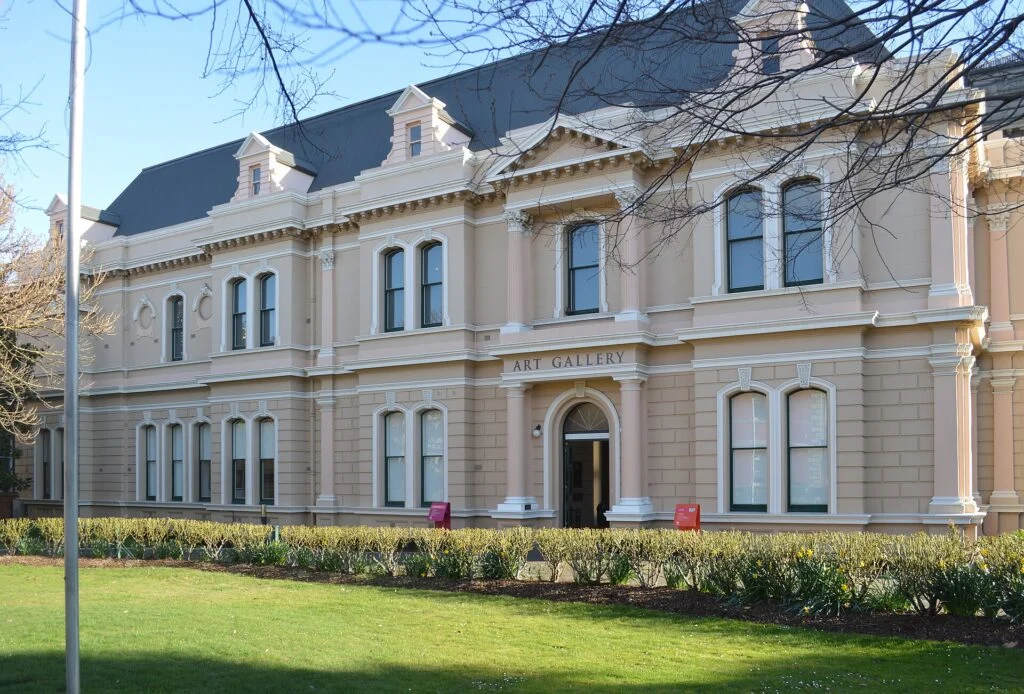
From visual descriptions and public information, visitors approaching QVMAG are primarily met with two distinct museum identities corresponding to its two sites. The Royal Park location, known for its older, more classical architecture, offers a conventional museum façade that communicates institutional solidity and historical continuity. Here, one might expect a traditional entry experience focused on natural history and ethnographic displays.
In contrast, the Inveresk site presents a more modern architectural approach and is part of a precinct that includes cultural and educational organizations. This venue signals a broader scope and a focus on art galleries alongside historical and scientific collections. The Inveresk site is often presented as the museum’s flagship exhibition space, aiming to attract a diverse visitor base interested in contemporary exhibitions as well as historical collections.
Neither site attempts ostentation; the museum’s external presence is relatively understated compared to larger metropolitan institutions in Australia. The signage and branding tend to emphasize the museum’s connection to Tasmania’s culture and history rather than global or blockbuster exhibition ambitions. Visitors are positioned to understand QVMAG as a space rooted in regional identity with a commitment to combining art and science within a museum framework that remains accessible and educational.
Highlights and Key Exhibitions
The Queen Victoria Museum and Art Gallery’s strengths reside in its comprehensive collection that spans natural history, fine art, social history, and technology, with a particular focus on Tasmanian and broader Australian contexts.
One of the core attractions is the natural sciences collection, which provides detailed insights into Tasmania’s unique flora and fauna. Displays often include taxidermy, geological samples, and ecological dioramas highlighting the island’s biodiversity, including endemic species. This part of the museum serves both as a scientific resource and as an accessible introduction to Tasmania’s natural environment for visitors without specialist backgrounds.
The art gallery component features works by Tasmanian and Australian artists across a range of periods and styles. Representations include colonial-era landscapes, portraits, and contemporary art, enabling a dialogue between historical and modern perspectives. The gallery collection is notable for its inclusion of regional artists, giving local creative communities a platform and helping to map Tasmania’s art history distinct from mainland Australian narratives.
The social history and technology collections emphasize Tasmania’s settler history, industrial development, and maritime heritage. Artifacts such as tools, household objects, and ship models illustrate the region’s economic and cultural evolution. These displays contribute to an understanding of daily life, migration, and technological change in Tasmania from the 19th century onwards.
Particularly significant is the museum’s engagement with Indigenous history and culture, though this remains an area with mixed reviews from community perspectives. The institution holds collections relating to Tasmanian Aboriginal heritage and has endeavored to present these with increased sensitivity. However, the extent and depth of this engagement can vary, reflecting broader challenges faced by Australian museums in appropriately interpreting Indigenous histories within public settings.
The Inveresk site hosts larger temporary exhibitions and community events oriented around arts and science, but given the need to avoid speculation about specific shows, the focus remains on permanent collections. Yet it is this site that aligns the museum more visibly with contemporary arts programming and scientific outreach, supporting a wider public engagement beyond static exhibits.
Visitor Experience
The Queen Victoria Museum and Art Gallery caters to a broad audience including families, students, researchers, and casual visitors with an interest in regional history and arts. The museum’s layout and presentation aim to be inviting rather than overly academic or specialist, though some subjects such as natural sciences presuppose a degree of curiosity or baseline understanding of biological and geological terms.
Interpretation across the museum balances graphic panels, artifact labels, and multimedia elements, where available, but the density of information can vary from straightforward to occasionally dense. Visitors attuned to more traditional, object-focused museum experiences will find plenty to examine, while those seeking interactive or highly digital forms of engagement might find some displays less dynamic.
The dual site model offers variety but also requires visitors to plan which site(s) to visit, depending on interests. Royal Park’s historical collections suit those interested in natural history and regional ethnography, while Inveresk’s proximity to related cultural institutions may appeal more to visitors interested in contemporary art and larger curated exhibitions.
The museum’s spatial organization at both sites generally supports a logical flow from one gallery to the next, though some complexity arises from the breadth of disciplines represented. This can occasionally present a challenge in terms of thematic coherence, as the institution covers both natural history and fine art under one roof (or two). Such breadth is an asset in terms of inclusivity but can require visitors to divide attention.
The institutions have made efforts to remain relevant to the local community, including educational programs and events, though external information on these offerings should be sought through the museum’s official channels to assess availability or scope.
Tickets, Access, and Planning
Potential visitors should consult the Queen Victoria Museum and Art Gallery’s official website prior to planning their visit to confirm current opening hours, entry fees, booking requirements, and available visitor services. This is important because hours, admission policies, and available tours or events may change due to special circumstances, public holidays, or institutional programming.
Information about disabled access is not always comprehensive in publicly available materials, so specific inquiries are advisable. Similarly, while it may be reasonable to expect basic visitor amenities such as restrooms and seating, the degree and distribution of these within the two sites may vary.
Public transport options to both museum locations exist given their urban settings in Launceston, but visitors relying on private vehicles should investigate parking facilities locally. When planning time, visitors should consider that the museum’s diverse collection could require at least a couple of hours to engage meaningfully with either site, particularly if viewing both.
The absence of detailed official guides or specialized tours in some museum literature means that self-guided visits should be expected, though staff may provide assistance on-site. Audio guides or digital enhancements might be available on occasion, but verification is recommended through current official sources.
Final Verdict
The Queen Victoria Museum and Art Gallery stands as a significant cultural institution within Tasmania that offers a wide-ranging window into the island’s natural environment, artistic heritage, and social history. Its unique status as a dual-site museum encompassing both traditional and more contemporary exhibition approaches allows it to serve a variety of audiences and interests.
Its strengths lie in its comprehensive collections and its regional focus, which offers insight into Tasmania’s particular histories and natural world. The museum manages to integrate collections of natural science, art, and technology with reasonable care, though the breadth occasionally challenges curatorial coherence. The emphasis on Tasmanian content is a defining feature, making it especially relevant for visitors seeking a deeper understanding of this part of Australia beyond the usual metropolitan centers.
There are limitations in terms of the museum’s contemporary engagement strategies and interpretive methods, which could feel uneven or less interactive compared to larger urban institutions. The dual-location setup also raises practical considerations for visitors wanting a full experience, as not all collections or exhibitions are accessible in a single venue. Moreover, while the museum’s Indigenous collections and narratives have developed, this remains an area with ongoing tensions and room for further sensitivity and collaboration.
In sum, QVMAG offers solid value as a regional institution that brings together science and art within a Tasmanian context. Its scope and collections make it well suited to those with specific interests in natural history and Australian regional art. However, visitors should approach their visit with clear priorities, consult the museum’s official website for practical details, and prepare for a largely self-directed experience. Those seeking highly interactive or fast-moving exhibitions might find the museum more reflective and traditional, but this corresponds to its enduring mission to document and preserve Tasmania’s heritage in a measured and accessible way.