Natural History Museum London Review
Natural History Museums · London, United Kingdom. The Natural History Museum in London stands as an emblem of scientific inquiry and public education, tracing its origins to the 19th century. Established from the extensive natural collection of Sir Hans Sloane, the…
Natural History Museums · London, United Kingdom. The Natural History Museum in London stands as an emblem of scientific inquiry and public education, tracing its origins to the 19th century. Established from the extensive natural collection of Sir Hans Sloane, the…
Best forMasterpieces, architecture, cultural history
Review focusCollection highlights, building, visitor flow
Historical Context
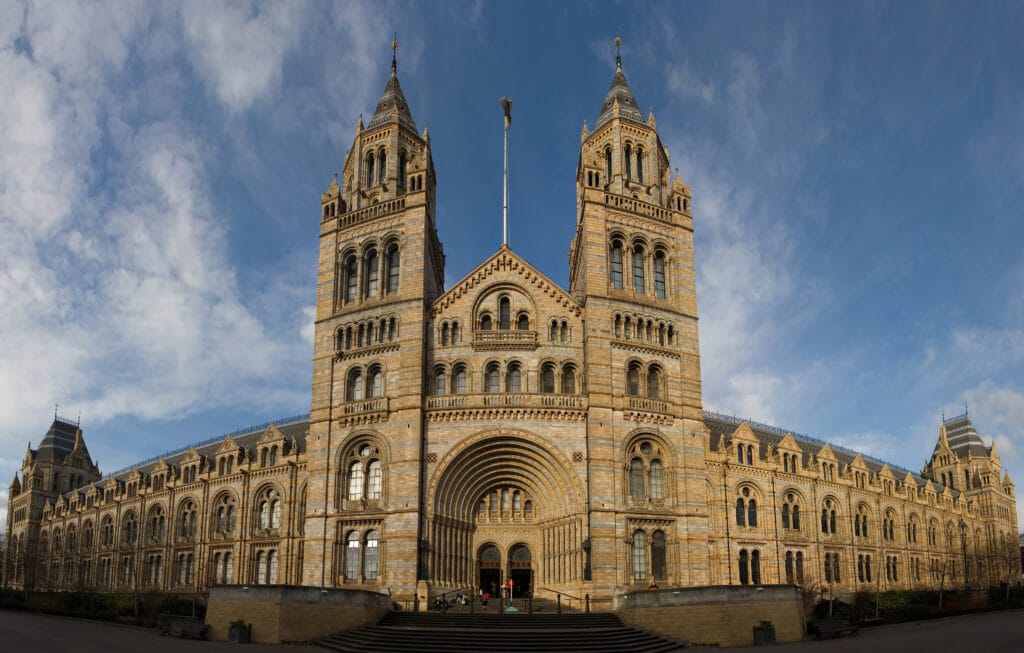
The Natural History Museum in London stands as an emblem of scientific inquiry and public education, tracing its origins to the 19th century. Established from the extensive natural collection of Sir Hans Sloane, the museum was formally opened to the public in 1881, designed by Alfred Waterhouse in the Romanesque revival style. Its creation was part of a broader Victorian ambition to catalog and understand the natural world, driven by the era’s zeal for exploration and discovery. The museum quickly became a center for research, housing millions of specimens that span life’s history on Earth, from fossils and minerals to botanical and zoological samples. Over the decades, it evolved into an institution respected globally for both academic contributions and public outreach. The museum not only preserves a vast archive of natural artifacts but also narrates humanity’s relationship with nature, reflecting shifts in scientific thought and environmental awareness. Its longevity and continuous development make it a cornerstone in the heritage and ongoing dialogue of natural history.
What You See on Arrival
Visitors approaching the Natural History Museum London are first greeted by the awe-inspiring façade of its main building on Cromwell Road. The intricate terracotta ornamentation, featuring sculpted reliefs of flora and fauna, hints at the wonders inside. The grand entrance hall, often referred to as the Hintze Hall, is dominated by architectural elegance, with soaring vaulted ceilings and ornate detailing that make it a spectacle itself. Central to this space is the iconic blue whale skeleton, suspended from the ceiling, which draws immediate attention and sets a tone of marvel and scale. Beyond the entrance, the museum’s layout unfolds into multiple galleries arranged logically to guide visitors through themes of biodiversity, geology, and paleontology. The self-contained nature of these sections ensures that guests are immersed immediately in a world where science and natural beauty intersect, lending a palpable sense of discovery from the moment one steps inside.
Highlights and Key Exhibitions
The museum’s collection is vast, covering several fields of natural history, but certain exhibits stand out for their scientific significance and public appeal. The Dinosaur Gallery is invariably a major attraction, showcasing an extensive array of fossilized skeletons, including the famous Diplodocus, once a central feature of the museum. This gallery combines detailed scientific explanations with interactive displays that effectively engage visitors of all ages. The Earth Hall presents an impressive showcase of geology, featuring minerals, gemstones, and an extraordinary model of the Earth. Here, the dramatic depiction of volcanic activity and tectonic forces provides an excellent educational component about the planet’s dynamic nature.
Another pivotal section is the Human Evolution gallery, which explores the development of hominins through fossil records and anthropological insights. This area offers a compelling narrative that connects visitors to their own origins in a profound and accessible manner. The Wildlife Garden, an outdoor space adjacent to the museum, offers a real-world complement to indoor exhibits, illustrating local biodiversity and ecological practices. While permanent collections are the museum’s backbone, the thoughtful integration of multimedia and scientific research keeps the exhibitions current and relevant without relying heavily on transient shows.
Visitor Experience
The Natural History Museum London balances the dual priorities of accessibility and academic rigor with notable finesse. The spatial design allows for an intuitive progression through topics, minimizing visitor fatigue and confusion. Clear signposting and multilingual information enrich the experience for international guests. For families, the museum offers bespoke educational programs and interactive activities, making complex scientific concepts approachable and entertaining for younger audiences. In terms of atmosphere, the museum succeeds in creating an environment that is both grand and welcoming, where the weight of scientific history remains palpable without feeling overly formal or intimidating.
One of the more commendable aspects is how the museum accommodates different learning styles; tactile exhibits, digital displays, and traditional labels coexist to provide a variety of engagement options. For those with specific interests, guided tours and expert talks augment the depth of information available. However, the museum can become notably busy during peak hours, which may affect the quality of the experience in some galleries. Planning visits during quieter times can mitigate this issue. On-site amenities, including cafés and retail outlets, maintain the overall standard expected of a leading global institution, catering to both comfort and curiosity.
Tickets, Access, and Planning
Entry to the Natural History Museum London is free, aligning with the institution’s commitment to making scientific knowledge accessible to all. This policy is supported by optional donations and membership plans, which help sustain ongoing research and educational initiatives. While no ticket purchase is required, visitors are encouraged to book timed entry passes online, particularly during weekends, holidays, and school breaks, to avoid long queues and ensure a smooth visit.
The museum is well-served by public transportation, with several Underground stations in close proximity and clear signage directing foot traffic from major hubs. Accessibility for visitors with mobility impairments is commendable, with ramps, elevators, and dedicated services available throughout the facility. Audioguides and braille-enabled materials further enhance inclusivity. The layout accommodates strollers and wheelchair users efficiently, though certain older parts of the building present minor navigational challenges due to historic architectural constraints.
Planning a visit benefits from reviewing the museum’s online resources, which provide up-to-date information on temporary exhibition closures, special events, and family workshops. For those traveling with children or educational groups, advance booking is essential to secure spots in popular activities. Overall, logistical considerations are handled with care, reflecting the museum’s role as a major public attraction in a bustling cosmopolitan city.
Final Verdict
The Natural History Museum London remains a paragon of cultural and scientific engagement, maintaining a careful balance between scholarly depth and public appeal. Its enduring legacy as both a research institution and a museum open to all is reflected in the quality and breadth of its permanent collections. Visitors can expect a journey that is intellectually enriching, visually stunning, and suitable for audiences of diverse backgrounds and knowledge levels. While occasional crowding and the scale of the venue might feel overwhelming, the thoughtful design and comprehensive resources mitigate many common visitor frustrations.
The museum’s commitment to accessibility, education, and inclusivity is evident in its facilities and programming, making it not just a repository of natural wonders but an active space for learning and community involvement. Whether one is a casual visitor or a dedicated naturalist, the museum presents compelling narratives of life’s complexity and Earth’s history. In short, an experience here is a celebration of the natural world and humanity’s place within it, secured by the museum’s vigilant stewardship and evolving relevance. For any trip to London, this institution ranks as an indispensable destination that continues to inspire curiosity and respect for the environment.