National Museum of Scotland Review
Scottish History & Culture · Edinburgh, ScotlandA National Museum with Real RangeThe National Museum of Scotland is one of the most complete and.
Scottish History & Culture · Edinburgh, ScotlandA National Museum with Real RangeThe National Museum of Scotland is one of the most complete and.
Best forMasterpieces, architecture, cultural history
Review focusCollection highlights, building, visitor flow
Scottish History & Culture · Edinburgh, Scotland
A National Museum with Real Range
The National Museum of Scotland is one of the most complete and rewarding museum experiences in the United Kingdom because it combines breadth, accessibility, and strong architectural presence without losing focus. Located in the center of Edinburgh, the museum succeeds as both a major national institution and a welcoming public museum that works for first-time visitors, families, and more historically minded travelers alike.
That balance is not easy to achieve. Many large national museums either become so broad that they feel diffuse, or so specialized that they lose wider appeal. The National Museum of Scotland avoids both problems. It presents Scottish history and identity clearly, but it also expands into science, technology, decorative arts, natural history, and global collections in a way that feels integrated rather than scattered.
Architecture & Spatial Experience
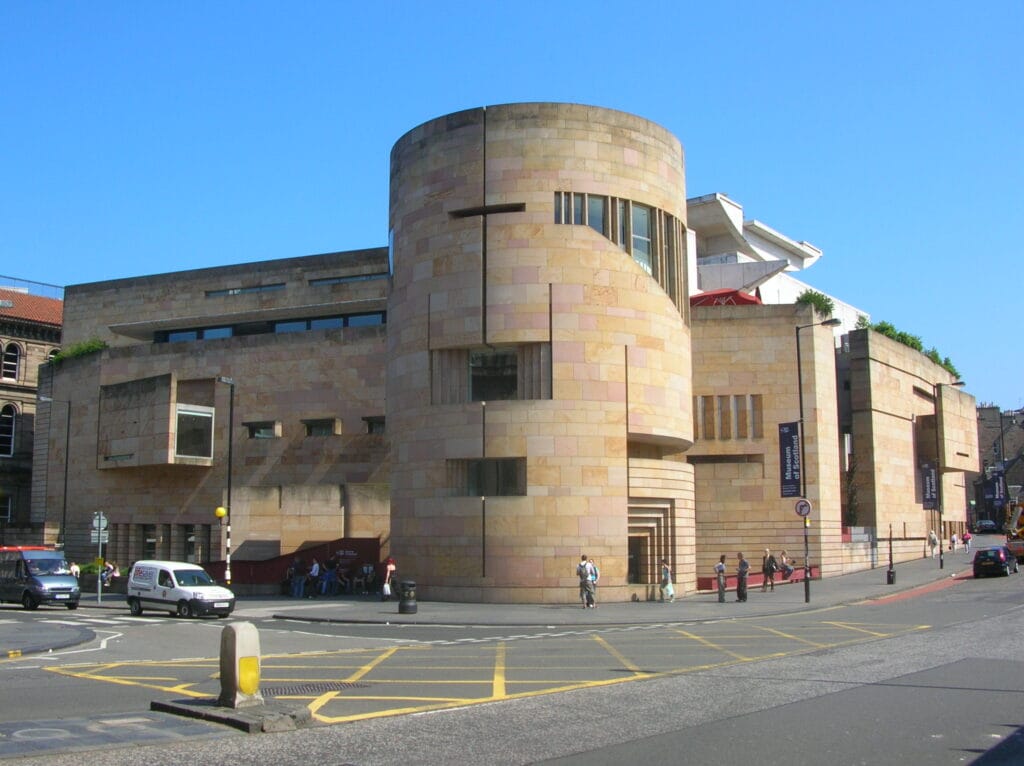
One of the museum’s immediate strengths is its setting and internal design. The Grand Gallery makes a memorable first impression, with its soaring open interior, cast-iron detail, and layered balconies creating a space that feels both historic and inviting. It is the kind of room that instantly establishes confidence. You know you have entered a major institution, but not one that feels cold or inaccessible.
The building balances nineteenth-century museum atmosphere with more modern expansion and circulation. This gives the visit variation. Some areas feel ceremonial and architectural, while others feel cleaner and more contemporary. The result is a museum that can handle many different kinds of collections without becoming visually incoherent.
Navigation is generally strong for a museum of this scale. Visitors can move chronologically through Scottish material or branch outward into thematic sections. That flexibility is important because the museum attracts different audiences with different interests. You can treat it as a museum of national history, or as a much broader survey institution.
The Collection: Scotland at the Center, But Not Alone
The museum is at its strongest in the galleries devoted to Scottish history and culture. These sections provide the museum’s emotional and intellectual center. Archaeological objects, medieval material, royal and political history, decorative arts, and objects from everyday life combine to tell a story that feels layered rather than simplified.
This is where the institution becomes more than a general family museum. It makes the case for Scotland as a place with long historical continuity and distinctive cultural identity. The collections do not rely only on famous names or isolated treasures. Instead, they build atmosphere through sequence, context, and contrast between periods.
At the same time, the museum’s wider collections are a major part of its appeal. Science and technology galleries broaden the tone and give the museum a more public, civic quality. Natural history sections add accessibility and energy, especially for younger visitors. Decorative arts, world culture, and design displays prevent the institution from becoming too narrowly national. The museum feels expansive, but not unfocused.
That range also makes the museum unusually durable as a repeat-visit destination. On a first visit, many people will naturally stay with the headline Scottish collections and the Grand Gallery experience. On later visits, the broader science, global, and design material becomes more rewarding.
Visitor Experience & Rhythm
The National Museum of Scotland works well because it gives visitors choices without sacrificing coherence. You can spend one to two hours here and still feel that you have had a satisfying experience, which is a rare quality in a major museum. At the same time, it is easy to stay much longer if the collections suit your interests.
The atmosphere is lively but usually manageable. Because the museum is popular with both tourists and local families, it has more movement and energy than some quieter art museums. That is not a weakness. In fact, it reinforces the sense that this is a real public institution rather than a place designed only for specialist audiences.
The museum is particularly good for mixed-interest groups. Someone interested in Scottish history, someone drawn to science and engineering, and someone mainly looking for a visually impressive cultural stop can all find something worthwhile here. Few museums handle that kind of broad appeal so well.
The rooftop viewpoint is another advantage. It adds a final architectural and urban dimension to the visit, connecting the museum back to Edinburgh itself. That transition from interior collection to city view is satisfying and memorable.
Atmosphere & Intellectual Tone
What makes the museum especially successful is that it remains serious without becoming intimidating. Interpretation is clear and often engaging, but the institution does not oversimplify itself. It respects visitors enough to present substantial material, while still keeping displays readable and welcoming.
There is also a real sense of civic pride running through the museum. It feels built for public use in the best sense: educational, ambitious, and open. That tone suits a national museum. Rather than projecting exclusivity, it projects confidence and generosity.
Who Will Appreciate It Most
The National Museum of Scotland is ideal for first-time visitors to Edinburgh who want broad cultural context, travelers interested in Scottish history and identity, families looking for a major museum that remains accessible and varied, and visitors who enjoy museums that combine history, science, design, and public atmosphere.
Practical Considerations
Two to three hours is a strong minimum for a balanced visit, though you can easily stay longer. Because of its central location, the museum fits naturally into a wider day in Edinburgh. It also works very well in poor weather, making it one of the city’s most reliable major indoor attractions.
Final Verdict
The National Museum of Scotland succeeds because it does not force visitors to choose between scale and accessibility. It offers both. It is broad without becoming shapeless, and educational without becoming dry.
Handled thoughtfully, the visit becomes more than a museum stop. It becomes a way of understanding Scotland through history, design, science, and public culture at once.
It is a museum built for real return visits.