National Museum of Decorative Arts Review
The National Museum of Decorative Arts in Madrid offers a museum experience built on attention rather than spectacle. It is not the kind of.
The National Museum of Decorative Arts in Madrid offers a museum experience built on attention rather than spectacle. It is not the kind of.
Best forMasterpieces, architecture, cultural history
Review focusCollection highlights, building, visitor flow
Introduction
The National Museum of Decorative Arts in Madrid offers a museum experience built on attention rather than spectacle. It is not the kind of institution that overwhelms visitors with monumental scale or a parade of universally recognizable masterpieces. Its appeal lies elsewhere: in how convincingly it shows that furniture, ceramics, textiles, glass, jewelry, and domestic interiors can tell a cultural story as rich as painting or sculpture. For travelers moving between Madrid’s major art museums, this makes it a particularly worthwhile stop. It changes the rhythm of a museum day and invites a different kind of looking—closer, slower, and more domestic in scale.
That shift in tone is precisely what makes the museum memorable. Instead of presenting design as decoration around the edges of history, it places material culture at the center. The result is an experience that feels grounded in everyday life while still offering the refinement and scholarship expected from a national collection.
About the Museum
Originally founded in 1912 as the National Museum of Industrial Arts, the institution was created with a practical mission: to inspire makers, students, and designers by giving them access to strong examples of craftsmanship and design. That origin still matters because it shapes the museum’s identity. This is not simply a treasure house of beautiful objects assembled for prestige. It is a museum with an educational backbone, concerned with how things are made, how styles travel, and how applied arts reflect both social need and artistic ambition.
Over time the collection expanded into a broad survey of decorative arts, with strengths in Spanish ceramics, furniture, textiles, carpets, glass, metalwork, and historic interiors. It also developed important holdings beyond Spain, including Asian material that highlights international exchange and collecting. This wider range keeps the museum from feeling purely national in outlook. Instead, it presents Spain’s decorative traditions within a larger conversation about craft, taste, trade, and domestic culture.
Its significance comes from this combination of intimacy and range. The museum is small enough to feel coherent, yet broad enough to show how design moves between workshops, courts, homes, and international markets.
Architecture and Atmosphere
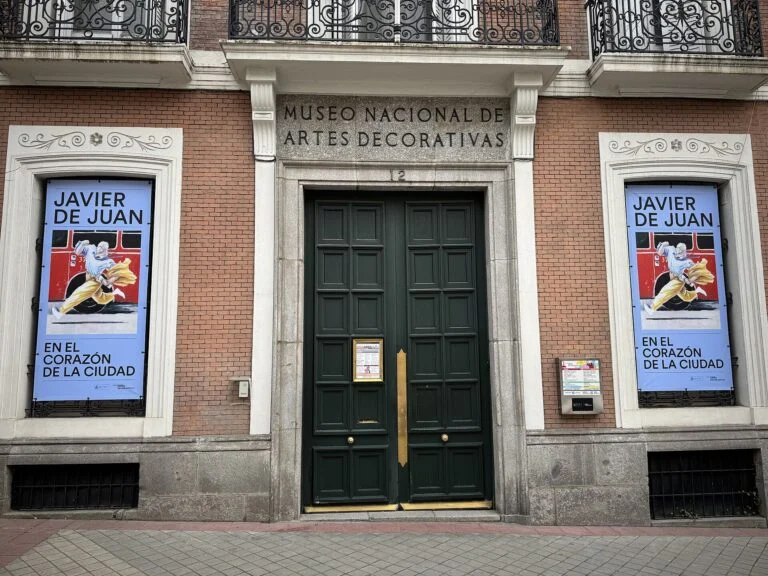
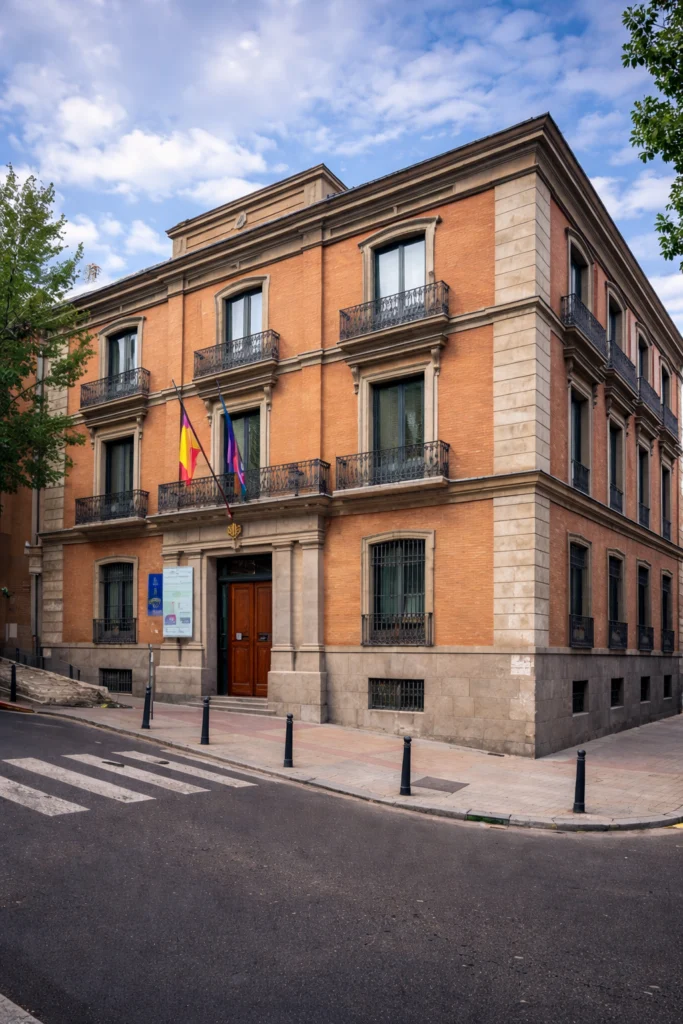
One of the museum’s advantages is its setting in a nineteenth-century palace on Calle Montalbán. The building immediately establishes a different mood from Madrid’s larger institutions. It feels less civic-monumental and more residential, which suits the collection perfectly. Decorative arts often lose something when displayed in oversized, impersonal halls. Here, the domestic scale helps visitors imagine how objects once functioned in lived spaces.
The interiors create a sense of closeness without claustrophobia. Rooms lead naturally into one another, and the visit unfolds more like moving through a sequence of designed environments than through a conventional object warehouse. That matters because the subject of the museum is not only individual craftsmanship but the arrangement of objects within daily life. Furniture, ceramics, textiles, and ornament make more sense when encountered in rooms that preserve some echo of intimacy.
The atmosphere is calm, reflective, and slightly understated. There is little theatrical design. Instead, the museum relies on proportion, detail, and context. This restraint works in its favor. You are encouraged to pay attention to surfaces and materials rather than to immersive spectacle. The building supports that kind of looking by keeping the visitor physically close to the objects and by maintaining a sense of continuity from room to room.
Highlights of the Collection
The museum’s greatest strength is the way it presents decorative arts as a connected environment rather than as scattered examples of craftsmanship. Recreated interiors are among the most rewarding elements of the visit because they show how furniture, ceramics, textiles, and ornament operate together. These rooms do more than display objects attractively. They help visitors understand atmosphere, hierarchy, and domestic ritual. A chair becomes more interesting when placed beside a carpet, a cabinet, and a ceramic service that reveal how taste is staged in lived space.
Spanish ceramics form one of the collection’s most memorable areas. Works from centers such as Talavera, Toledo, and Alcora demonstrate both technical range and stylistic variety, moving from practical domestic wares to highly refined decorative pieces. Looking closely at them reveals changes in color, pattern, glazing, and intended use. They also illuminate how local traditions responded to foreign influence and changing demand.
Glass and metalwork add another register to the collection. These displays show how delicacy, precision, and material value became part of social display. In glass especially, the museum succeeds in demonstrating that decorative arts can carry both utility and fragility at once. Metalwork and jewelry, by contrast, often speak more directly about status, ceremonial life, and craftsmanship under patronage.
The textile and carpet holdings are equally important, though they reward a quieter kind of attention. Textiles can be easy to overlook in mixed collections, yet here they help explain how design enters interior life through texture, warmth, color, and repetition. They reveal patterns of regional identity, trade, and technical skill, and they anchor the museum’s broader story about design as lived experience rather than isolated objecthood.
Furniture is another major highlight, not just for the quality of workmanship but for what it reveals about domestic habits and social structure. Storage pieces, tables, seating, and decorative cabinets show how interiors were organized and how objects could project order, refinement, or aspiration. Together with the other collections, these works create a layered portrait of design as something functional, symbolic, and deeply tied to everyday life.
The museum’s international material, especially Asian holdings, broadens the narrative. These objects remind visitors that decorative arts are shaped by exchange as much as by local tradition. Imported forms, collected luxuries, and adapted influences all complicate the idea of a purely national design history, making the collection more dynamic and intellectually satisfying.
Visitor Experience
Walking through the museum is a notably different experience from moving through Madrid’s larger, more famous museums. The pace is gentler, the rooms are more manageable, and the emphasis falls on concentration rather than endurance. That makes the museum especially appealing for visitors who enjoy looking closely but do not want to battle constant density around headline works. It also suits travelers who may already have spent hours in the Prado or Reina Sofía and want a museum that restores attention rather than draining it.
Navigation is straightforward. The building’s scale means there is little risk of feeling lost, and the sequence of rooms encourages steady movement without forcing a rigid route. Because the collection is varied, the visit never depends on a single iconic object. Interest comes from accumulation and comparison: one room deepens an earlier one, a new material shifts your attention, an interior reconstruction brings isolated objects into relation.
Crowd levels are usually more forgiving than at Madrid’s blockbuster museums, and that noticeably improves the experience. Decorative arts often require close viewing—surface, joinery, weave, glaze, and pattern matter here—and that becomes much easier when the galleries are not overcrowded. The museum rewards visitors who slow down enough to notice craft decisions and domestic context. It is less about ticking off highlights and more about learning how to see designed objects as historical evidence.
Another strength is how well the museum fits into a broader cultural day. Its central location makes it easy to combine with nearby institutions, yet its atmosphere is distinct enough that it never feels redundant. It offers a change of register: less grand narrative, more material intelligence.
Who Should Visit
This museum will appeal most strongly to visitors interested in interiors, craft traditions, decorative arts, and the social history of objects. It is an especially good choice for travelers who enjoy museums that connect design with lived experience rather than isolating objects as untouchable masterpieces. Students of architecture, design, fashion, and material culture are likely to find it particularly rewarding.
It also works well for museumgoers who prefer focused institutions over vast encyclopedic collections. If you enjoy looking closely at how things are made, how rooms are composed, and how taste changes across time, the museum offers a rich experience. Families and casual tourists can enjoy it too, though the quiet pleasures of the collection are likely to resonate most with visitors willing to slow down and pay attention to detail.
Practical Tips
Allow around 90 minutes to two hours for a comfortable visit. That gives enough time to move through the collection without rushing the rooms that require close observation. The museum pairs well with the Prado area and Retiro Park, making it easy to include in a central Madrid itinerary. It is especially useful on days when you want culture without committing to a half-day marathon through a larger institution. Because this is a museum of detail, try not to schedule it when you are already exhausted. Arriving with some visual energy left will make the textures, materials, and room settings far more rewarding.
Final Verdict
The National Museum of Decorative Arts succeeds by taking material culture seriously and by presenting it in a setting that suits its scale and subject. It does not compete with Madrid’s most famous museums on grandeur, nor does it need to. Its strength lies in coherence, intimacy, and the quality of attention it encourages. For visitors interested in how design shapes domestic life and cultural identity, it is one of the city’s most satisfying museum experiences. It may be quieter than Madrid’s headline institutions, but it is no less revealing.