National Museum of Decorative Arts
Set between Madrid’s Art Walk and the edge of Retiro Park, the National Museum of Decorative Arts offers a different perspective on Spanish.

Best forMasterpieces, architecture, cultural history
Setting / nearbyEurope
Introduction
Set between Madrid’s Art Walk and the edge of Retiro Park, the National Museum of Decorative Arts offers a different perspective on Spanish cultural history. Instead of telling the story of a nation through grand political events or royal portraiture, it focuses on the objects people lived with: furniture, ceramics, glass, textiles, metalwork, and domestic interiors. That makes the museum feel both intimate and revealing. Visitors are not simply looking at beautiful things; they are seeing how taste, craftsmanship, trade, and daily life changed across centuries. In a city better known for heavyweight painting collections, this museum stands out for its human scale and for the way it turns design into a cultural record rather than a luxury sideline.
About the Museum
Founded in 1912 as the National Museum of Industrial Arts and later renamed, the museum was created to support makers, designers, artisans, and students by bringing together examples of high-quality craftsmanship. Over time it developed into one of Spain’s key institutions for the study of decorative arts and material culture. Its holdings range from Spanish ceramics and furniture to jewelry, textiles, carpets, and glass, with additional collections that reflect broader international exchange, including notable Asian material.
What makes the museum important is not only the number of objects it preserves, but the way those objects explain how design moves between utility and status. A chair, a cabinet, a tile panel, or a lacquered box can reveal patterns of trade, domestic habits, religious influence, and changing social aspiration. The museum therefore works on two levels at once: as a design museum and as a subtle history of everyday life in Spain and beyond.
The Building & Location
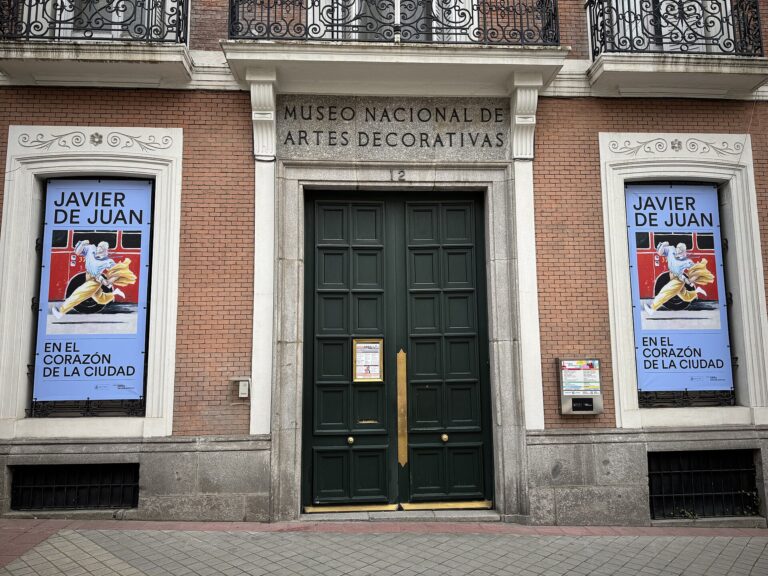
The museum is housed in a nineteenth-century palace on Calle Montalbán, a short walk from the Prado, the Thyssen-Bornemisza, and the greenery of Retiro Park. That location matters. It places the museum within one of Madrid’s richest cultural districts while giving it a quieter, more residential feel than the city’s busier headline institutions. Arriving here feels less ceremonial and more personal, as though you are stepping into an elegant townhouse devoted to design history.
Inside, the building’s scale shapes the visit. Rooms are more compact than those in Madrid’s major art museums, and that intimacy suits the subject. Decorative arts often reward close looking: wood grain, woven patterns, glaze, embroidery, and surface detail can easily disappear in oversized gallery spaces. Here, the domestic proportions help the collection make sense. The building does not overpower the objects. It frames them.
Collection Highlights
The museum’s strongest displays are those that show decorative arts as lived environments rather than isolated masterpieces. Recreated interiors from earlier centuries allow visitors to see furniture, ceramics, textiles, and decorative surfaces in context, making it easier to understand how these works originally functioned within homes and social spaces. This approach brings coherence to the collection and prevents the museum from feeling like a sequence of unrelated objects in cases.
Spanish ceramics are a particular highlight, especially pieces from well-known production centers such as Talavera and Alcora. These works demonstrate the technical skill and stylistic diversity of ceramic traditions across the country, from functional domestic wares to richly decorative pieces made for display. Glass collections add another dimension, showing how transparency, color, and form became markers of refinement.
Textiles and carpets also deserve careful attention. They reveal how design enters daily life through touch and atmosphere rather than spectacle alone. Patterns, materials, and production methods tell stories about regional craft traditions, imported influence, and the status attached to ornament. The museum’s furniture collection completes that story by showing how domestic interiors communicated hierarchy, comfort, and cultural ambition.
Another rewarding aspect of the museum is its international reach. Oriental and Asian objects, including material connected to Chinese and Japanese traditions, remind visitors that decorative arts are inseparable from exchange. Design history here is not sealed within national borders; it is shaped by movement, imitation, adaptation, and collecting.
Visitor Experience
Visiting the museum feels measured and calm. It is not a place of blockbuster crowds or rushed one-way circulation. Instead, it encourages visitors to slow down, compare details, and think about how objects were made and used. The galleries are manageable in size, making the museum a good choice for travelers who want substance without committing half a day to an overwhelming institution.
Because the collection includes many applied and decorative works rather than a handful of globally famous icons, attention spreads more evenly across the rooms. That creates a more relaxed way of looking. You are less likely to find yourself waiting behind a crowd for one star object, and more likely to notice the richness of smaller things: a cabinet mount, a woven motif, a ceramic glaze, a piece of silverwork. The museum rewards patience and curiosity more than speed.
Visitor Tips
Plan on around 90 minutes to two hours for a satisfying visit. It works especially well as part of a broader museum day in central Madrid, but it is best approached when you still have enough energy to look closely. This is also a good option for visitors who want a quieter alternative to the Prado or Reina Sofía. After your visit, the nearby Retiro area and the surrounding streets provide an easy transition back into the city. For anyone interested in interiors, craft, and design history, this museum offers one of Madrid’s most rewarding small-scale cultural experiences.