Revs Institute Review
Automobile Museums · Naples, United States. The Revs Institute, located in Naples, Florida, is a museum dedicated to the preservation and study of automotive history, focusing primarily on significant vehicles, engineering achievements, and the cultural narrative of motoring in the…
Automobile Museums · Naples, United States. The Revs Institute, located in Naples, Florida, is a museum dedicated to the preservation and study of automotive history, focusing primarily on significant vehicles, engineering achievements, and the cultural narrative of motoring in the…
Best forMuseum lovers, culture travelers, first-time visitors
Review focusCollections, visitor experience, and practical planning
Historical Context
The Revs Institute, located in Naples, Florida, is a museum dedicated to the preservation and study of automotive history, focusing primarily on significant vehicles, engineering achievements, and the cultural narrative of motoring in the United States and beyond. Founded in the early 21st century by Miles Collier, a member of the noted Collier family with a long-standing commitment to automotive heritage, the institution reflects a passion for safeguarding classic and historically important automobiles as artifacts of design, innovation, and competition.
The museum’s collection builds on the legacy of the Collier family’s influence in American car culture, complemented by the research and archival expertise developed within the Institute. It situates itself not merely as a repository for the display of cars but as a center for scholarship, where the technological evolution and artistic dimensions of automobiles are studied and documented. This approach shapes the museum’s content and interpretive framework, addressing themes such as automotive engineering prowess, racing heritage, and the social context of car ownership and mobility through most of the 20th century. The Revs Institute’s emphasis on original cars in racetrack condition, supported by a comprehensive archive, distinguishes it from many institutions that focus more broadly on popular automotive culture or contemporary collections.
While rooted in American automotive heritage, the Institute incorporates international vehicles influential to the history of racing and design. Its mission is thus both preservationist and educational, insofar as it seeks to maintain an authentic historical perspective through objects with clear provenance and technical documentation. The museum’s presence in Naples contributes to a regional diversification of automotive museums in the United States, extending beyond the better-known collections found in Detroit, California, or Daytona.
What You See on Arrival
From the exterior and initial approach, the Revs Institute presents itself as a specialized and somewhat understated institution, with a focus on the cared-for and carefully arranged display of historic cars rather than theatrical or thematic spectacle aimed at general tourism. Visitors will notice the museum’s unassuming setting in a relatively quiet part of Naples, signaling that this is not a high-traffic tourist site but rather a destination for enthusiasts, researchers, and automotive historians.
The entrance and lobby area, as described in available resources, are designed to foreground the significance of the collection with minimal distraction—giving precedence to the cars themselves rather than elaborate interpretive installations. There is an emphasis on clean, elegant presentation, with the vehicles often displayed in well-lit glass enclosures and carefully managed spatial arrangements that allow close inspection. The museum identity is closely tied to authenticity and preservation, making a clear impression that the focus is on original artifacts rather than replicas or modern artwork inspired by automotive themes.
The architecture and layout maintain a restrained aesthetic, reflecting the Institute’s dual commitment to research and display. This measured approach likely sets visitor expectations toward a contemplative and informative experience rather than an entertainment-driven visit. Branding materials and signage underscore the Institute’s role as a repository and study center, with a tone that suggests depth and technical expertise rather than general accessibility.
Highlights and Key Exhibitions
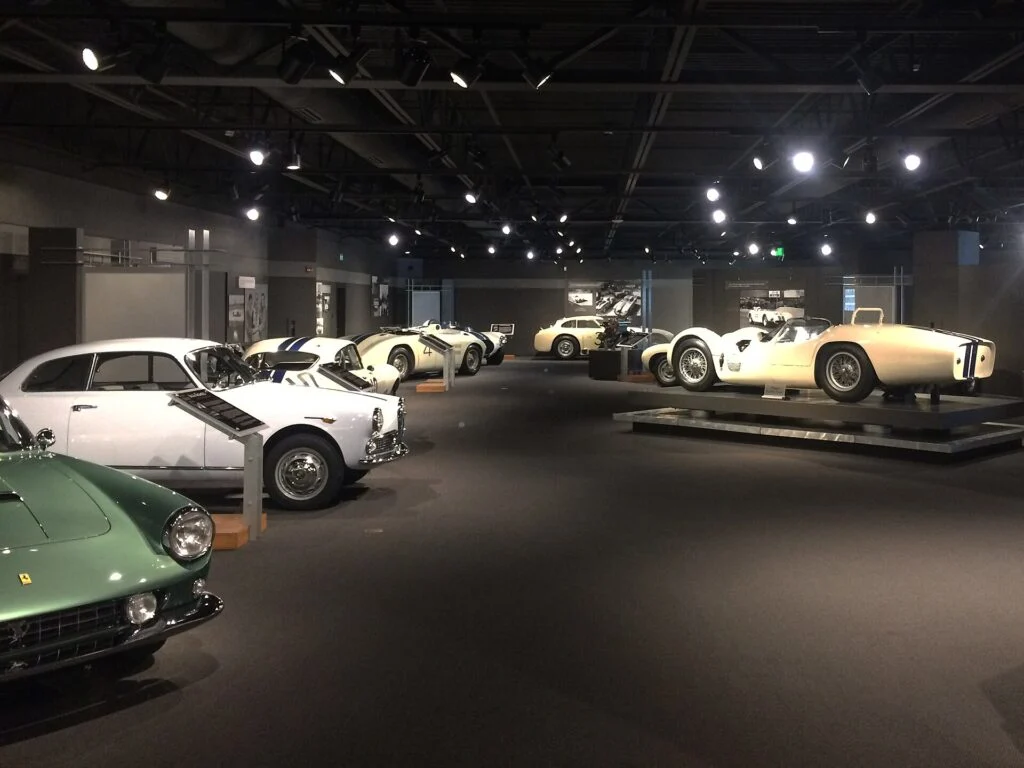
At the core of the Revs Institute is its celebrated collection of automobiles that represent pivotal moments in racing and automotive engineering history, primarily from the first half to the mid-20th century. The collection is built around a diverse array of vehicles that meet stringent standards of authenticity, many of which remain in running condition. The artifacts include pre-war European race cars, American road racers, and notable examples of early sports cars and legendary marques that defined the formative years of motor racing.
Significant is the representation of the “Golden Age” of Grand Prix and endurance racing cars—from manufacturers such as Bugatti, Alfa Romeo, Bentley, and Maserati—vehicles that embodied innovation in the pre- and post-World War II periods. These cars are preserved with original mechanical components, enabling a more tangible understanding of their design and performance characteristics, which often set them apart from other museum collections that may prioritize aesthetics over mechanical integrity.
Another key theme is the documentation and display of cars linked to particular races or drivers whose influence shaped competitive motorsport. The museum’s archive holds race programs, blueprints, photographs, and technical manuals that add depth to the objects on display, reinforcing the relationship between these vehicles and the broader history of racing. This combination of archive and artifact supports scholarship and understanding of how technological developments in racing influenced commercial automotive production and vice versa.
The collection also advances a narrative on American automotive heritage, including early sports cars and racing machines that defined domestic competition outside of the European context. This dual focus allows visitors to draw comparisons across geographical and technical lines, tracing how design philosophies and material capabilities shifted in response to different racing conditions and cultural attitudes toward speed.
Integral to the Institute’s mission is the active conservation of aging vehicles with the highest respect for their original condition. Visitors can expect to encounter cars maintained in near-authentic states rather than restored to a presentable but inauthentic finish, a choice that sometimes poses challenges in display but enhances historical fidelity.
Visitor Experience
The Revs Institute caters primarily to a specialized audience—automotive historians, engineers, dedicated collectors, and serious enthusiasts. The museum's content requires a degree of background knowledge or keen interest in automotive history to fully appreciate the nuances on display. Its exhibits are arranged to facilitate close study of vehicles and to encourage interaction with archival materials, although the average visitor might find some of the technical information dense without supplementary interpretation.
The pacing of a visit to the Institute is therefore likely unhurried. There are no overbearing crowd-control mechanisms or spectacle-driven shows, which benefits those intent on in-depth examination but may not be as engaging for casual tourists or families with younger children. The museum’s educational materials and placards are thorough but tend to present technical data and historical context rather than storytelling aimed at general audiences.
Interpretative efforts focus on the historical importance of individual cars, their mechanical features, and their racing pedigree, supplemented by archival material that contextualizes the vehicles within broader timelines of automotive development. This approach supports a layered educational objective suited to repeat visits or those engaged in research.
Limitations to the visitor experience exist in terms of interactivity and accessibility of information. The Institute does not emphasize hands-on exhibits or multimedia installations, which might limit appeal for visitors seeking a more interactive or accessible experience. Those without prior knowledge of automotive history may appreciate additional introductory context or guided explanations that the museum either does not provide extensively or does so in limited capacity.
Tickets, Access, and Planning
Information regarding admission procedures, booking, opening hours, and visitor facilities at the Revs Institute should be sought via the museum’s official website to ensure accuracy, as these details may vary or be subject to change. Potential visitors should confirm current policies on ticket availability, discounts, accessibility accommodations, audio guide provision, and guided tours where relevant.
Given the museum’s specialized focus, it is reasonable to consider that it may attract a less casual crowd and thus might have different operational rhythms than larger public museums. The location in Naples means it is somewhat off the beaten path of traditional automotive museum clusters, which could influence travel planning, including transportation options and accommodations.
Prospective visitors should also verify whether the Institute provides visitor amenities such as a café or shop, as these are not central to the institution’s primary mission and may not be part of the offering. Careful planning is advisable to maximize the educational return of a visit.
Final Verdict
The Revs Institute occupies a distinctive position in the landscape of automotive museums, emphasizing authenticity, technical preservation, and historical depth in a collection largely centered on racing automobiles. For those with serious interest in the engineering, history, and culture of early and mid-century motor racing, the Institute offers a valuable and focused resource.
Its strengths lie in the high-quality, original-condition vehicles combined with a substantial archival base, providing opportunities not only to view significant cars but also to engage with detailed historical documentation. This makes it a noteworthy destination for specialists, scholars, and dedicated enthusiasts rather than casual visitors or families looking for a general entertainment experience.
The museum’s understated presentation and restrained interpretive style reflect its identity as a center for research and appreciation rather than spectacle. This will appeal to visitors who prioritize depth and authenticity, even though this approach may limit accessibility for those without some pre-existing interest in the subject.
While practical visit details need confirmation before planning, the Revs Institute rewards those who arrive prepared for a substantive exploration of automotive history, particularly in the domain of racing and technical innovation. It plays an important role within American and international motor car heritage preservation but remains a specialized venue with a clear focus rather than a broadly popular tourist museum. Prospective visitors should consider their own interests and expectations carefully before committing time and travel to the Institute.