National Gallery Singapore Review
Art Museums · Singapore, Singapore. The National Gallery Singapore stands as a premier institution dedicated to the visual arts of Singapore and Southeast Asia. Opened in 2015, it represents a significant cultural investment by the nation, reflecting Singapore’s ambition…
Art Museums · Singapore, Singapore. The National Gallery Singapore stands as a premier institution dedicated to the visual arts of Singapore and Southeast Asia. Opened in 2015, it represents a significant cultural investment by the nation, reflecting Singapore’s ambition…
Best forMasterpieces, architecture, cultural history
Review focusCollection highlights, building, visitor flow
Historical Context
The National Gallery Singapore stands as a premier institution dedicated to the visual arts of Singapore and Southeast Asia. Opened in 2015, it represents a significant cultural investment by the nation, reflecting Singapore’s ambition to position itself as a global arts hub. Housed in two historic buildings—the former Supreme Court and City Hall—the gallery marries colonial architectural heritage with contemporary functionality. This transformation from civic institutions of governance to a sanctuary for art underscores Singapore’s broader narrative of modernization and cultural identity formation. The gallery serves as both a repository and a beacon for the artistic expressions that have defined the region’s history, society, and aspirations. Its establishment signals a deliberate effort to preserve and present the region’s artistic heritage within a global context, encouraging dialogues between local and international art forms. By focusing on Singaporean and Southeast Asian visual culture, the National Gallery Singapore fills a previously unmet need for a dedicated platform that showcases the rich diversity of the area’s artistic legacy.
What You See on Arrival
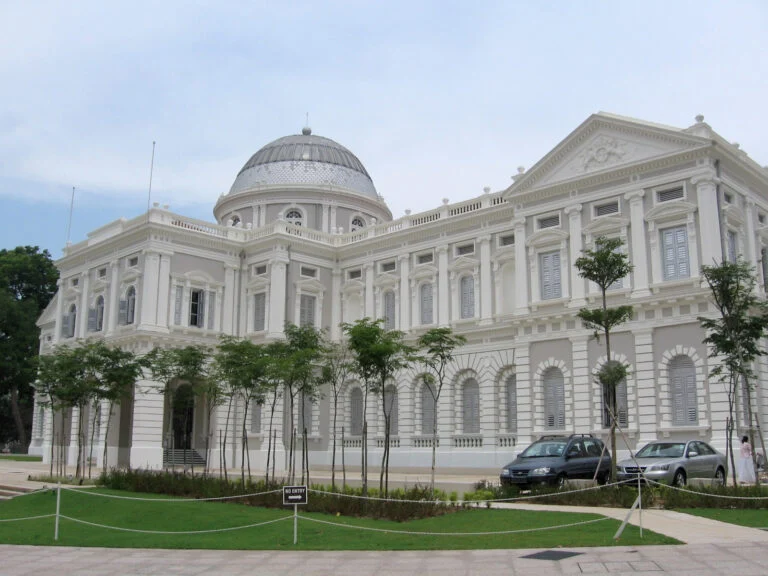
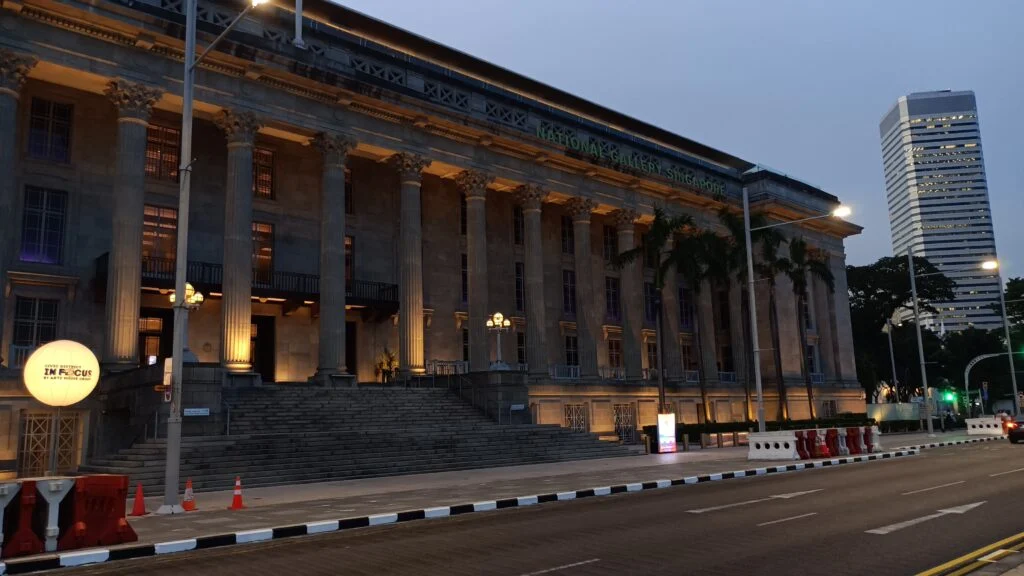
Approaching the National Gallery Singapore, visitors are immediately greeted by the imposing façades of the two historic buildings that have been seamlessly integrated. The former City Hall’s neoclassical features with grand columns and ornate detailing stand prominently alongside the more modernized interiors, symbolizing a harmonious blend of old and new. The entrance courtyard is spacious and meticulously designed, offering an inviting transition from the bustling urban environment of downtown Singapore into the contemplative space of the museum. The gallery’s positioning within the Civic District places it amidst other cultural landmarks, enhancing its role in Singapore’s cultural landscape. On entering, one encounters a bright, expansive interior that contrasts with the heritage exteriors. The spatial design emphasizes natural light and open areas, providing visitors with a sense of ease and orientation. Information desks, signage, and welcoming staff are visible and helpful, ensuring clear pathways for both first-time visitors and seasoned museum-goers.
Highlights and Key Exhibitions
The National Gallery Singapore’s permanent collection is its greatest strength, focusing primarily on Singaporean and Southeast Asian modern art from the 19th century to the present day. Among the standout pieces are works by pioneering artists such as Georgette Chen, Liu Kang, and Cheong Soo Pieng, whose pioneering styles helped shape the region’s modern artistic identity. The gallery is known for its rich collection of Nanyang style paintings, a distinctive genre that melds Western techniques with Asian subjects and motifs. The curation within these galleries is integrative, combining paintings, sculptures, and multimedia installations that collectively tell a story of cultural hybridity and evolution. In addition to the permanent holdings, the National Gallery frequently hosts exhibitions that delve into specific themes or artists, often providing fresh perspectives on the historical and contemporary relevance of Southeast Asian art. The architecture itself can also be considered part of the exhibition, with carefully preserved historical details showcased alongside modern additions such as the stunning glass and steel canopy spanning the former court building’s rotunda.
Visitor Experience
Visitors to the National Gallery Singapore report a well-considered flow through its galleries that facilitates a gradual immersion into the region’s artistic narrative. The layout encourages an exploration that is both chronological and thematic, enabling a deeper understanding of historical contexts alongside artistic innovation. Audio guides and multimedia aids—while unobtrusive—add layers of depth for those seeking more comprehensive information. Additional amenities such as a well-stocked gallery shop, café options, and seating areas contribute to a comfortable and enjoyable visit. The museum places a strong emphasis on educational programming, regularly hosting talks, workshops, and guided tours that cater to diverse audiences, from families to scholars. The staff's professionalism and enthusiasm contribute to an inviting atmosphere without feeling overly formal. Occasionally, the size and scope of the galleries can be somewhat overwhelming, particularly for casual visitors, but clear signage and rests areas provide relief. Overall, the experience balances engagement with rest, making it suitable for both prolonged visits and shorter stops.
Tickets, Access, and Planning
Admission to the National Gallery Singapore involves a straightforward ticketing system with a tiered pricing structure that considers local residents, tourists, and students. General admission fees are reasonable, reflecting the museum’s role as a public cultural institution dedicated to accessibility. Discounts and free entry days are regularly available, making it financially accessible for a broad audience. The gallery is well connected by public transport, situated within walking distance from major MRT stations and bus routes, which facilitates easy access for visitors. For those arriving by car, parking nearby is available but can be limited and costly, reflecting its central urban location. Accessibility features for visitors with disabilities are well implemented, including ramps, elevators, and tactile guides, ensuring a welcoming environment for all. Planning a visit is straightforward thanks to the gallery’s informative official website, which offers detailed opening hours, exhibition schedules, and downloadable maps. Visitors are advised to allocate several hours to fully appreciate the extensive collections and facilities.
Final Verdict
The National Gallery Singapore emerges as a pivotal cultural institution that successfully bridges Singapore’s colonial history with its contemporary creative aspirations. By situating Southeast Asian art at the heart of its narrative, it provides a crucial platform for regional artists and stories that have historically seen limited international representation. The architectural grandeur and historical significance of its setting add a unique dimension to the museum experience, enriching the artworks on display. While the expansive collection and layout may demand significant time and attention from visitors, this also allows for a more profound and enriching engagement with the art and its contexts. The museum strikes a commendable balance between accessibility and authenticity, education and aesthetic pleasure. It not only invites visitors to appreciate the diversity and complexity of Southeast Asian art but also encourages reflection on broader cultural and social themes. For anyone interested in the arts of this dynamic and fast-evolving region, the National Gallery Singapore represents a compelling destination worthy of exploration, study, and return visits.