National Automobile Museum Review
Automobile Museums · Reno, United States. The National Automobile Museum, located in Reno, Nevada, offers a somewhat unique perspective on automotive history in the United States. Founded in 1989, the museum was established to preserve and present a comprehensive narrative…
Automobile Museums · Reno, United States. The National Automobile Museum, located in Reno, Nevada, offers a somewhat unique perspective on automotive history in the United States. Founded in 1989, the museum was established to preserve and present a comprehensive narrative…
Best forClassic cars, automotive design, motoring heritage
Review focusVehicle collections, design history, and visitor planning
Historical Context
The National Automobile Museum, located in Reno, Nevada, offers a somewhat unique perspective on automotive history in the United States. Founded in 1989, the museum was established to preserve and present a comprehensive narrative of automobiles and their impact on American culture and technology. Its creation followed the recognition that the evolution of the automobile was integral not only to transportation but also to social change, design innovation, and industrial progress throughout the 20th century and beyond.
Situated in a region not typically associated with automotive manufacturing hubs like Detroit or Southern California, the Reno museum stands out by focusing on the broader significance of cars within American life. The location is notable for its proximity to historic cross-country travel routes and the growth of automotive tourism. The institution has grown methodically over the years to amass a collection that reflects both the mechanical and aesthetic qualities of automobiles, balancing rare and recognizable vehicles.
Unlike some museums that focus predominantly on racing or commercial production lines, the National Automobile Museum emphasizes a more holistic view of the car’s evolution, including its societal roles. This lends the museum a distinctive voice in an increasingly crowded field of automotive museums. Its holdings reflect a commitment to showcasing a range of vehicles from the early 1900s to the modern era, capturing the transitions in style, engineering, and public use.
What You See on Arrival
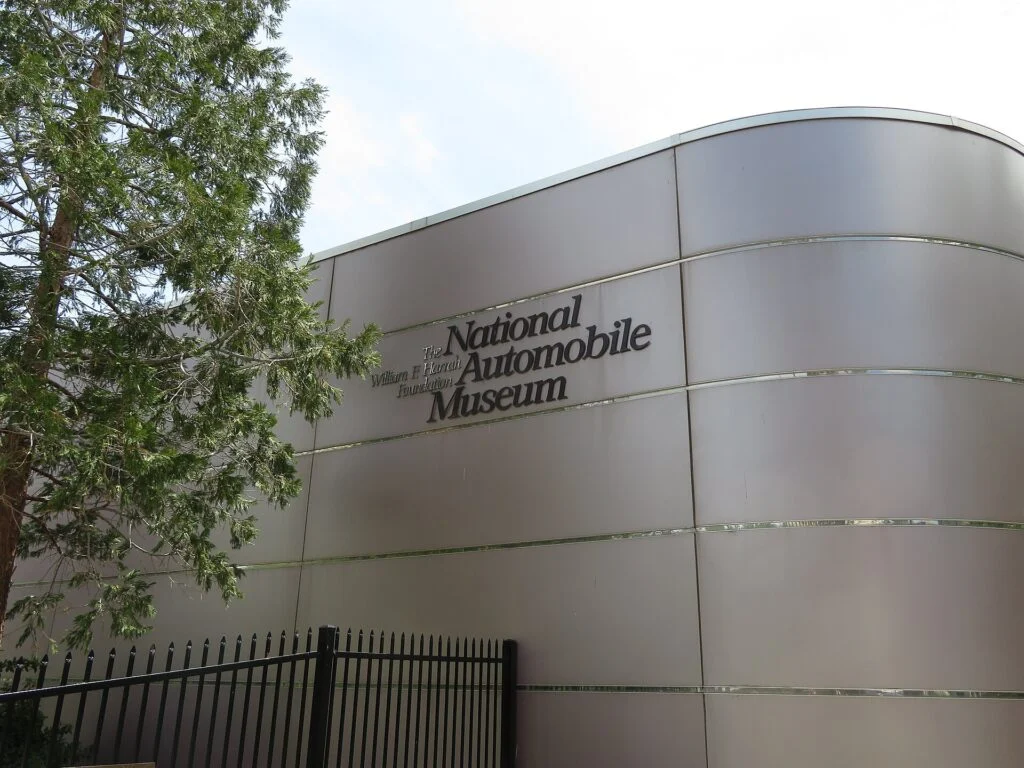
On approach, the National Automobile Museum makes a clear statement about its focus through its building and presentation style. The architecture of the museum is clean and straightforward, reflecting a dedication to function and clarity rather than grandiose design flourishes. This restraint sets the tone for what visitors can expect internally: a thoughtfully curated collection prioritizing substance over spectacle.
Outside the physical structure, the museum’s identity is conveyed through displays visible even before entry, such as a selection of vintage cars placed around the entrance plaza, hinting at the unique and diverse vehicles contained within. These give a sense of the museum’s span across different eras and styles, from the elegance of the early 20th century to the more utilitarian and performance-driven models of later years.
The entry area itself is straightforward and unpretentious. The signage and layout are designed to make navigation intuitive, aligning with the museum’s educational mission. Immediately upon arrival, visitors understand that this is a place grounded in history and technical detail, aimed at audiences who appreciate design, innovation, and cultural storytelling through the lens of the automobile.
Highlights and Key Exhibitions
The National Automobile Museum’s collection is its core strength, offering more than 200 automobiles representing over 80 brands from around the world. The range ensures that visitors encounter both the familiar and the rare, giving a comprehensive picture of automotive history without feeling narrowly focused.
One of the standout features is the emphasis on early American automobiles. The museum houses several well-preserved models from the Horseless Carriage era, including a 1903 Oldsmobile Curved Dash. Such vehicles are crucial for understanding the genesis of mass-produced cars and the shift from horse-drawn transportation to motorized travel. The museum’s curators have made efforts to contextualize these vehicles within their period, highlighting the technological ingenuity required to transition industries and societies.
Transitioning into the 1920s and 1930s, the museum features several classic cars that illustrate the increasing importance of style and luxury alongside functionality. Vehicles like the Cadillac V16 and the Duesenberg J highlight breakthroughs in performance and comfort, reflecting the expanding consumer market for automobiles as status symbols.
Post-World War II vehicles form another important section of the museum’s narrative. Here, visitors encounter muscle cars, convertibles, and other high-performance vehicles that emerged during the American economic boom. This part of the collection offers insights into both the engineering advances and the cultural shifts that shaped mid-century car culture, including the rise of youth-oriented marketing and the importance of leisure driving.
In addition to American makes, the museum includes notable European and Asian cars, providing a comparative perspective on design and innovation in different regions. This helps visitors appreciate key technological advances and stylistic differences beyond the typical U.S.-centric lineup.
The museum also places emphasis on cars connected to films, television, and historic events, adding a layer of popular culture appeal. While these vehicles may not dominate the collection, their inclusion helps broaden the narrative to show how automobiles intersect with entertainment and media.
Throughout the galleries, the vehicles are displayed in ways that allow close viewing, often accompanied by informative panels outlining technical specifications, historical context, and anecdotal details. This approach supports a focused experience for visitors interested in both the engineering and the social history of automobiles.
Visitor Experience
The National Automobile Museum is structured to cater to a diverse audience, from automotive enthusiasts to casual visitors with an interest in technology or history. The pace of the exhibits encourages lingering on key vehicles while still covering broad ground as visitors move through the galleries.
The spatial layout is clear and avoids overcrowding, which can be an issue in busy automotive museums where large vehicles and narrow aisles complicate flow. Lighting is generally sufficient, although some darker corners might benefit from improved illumination to better reveal the detailing on certain older vehicles. The museum avoids excessive gimmickry, choosing instead to let the collection speak for itself, which aligns well with serious collectors or researchers.
Interpretative materials balance technical detail with accessible language, making the information approachable without oversimplifying complex mechanical advancements. Some visitors might find the signage dense if they prefer a purely visual experience, but it contributes well to a deeper understanding for those who engage with the texts.
The museum’s focus means it is particularly suited to those who appreciate the developmental story of the automobile—its technological innovations, cultural significance, and design evolution—rather than purely racing or memorabilia enthusiasts. Family groups will find enough to engage younger visitors through the sheer spectacle of seeing a variation of car shapes and colors, though supplementary children’s programming is limited.
On days with higher visitor numbers, the museum generally maintains a comfortable environment, avoiding congestion at key displays. However, weekends or holidays may see increased visitation, so planning visits on quieter days could enhance the experience.
Tickets, Access, and Planning
Details regarding admission fees, opening hours, discount policies, and booking procedures should be verified directly through the museum’s official channels, as they can vary seasonally or due to special circumstances. Similarly, information on audio guides, guided tours, accessibility accommodations, parking facilities, and on-site amenities is best consulted through the museum’s website or customer service before planning a visit.
The museum’s location in Reno means it is accessible for both local residents and travelers exploring Nevada. While public transportation may be limited due to the building’s suburban setting, private vehicles are commonly used to reach the museum. Visitors unfamiliar with the region or driving routes should consult local maps and transport websites to plan their journey effectively.
Given the museum’s moderate size and focused collection, allocating two to three hours can allow visitors to engage meaningfully without rushing, but individual interest levels may warrant more or less time. Planning visit timing to avoid peak hours could improve comfort levels, especially for those traveling with children or in groups.
Final Verdict
The National Automobile Museum in Reno is a well-curated, thoughtfully organized institution that offers a comprehensive overview of the automobile’s past and present. Its strength lies in its broad-ranging collection, emphasizing technological progress and cultural impact across multiple decades and regions.
The museum avoids flashy distractions in favor of clarity and detail, making it a serious destination for enthusiasts and historians, though it can still appeal to a general audience interested in classic design and Americana. It offers a balanced experience that neither overwhelms with sheer quantity nor narrows its focus in a way that excludes important contexts.
Its location outside of traditional automotive strongholds and careful collecting approach provide a distinctive perspective on the subject. While some visitors may desire more interactive features or contemporary vehicles, the National Automobile Museum provides a solid historical backbone that supports understanding of the automobile’s evolving role in society.
Those planning to visit should check practical arrangements in advance, as publicity around schedules and services can shift. When done, the visit is likely to be rewarding for anyone seeking to understand how the car developed from a novel technology to a defining feature of daily life and culture in the United States.
Overall, the National Automobile Museum balances educational value, range of exhibits, and visitor accessibility in a way that justifies its place within the network of American automotive museums. It is neither a site for the casual passerby nor exclusively for dedicated motorheads, but it fits well for those positioned between the two—curious to learn, willing to engage, and ready to appreciate the multifaceted story of the automobile.