Savoy Automobile Museum Review
Automobile Museums · Cartersville, United States. The Savoy Automobile Museum, located in Cartersville, Georgia, represents an important chapter in the story of American automotive history, particularly reflecting the regional industrial legacy connected to the broader rise of t…
Automobile Museums · Cartersville, United States. The Savoy Automobile Museum, located in Cartersville, Georgia, represents an important chapter in the story of American automotive history, particularly reflecting the regional industrial legacy connected to the broader rise of t…
Best forClassic cars, automotive design, motoring heritage
Review focusVehicle collections, design history, and visitor planning
Historical Context
The Savoy Automobile Museum, located in Cartersville, Georgia, represents an important chapter in the story of American automotive history, particularly reflecting the regional industrial legacy connected to the broader rise of the automobile in the 20th century. The museum is named after the Savoy Motor Car Company, a business that was part of Cartersville’s industrial landscape and emblematic of the varied smaller manufacturers and aftermarket companies that contributed to American motoring culture before the automobile industry consolidated around a few dominant players. While the museum does not center explicitly on mass automotive manufacturing giants, it holds a distinctive place in preserving and interpreting automobiles and memorabilia linked to this somewhat overlooked niche—the regional and bespoke dimension of the industry.
Cartersville itself was historically a hub for numerous manufacturing enterprises, and the Savoy Automobile Museum carries forward this industrial heritage by showcasing vehicles and related artifacts representative of both local and national automotive narratives. The museum’s focus spans from early 20th-century models—reflecting the progression from horse-drawn carriages to motorized vehicles—to more modern developments, highlighting both technological advances and stylistic trends in American cars. Its collections touch upon not only the mechanical but also the cultural and social aspects of automobile ownership, use, and design across decades.
The museum’s establishment in Cartersville aligns with wider trends in the United States where regional automotive museums preserve industrial history linked to local economies and communities. This allows the Savoy Automobile Museum to serve not just as a collection of cars, but as a node of historical memory that connects Cartersville’s industrial past to the evolving identity of American transportation.
What You See on Arrival
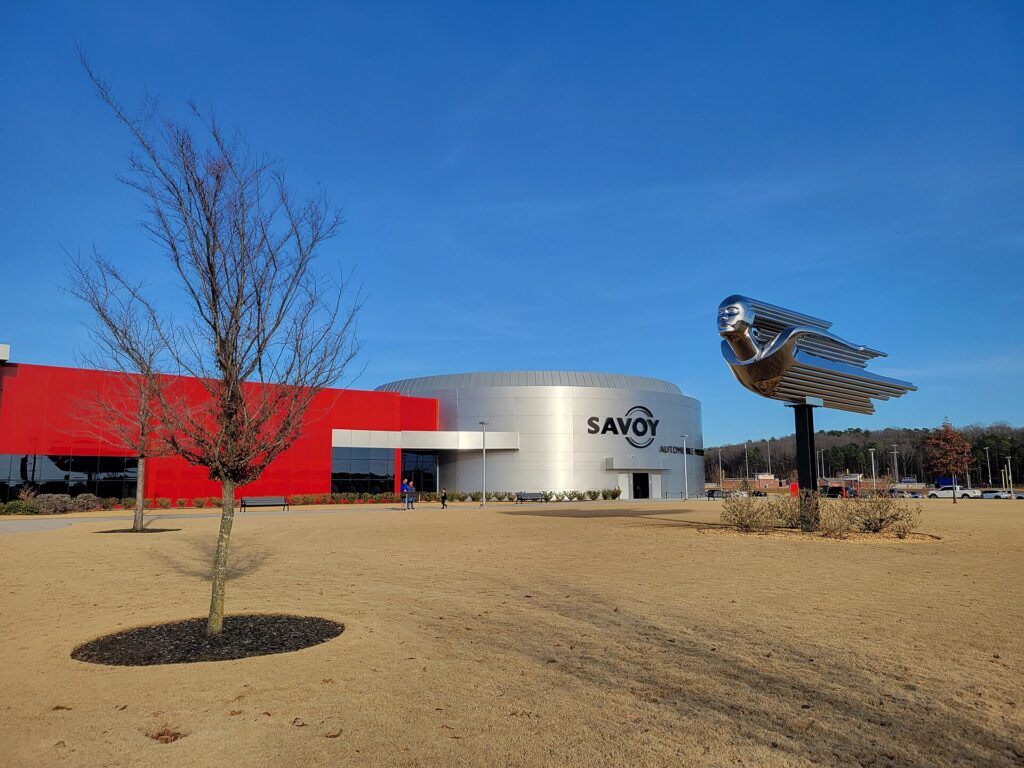
Approaching the Savoy Automobile Museum, visitors find a venue that is modest in scale compared to larger automotive institutions but oriented clearly toward enthusiasts and those interested in regional industrial heritage. The building itself, purpose-built or adapted for museum use, signals a focus on the automobile through understated signage and a layout designed to allow easy access to the collection. The site’s location within Cartersville situates the museum off the beaten path for typical tourist routes, which can influence first impressions: it is a destination primarily for those with a specific interest in cars, industrial history, or Americana.
Upon entering, the initial impression is one of a carefully curated collection rather than an overwhelming, expansive showroom. The design of the space aims to foreground the vehicles themselves, with room for each car to be appreciated individually. Some interpretive panels and displays near the entrance frame the museum’s mission and give visitors an overview of the historical significance of the collection and the regional impact of the Savoy Motor Car Company and related enterprises.
The entrance area often includes informational materials providing context for the visit, setting expectations about what the Savoy Automobile Museum offers. This supports a visitor mindset centered on learning about specific marques, mechanical developments, and the local industrial heritage, rather than a broad, generic automotive experience found at larger national museums.
Highlights and Key Exhibitions
The core strength of the Savoy Automobile Museum lies in its carefully selected vehicles and related artifacts that reflect the evolution of American automotive design and engineering with a particular investment in the regional story. The collection features early 20th-century cars, including both complete vehicles and parts that illustrate pioneering efforts in engine design, body construction, and automotive customization. This emphasis on early models reveals the challenges and ingenuity of the first decades of motorized transportation, presented through a tangible collection.
Among the notable pieces are vintage automobiles that evoke the craftsmanship and stylistic trends of their eras. These often include mid-century classics that showcase the transition from purely mechanical propulsion to vehicles designed with both performance and aesthetic considerations in mind. Details such as chrome trim, upholstery, and dashboard layouts are presented to underline changing consumer tastes and technological capacities over time.
The museum also highlights local and small-scale manufacturers and aftermarket industries, shedding light on less commonly told stories within the automotive history landscape. This reflects a valuable interpretative approach: rather than spotlighting only headline-grabbing brands, the Savoy Automobile Museum focuses on the ecosystem surrounding the car industry, an aspect often overlooked in larger collections. This involves an exploration of how regional companies fuelled industrial growth and consumer culture.
In addition to vehicles, the museum’s displays include related memorabilia—tools, advertisements, and mechanical components—that enrich the narrative of automobile production and maintenance. The presence of these supporting artifacts helps visitors understand the broader economic and social systems linked to automobile manufacturing and use.
Some parts of the exhibition focus on the evolution of automotive technology, such as innovations in engine mechanics or safety features, allowing visitors to trace how early experiments informed later mainstream developments. Interpretation here tends to connect the vehicles and components on display to their societal implications, such as changes in mobility patterns, economic accessibility, and American cultural identity tied to the automobile.
Visitor Experience
The Savoy Automobile Museum is best suited to visitors who come with a moderate to strong interest in automotive history, particularly those intrigued by the local industrial heritage of Cartersville and the Southeast United States. The museum’s pace is measured, allowing time to appreciate the engineering and stylistic details of the cars while offering enough context to link individual objects to larger historical themes. Visitors with a deeper knowledge of automotive mechanics and history will find points of interest in the technical artifacts and the nuanced exploration of lesser-known manufacturers.
Interpretative materials are clear and informative, using text panels and occasionally maps or timelines to frame the objects within historical developments. The information tends to strike a balance between factual detail and contextual explanation, without overwhelming or oversimplifying. This approach supports a broad audience that includes casual visitors, scholars, and automotive enthusiasts.
That said, the museum’s relatively small scale and specialized focus mean it may not satisfy those expecting a wide chronological sweep or extensive variety across global automotive innovations. Some visitors might find the collection somewhat niche; it specifically foregrounds American and regional automotive history, with less attention given to European or Asian car developments unless they intersect with the local story.
The layout encourages a steady, linear flow through the exhibits, making it accessible without needing extensive prior planning. Still, those with limited time or a preference for more interactive experiences might find the visit quieter and more contemplative rather than engaging in a hands-on or highly visual manner. The museum primarily relies on traditional display cases and descriptive text rather than multimedia or digital interpretation.
Tickets, Access, and Planning
Information about tickets, opening hours, and specific visitor services is limited in widely accessible sources. Potential visitors should consult the Savoy Automobile Museum’s official website or contact the institution directly for up-to-date details before planning a visit. This will ensure clarity on admission policies, any required reservations, current operating hours, and available visitor amenities.
The museum’s location in Cartersville suggests that visitors might need to arrange private transportation, as the town is less likely to be served by extensive public transit options. As with many specialized museums outside major urban centers, visitors should plan accordingly to allow for travel time and local accommodations if necessary.
Accessibility features and visitor services are not comprehensively documented, so users requiring specific accommodations or those who seek guided tours or audio guides should inquire directly with the museum. This is important to confirm availability and ensure a well-prepared visit.
While on-site facilities such as cafés, restrooms, and gift shops are not fully described in publicly available materials, it is reasonable to assume basic visitor amenities are present, but visitors should verify via official channels.
Final Verdict
The Savoy Automobile Museum offers a focused window into a distinctive area of American automotive history with a loyal interest in the industrial roots of Cartersville and the surrounding region. Its collection, though not vast, provides a carefully assembled narrative of early to mid-20th-century vehicles and associated artifacts that emphasize local manufacturing efforts and the nuanced evolution of the car in American life. This regional perspective is valuable for those interested in how smaller players contributed to a nationally significant transportation story.
The museum’s presentation is straightforward and respectful of the subject matter, favoring measured interpretation over flashy or heavily commercial displays. This lends the museum a certain seriousness appreciated by enthusiasts and scholars but may require patience or prior interest from casual visitors who are more accustomed to large-scale or highly curated automotive exhibitions.
Its specificity and smaller scale can be both an asset and a limitation: the Savoy Automobile Museum provides depth on a specialized topic but does not seek to frame an all-encompassing automotive history. This positions it as a worthwhile destination for those with a defined interest in American car manufacturing history, industrial heritage, and regional contributions to motoring culture.
For potential visitors, the best preparation includes checking the museum’s official communications for practical details on visiting logistics. Those open to exploring a less conventional automotive museum experience in a smaller city will find the Savoy Automobile Museum a thoughtful venue for connecting with a unique slice of American industrial and transportation history.