LeMay America’s Car Museum Review
Automobile Museums · Tacoma, United States. LeMay America’s Car Museum in Tacoma, Washington, occupies a unique position in the landscape of American automotive history institutions. Founded through the vision and collection efforts of Harold LeMay, a noted car collector with…
Automobile Museums · Tacoma, United States. LeMay America’s Car Museum in Tacoma, Washington, occupies a unique position in the landscape of American automotive history institutions. Founded through the vision and collection efforts of Harold LeMay, a noted car collector with…
Best forClassic cars, automotive design, motoring heritage
Review focusVehicle collections, design history, and visitor planning
Historical Context
LeMay America’s Car Museum in Tacoma, Washington, occupies a unique position in the landscape of American automotive history institutions. Founded through the vision and collection efforts of Harold LeMay, a noted car collector with one of the largest private automobile collections in the world, the museum opened its doors in 2012. The creation of the museum reflected not only a desire to house an extensive variety of vehicles under one roof but also to celebrate the cultural and technological impact of the automobile in the United States. Harold LeMay’s collection, which once numbered over 3,000 vehicles, represented decades of acquisition and a passion for automotive diversity, spanning makes, models, and eras.
The museum’s establishment carried a dual purpose: to preserve automotive heritage and to stimulate interest in American car culture through education and public appreciation. Its location in Tacoma connects it to the industrial and transportation histories of the Pacific Northwest, an area historically significant for both manufacturing and trade routes in the U.S. Since its founding, LeMay America’s Car Museum has aimed to broaden its narrative beyond the collector's focus, incorporating the stories of manufacturing innovation, design evolution, and social change tied to automotive history. The museum sits within a broader sector of specialized transportation museums in the United States but distinguishes itself by its scale and the deliberate effort to contextualize its collection within American cultural and technological currents.
What You See on Arrival
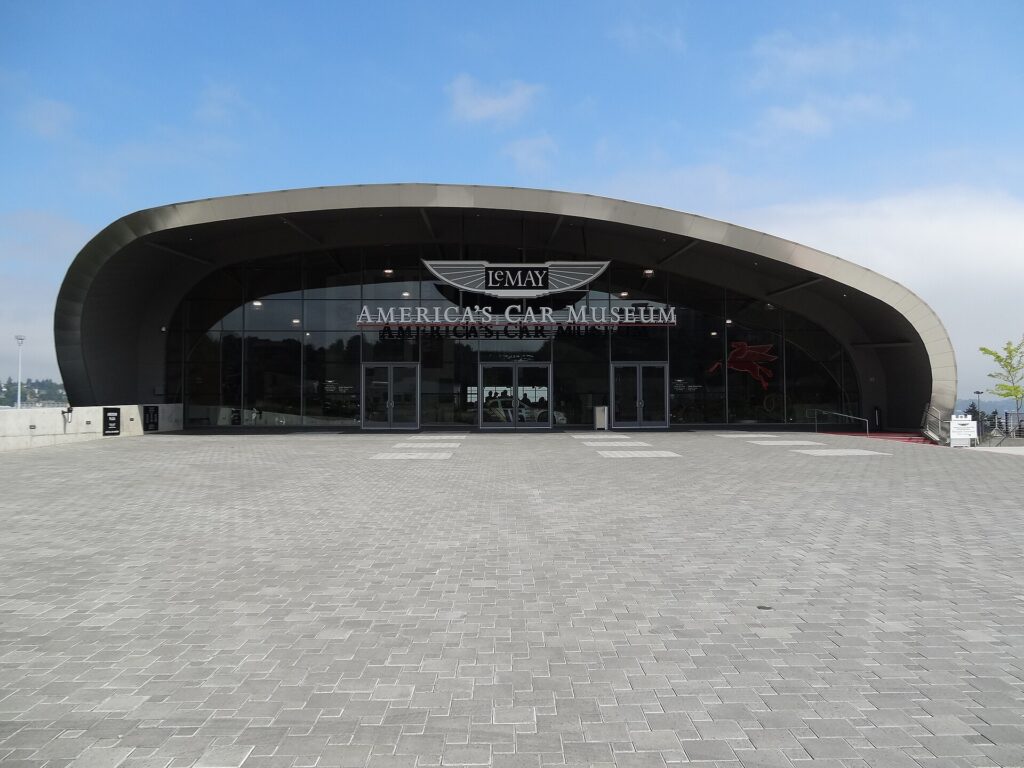
From the outside, the building’s architecture signals a modern approach to exhibition space. The museum’s design emphasizes openness and light, with large windows offering views of the collection inside and surrounding landscape, particularly the views toward the nearby Mount Rainier and the industrial waterfront. Visitors approaching the museum will first encounter a spacious entryway framed by metal and glass, blending industrial aesthetics with modern design elements that echo the automotive theme. This architectural presentation sets a tone: the museum is a venue that respects both the machine as artifact and the environment it occupies.
Inside the lobby and initial public areas, one can reasonably expect clear sightlines to the vehicles on display, along with introductory materials outlining the museum’s mission and a sense of the scale of the collection. The museum’s identity as a space dedicated to American automotive history is immediately conveyed by the presence of classic and contemporary vehicles arranged in a manner that invites exploration. The emphasis on design and form is evident not only in the cars themselves but also in the thoughtful integration of the museum’s interior spaces, which support a visitor experience prioritizing visual access and thematic grouping.
The entrance sequence and preliminary spaces serve as an effective way to orient visitors, providing context before entering the galleries proper. These arrangements help frame what the museum is about: an institution devoted to preserving, displaying, and interpreting the automobile’s role within the American story.
Highlights and Key Exhibitions
At the core of the museum is its permanent collection, which represents roughly 300 vehicles selected from the vast LeMay holdings. The museum’s display strategy is built around themes that highlight both technical achievement and cultural resonance. Visitors can expect to see a range of automobiles spanning nearly a century or more, including early 20th-century models, muscle cars, luxury vehicles, and more utilitarian transportation forms. This breadth offers insight into how automotive design and usage evolved alongside changing societal needs and technological developments.
One notable focus is on the classic American car era, especially vehicles from the mid-20th century, a period often considered the height of U.S. automotive design innovation and cultural impact. Muscle cars, convertibles, and customized vehicles emphasize both performance and style, reflecting broader postwar economic and cultural shifts. The museum pays particular attention to the craftsmanship and engineering details of these vehicles, supporting an understanding of both function and aesthetic.
Another significant component of the collection addresses the role of the automobile in American social history. For instance, the displays often highlight the diverse ways cars influenced mobility, urban planning, and leisure activities. This contextual approach allows the museum not just to serve car enthusiasts but also visitors with interests in history, design, and technology.
Beyond the cars themselves, the museum incorporates related artifacts and interpretive materials such as vintage advertisements, technical drawings, and engine displays, which together enrich the historical narrative. The inclusion of race cars and specialty vehicles demonstrates the wide range of roles automobiles have filled, from everyday workhorses to symbols of speed and status.
Though the museum’s physical collection is the centerpiece, it is worth noting that the museum regularly curates temporary showcases and thematic exhibitions, though these change over time and may not be predictable from year to year. However, the core emphasis remains consistent: presenting American automotive history through a broad but carefully curated lens.
Visitor Experience
LeMay America’s Car Museum is designed to accommodate a diverse audience, ranging from car enthusiasts to families and casual visitors with a general interest in history or design. The layout encourages a paced exploration, allowing visitors to focus on individual vehicles while maintaining an awareness of the broader narrative sequence.
The gallery spaces are generally arranged by theme, era, or vehicle type, which allows visitors to engage with the collection in a structured yet flexible manner. The physical spacing between vehicles enables close viewing without feeling overcrowded, an important factor considering the visual and tactile appeal of automobiles as three-dimensional design objects.
Interpretation throughout the museum blends textual panels, multimedia, and physical displays. While some sections offer detailed technical descriptions suitable for enthusiasts, others provide broader historical context accessible to those less familiar with automotive terminology. This range helps the museum serve its dual function as both a specialized collection and an educational resource.
However, the museum’s focus on American vehicles means it may not fully satisfy those looking for a more global or comparative approach to automotive history. International makes are occasionally included, but the central narrative remains centered on U.S. industry and culture. Visitors expecting a comprehensive international car museum may find this emphasis somewhat limiting.
In terms of visitor amenities, the museum is designed for a smooth flow, though the large size and multiple levels can require a fair amount of walking. The spacious atrium and well-lit galleries mitigate any potential fatigue, allowing visitors to rest while still observing displays. Families and groups can benefit from this layout, as it supports both individual interest and shared experiences.
Tickets, Access, and Planning
Details concerning tickets, access, and visitor planning should be confirmed with the museum’s official channels for the most accurate and up-to-date information. Historically, the museum has set its admission to balance accessibility with the costs associated with maintaining a large collection and facility.
Given the museum’s location in Tacoma, visitors often approach from Seattle and surrounding areas, where transportation infrastructure facilitates access by car or regional transit. While the museum appears to be designed with accessibility in mind, those with specific mobility or access needs should verify accommodations ahead of their visit.
The museum’s website remains the best resource to check for current details on hours, admission fees, any available discounts or memberships, parking options, and visitor services such as guided tours or audio guides. Planning ahead is advisable since hours and services can vary by season or special events, and crowding may occur during peak times.
Final Verdict
LeMay America’s Car Museum offers a substantial and thoughtfully presented view of American automotive history. Its strength lies in the breadth and depth of its collection, especially the significant representation of mid-century American cars, which are shown not merely as objects but as artifacts embedded in cultural and technological contexts. The museum successfully addresses the interests of car enthusiasts while maintaining an accessible approach for visitors with a general interest in history and design.
The museum benefits from a well-integrated physical environment that supports both casual viewing and deeper engagement. Interpretation is balanced, providing material for experts and novices alike, though the focus remains firmly on the American automotive scene, which sets clear expectations for visitors.
While the museum provides a detailed and visually appealing experience, it is not without limitations. The northwestern United States location may make it less convenient for travelers primarily focused on automotive history destinations in more traditional hubs. Additionally, those seeking a global perspective will find the museum’s angle somewhat narrow, reflecting its specific cultural and historical mandate.
Overall, LeMay America’s Car Museum is a significant institution for those interested in the history of cars and their role in American life. By combining an extensive collection with thoughtful exhibition design and interpretive materials, it stands as a solid resource within its specialized field. Prospective visitors should consult official resources for practical information to plan their visit efficiently.