Museum of Contemporary Art Kiasma Review
Intro The Museum of Contemporary Art Kiasma in Helsinki, Finland, is one of the most interesting museums in Northern Europe because it occupies a.
Intro The Museum of Contemporary Art Kiasma in Helsinki, Finland, is one of the most interesting museums in Northern Europe because it occupies a.
Best forMasterpieces, architecture, cultural history
Review focusCollection highlights, building, visitor flow
Intro
The Museum of Contemporary Art Kiasma in Helsinki, Finland, is one of the most interesting museums in Northern Europe because it occupies a difficult but important cultural position. Contemporary art museums often need to balance accessibility, institutional seriousness, architectural identity, and a collection that may resist easy categorization. Kiasma manages this balance more effectively than many museums of similar scale. It neither retreats into specialist insularity nor flattens contemporary art into a purely lifestyle experience. Instead, it presents recent and contemporary art as part of public cultural life in Finland.
That role matters because Kiasma is not just another exhibition venue in a capital city. As part of the Finnish National Gallery, it functions as a major national institution for contemporary art. This gives the museum added weight and makes its curatorial choices more visible. Visitors therefore encounter not only individual works or temporary shows, but a broader statement about how a country frames contemporary visual culture in public.
How the Site Works
Kiasma works through variation. It is a museum in which architecture, movement, and changing exhibition design all matter almost as much as the individual works on display. That does not weaken the institution. In the case of contemporary art, it often strengthens it. Visitors move through spaces that create different intensities of attention, from more open gallery areas to rooms suited to video, installation, or immersive works.
The museum also works because it does not rely on a single curatorial voice or one fixed narrative. Contemporary art changes rapidly, and Kiasma acknowledges this by combining collection displays with temporary exhibitions that can shift the tone of the museum substantially from one visit to the next. This means the institution feels alive rather than static.
At a practical level, the site remains approachable. Even visitors who are uncertain about contemporary art can usually find points of entry through the museum’s architectural clarity, its central location, and the variety of media on view. Kiasma asks for openness, but it does not punish non-specialists.
Exhibitions and Collection
The collection and exhibition program are Kiasma’s core strengths. The museum focuses on art from the 1960s onward and gives particular visibility to Finnish and Nordic practice while also placing that work in dialogue with broader international trends. This is a strong model because it prevents the institution from becoming either too narrowly national or too vaguely global.
Installations, moving image, sculpture, photography, painting, and hybrid forms appear throughout the museum’s programming. That breadth reflects the reality of contemporary practice and allows Kiasma to avoid a conservative or medium-bound understanding of art. The result is an experience that feels current without being superficial.
What Kiasma does especially well is frame contemporary art as something that can deal with identity, memory, politics, environment, urban life, and sensory perception all at once. The museum’s best exhibitions remind visitors that contemporary art is not a niche language for insiders only. It is a public mode of inquiry, and Kiasma gives it institutional space to operate at that level.
At the same time, the museum’s changing temporary shows mean the quality of individual visits can vary according to the current program. This is not a weakness but part of the institution’s nature. Kiasma is a museum to revisit, because no single exhibition cycle can fully define it.
Architecture / Space
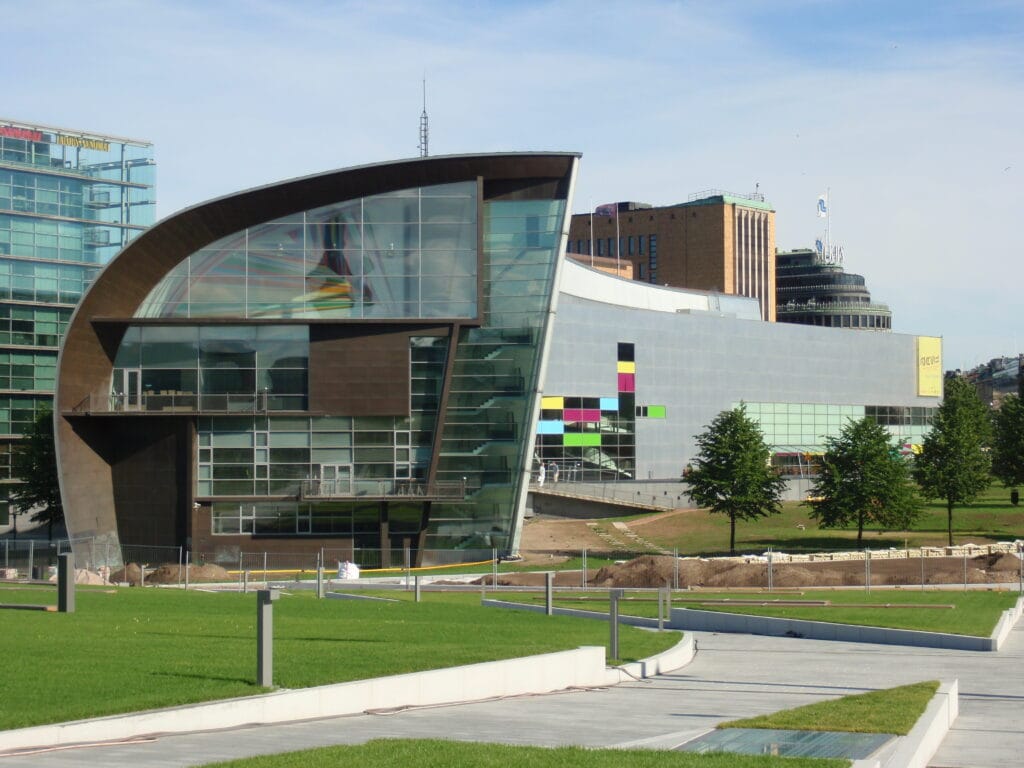
The museum building is one of the great strengths of Kiasma and a major reason it remains memorable even among contemporary art institutions. Located prominently in central Helsinki, it has enough visual identity to establish itself as a civic landmark without becoming architectural spectacle for its own sake. Inside, the spatial sequence supports the museum’s curatorial ambitions by allowing different scales of encounter.
Contemporary art often benefits from spatial complexity, and Kiasma’s architecture provides it. Galleries do not feel monotonous, and the movement through the museum helps sustain attention. The building creates the impression that contemporary art deserves its own institutional language rather than being inserted into spaces designed for older museum models.
Because the museum is centrally located, the building also acts as a bridge between civic Helsinki and the world inside the galleries. That public visibility matters. Kiasma feels like part of the city’s everyday symbolic landscape, not a specialist enclave hidden from general life.
Visitor Experience
The visitor experience is engaging, varied, and usually intellectually open rather than intimidating. One of Kiasma’s greatest advantages is that it supports different viewing styles. Some visitors will move quickly and respond to scale, image, and atmosphere. Others will spend more time with text, video, and conceptual framing. The museum accommodates both approaches without collapsing into confusion.
Families, casual visitors, and serious art audiences can all find something worthwhile here, though the museum naturally rewards those willing to slow down and pay attention to the logic of contemporary exhibition-making. Because the program changes, repeat visits are especially useful. Kiasma is not a museum whose identity can be exhausted in a single afternoon.
The atmosphere also tends to feel less formal than that of some major historical art museums, which suits the subject. This makes it easier for first-time contemporary art visitors to engage without feeling that they have entered a closed institutional culture.
Historical Context
Kiasma belongs to an important phase in late twentieth-century European museum history, when many countries expanded or redefined their contemporary art infrastructure in order to give recent practice a stronger public platform. In Finland, this development was particularly significant because national cultural institutions have long played a major role in shaping how art history is understood.
By giving contemporary art a central and highly visible institution, Finland acknowledged that the national collection story could not end with modernism or with historical painting and sculpture. Kiasma therefore has historical importance not only as a museum building but as a public statement about the cultural legitimacy of contemporary practice.
Practical Information
The museum is currently open Tuesday from 10:00 to 20:00, Wednesday and Thursday from 10:00 to 18:00, Friday from 10:00 to 20:00, Saturday and Sunday from 10:00 to 17:00, and closed Monday. Ticket prices are currently listed at 23 euros at the museum, 21 euros online, 13 euros reduced, and free for visitors under 18.
Because the museum’s temporary exhibition program matters so much, it is worth checking what is on view before arriving. Even so, Kiasma is strong enough as an institution that it can reward visitors regardless of the specific show, provided enough time is given to the architecture and collection context as well.
Final Verdict
Kiasma is one of the strongest contemporary art museums in the Nordic region because it combines architectural identity, national institutional weight, and a genuinely flexible approach to contemporary exhibition-making. It presents contemporary art as a public necessity rather than as a niche luxury, and that gives the museum both seriousness and relevance.
For visitors to Helsinki, it is essential if contemporary art matters at all. For those uncertain about the genre, it is also one of the better places to begin, because the museum remains open in tone while still maintaining high curatorial standards.
Plan your visit
Plan Kiasma as a major museum stop in central Helsinki rather than as a brief add-on. Give enough time for the building, the current exhibitions, and the collection displays to work together. Because the museum changes from visit to visit, it is worth treating it as an institution to return to rather than a one-time checklist destination. Visitors interested in public contemporary art culture should place it high on their Helsinki itinerary.