Museu Moto Bassella Review
Motorcycle Museums · Bassella, Spain. The Museu Moto Bassella is situated in Bassella, a municipality within the Catalonian region of Spain, and reflects an important chapter of automotive and industrial heritage. Opened where the passion for motorcycles and the…
Auto-rated with GMR rubric v1: collection 3.8, importance 3.4, visitor 3.2, presentation 3.5, practical 3.4, uniqueness 3.7. Confidence: medium.
Best forScience, technology, hands-on learning
Review focusExhibits, interpretation, visitor flow
Historical Context
The Museu Moto Bassella is situated in Bassella, a municipality within the Catalonian region of Spain, and reflects an important chapter of automotive and industrial heritage. Opened where the passion for motorcycles and the local history intersect, the museum was established to preserve and present the evolution of motorcycling technology alongside the cultural and sporting significance motorcycles have had, particularly in Spain and Catalonia. The museum’s collection and narrative emphasize the role of motorcycles not only as transport machines but as symbols of innovation, social change, and personal freedom over the 20th and into the 21st century.
Spain’s manufacturing and usage history in motor vehicles, especially motorcycles, has regional and national relevance. Catalonia historically has had several motorcycle producers and a strong motor sporting community. The museum stands in Bassella, which, beyond being geographically well-positioned within Catalonia, has a connection to motor sport events that underline the contextual relevance of the museum’s focus. The facility is more than a static collection; it acts as a focal point for enthusiasts and historians interested in the mechanical story, design trends, and local influence of motorcycles in broader European contexts.
What You See on Arrival
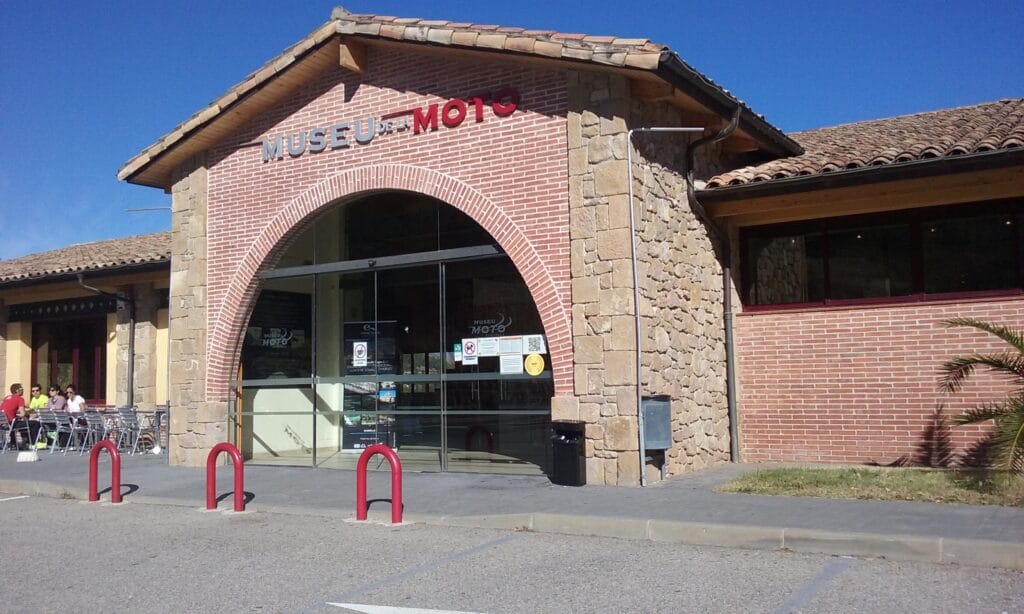
Approaching the Museu Moto Bassella, visitors encounter a facility that signals its dedication to motorcycles immediately through visible design choices and signage. The museum’s exterior merges industrial aesthetics with clean lines that reflect the mechanical and design ethos embedded in motorcycling itself. It does not rely on flamboyant architecture to attract attention but appears to let its subject matter—the motorcycle—be the true draw.
The entry experience frames the museum clearly as a specialized institution. Rather than presenting a generalized transport museum, the identity is sharply focused on motorcycles and their cultural and technical dimensions. The initial reception spaces likely offer introductory material or displays that prepare visitors for the detailed exhibitions within. This helps set expectations for a museum less oriented toward casual visitors unfamiliar with motorcycling and more toward those with a genuine interest, whether historical, technical, or sporting.
The external context also reinforces the museum’s base in a rural yet culturally active region. Visitors may gather an immediate sense that this is not merely an exhibit for the sake of display but part of a community narrative—something often appreciated by those who follow niche collections and heritage sites.
Highlights and Key Exhibitions
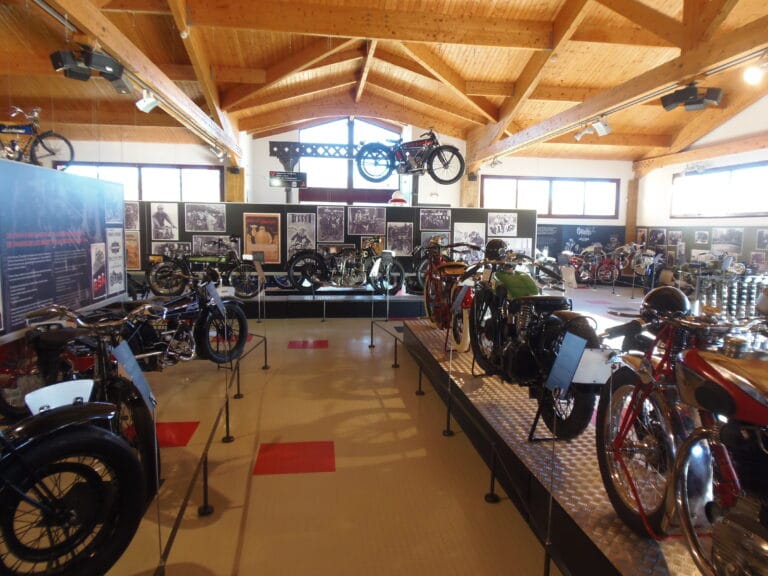
The Museu Moto Bassella’s core strength lies in its well-curated collection of motorcycles that span a variety of eras and styles. The collection notably charts the technological advancements in motorcycle engineering, including frames, engines, suspension systems, and design evolution. Museums centered on such a specific subject often risk becoming overly technical or niche to the general public, but Bassella appears to achieve a balance between depth and accessibility in its exhibits.
Among the key exhibitions are pre- and post-World War motorcycles, illustrating both the mechanical progress and shifting social attitudes toward motorized personal transport. Spanish-built motorcycles undoubtedly feature prominently, ensuring the museum’s narrative is anchored in national industrial history. Regional manufacturers and models provide a useful lens into Catalonia’s specific ties to motorcycling.
Another focal point is competitive and sport motorcycles, reflecting Spain’s vibrant racing history. The museum may include notable racing machinery, chronologies of events, and personal stories of riders who contributed to the sport locally and internationally. This introduces a dynamic and human element beyond the machines themselves.
Interpretative materials examine not only the technical specifications but also cultural and artistic dimensions—such as the motorcycle’s role in films, youth culture, and changing forms of mobility. While these aspects are present, the emphasis remains firmly on the machines’ design and mechanical heritage.
The collection’s breadth likely includes motorcycles from early 20th century models with rudimentary designs to later mid-century classics and contemporary styles. Complementary exhibits may display parts, tools, and accessories which contextualize the machines in their working life and maintenance. Archival photographs and documents also add depth to the historical narrative, anchoring motorcycles within the broader story of motorized transportation development in Spain.
Visitor Experience
This museum’s visitor experience probably suits a relatively specialized audience—motorcycle enthusiasts, mechanical historians, and those with a strong interest in technological history. The thematic focus, while clear, means that general tourists without prior interest in two-wheeled motor vehicles might find the content very specialized. However, those engaged by engineering, design, or local Catalan history will find informative and well-presented material.
Pacing the exhibition benefits from the discrete presentation of motorcycles accompanied by interpretive panels that explain technical evolution and contextual importance without overwhelming visitors. The layout likely allows for close inspection of the machines, essential for mechanical enthusiasts. Because motorcycles have varying sizes and designs, exhibit flow may offer a dynamic progression through different eras rather than a single linear timeline.
The museum may face some challenges in engaging younger visitors or general audiences unfamiliar with motorcycle history, given the very specific nature of the subject. Nonetheless, introductory texts and organized displays likely provide enough background to make the museum informative without excessive prior knowledge.
The interpretive approach appears to balance technical data with historical narrative. Technical descriptions help understand engineering ingenuity, whereas contextual materials relate these machines to their social and cultural impact. This dual approach can widen appeal but will most strongly resonate with audiences ready to delve beyond surface-level appreciation.
In terms of visitor facilities inside, although specific details are not confirmed, one can expect standard museum provisions aligned with this size and focus, but details on guided tours, audio guides, or interactive elements should be verified directly with the museum.
Tickets, Access, and Planning
Practical information on tickets, access, and visit planning is not exhaustively detailed here. Prospective visitors should consult the official Museu Moto Bassella website or contact the institution directly to confirm current opening hours, admission fees, and any relevant booking requirements.
Bassella’s location, outside large urban centers, might affect travel arrangements. Visitors should consider regional transport options or private vehicles as likely means to reach the museum. Planning ahead is advisable, especially given the area’s limited public transportation connections compared to major Spanish cities.
The museum’s spatial layout and exhibition scale suggest a visit could comfortably fit into a half-day itinerary for those with an ample interest in motor vehicles or local industrial heritage. Visitors should expect a focused museum experience; this is not a sprawling multi-themed facility but rather a concentrated exploration of motorcycles and their cultural footprint.
Information on accessibility, guided tours, or other visitor services may vary, so it is prudent to seek those details before planning a visit. This will help ensure that any specific visitor needs regarding mobility, language, or preferred learning methods are addressed.
Final Verdict
The Museu Moto Bassella offers a substantive and well-defined exploration of motorcycle history, combining technical insight with local and national cultural contexts. It stands out as a specialized institution that preserves and interprets the development of motorbikes from engineering, sporting, and social perspectives. This nuanced focus makes it particularly valuable for a dedicated audience interested in motorcycles, engineering history, or Catalan industrial heritage.
The museum’s strengths lie in its coherent thematic concentration, collection scope, and careful interpretation that avoids reducing the subject merely to mechanical curiosities. Its inclusion of both historic machines and their broader story places it as an informative resource within Spain’s museum landscape.
Potential visitors should note, however, that the orientation is quite focused, which may limit appeal for a broad tourist demographic. Those without a prior interest in motor vehicles or engineering may find the exhibits technical or narrowly specialized. Additionally, practical considerations such as location and access require some planning.
Ultimately, Museu Moto Bassella is best approached by those with curiosity about the evolution of motorcycles, their technical development, and their role within local Catalan culture and sport. It complements the network of Spanish museums dedicated to industrial and transport history by concentrating on a particular object type and narrative thread, making it an institution of clear purpose and value within its niche. For reliable visitor information, checking the official website or direct contact before planning a visit is recommended.