Museo Nazionale Romano Review
Intro The Museo Nazionale Romano is one of the most important museums in Rome precisely because it is not a single museum in the simple modern sense.
Intro The Museo Nazionale Romano is one of the most important museums in Rome precisely because it is not a single museum in the simple modern sense.
Best forMasterpieces, architecture, cultural history
Review focusCollection highlights, building, visitor flow
Intro
The Museo Nazionale Romano is one of the most important museums in Rome precisely because it is not a single museum in the simple modern sense. Spread across multiple sites, it presents Roman archaeology through a distributed institutional structure that mirrors the density and complexity of the city itself. For some visitors, this can seem inconvenient compared with a one-building museum. In reality, it is one of the institution’s greatest strengths. Ancient Rome cannot easily be reduced to a compact museum narrative, and the Museo Nazionale Romano wisely does not try to pretend otherwise.
This matters because Rome can overwhelm even informed visitors. Monuments, ruins, churches, palaces, and fragments all compete for attention. Without museums that explain the material culture behind the city’s architecture, Roman history risks becoming a sequence of monumental impressions without texture. The Museo Nazionale Romano gives that missing texture. It restores sculpture, fresco, inscription, domestic decoration, portraiture, and daily-life material to the story.
The result is one of the most intellectually rewarding museum experiences in Rome, especially for visitors willing to move beyond the usual shortlist of blockbuster sites.
How the Site Works
The institution works through multiple locations rather than a single centralized route, and that fact defines the visitor experience. Instead of leading everyone through one master narrative, the museum offers a set of connected archaeological encounters. Different sites emphasize different materials and forms of Roman life, allowing visitors to build knowledge in layers. This requires more planning than a conventional museum visit, but it also rewards that planning far more richly.
Each site contributes to the broader institutional argument. Roman civilization appears not only as imperial power and monumental architecture, but as decoration, burial, portraiture, language, domesticity, religion, and display. Because these dimensions are distributed rather than compressed, they become easier to register in their specificity.
In practice, the museum works best when visitors choose priorities and treat the institution as part of a wider Roman archaeological itinerary. It is not ideal for the one-hour, one-building mentality. It is ideal for anyone who wants Roman history to become more than scenery.
Exhibitions and Collection
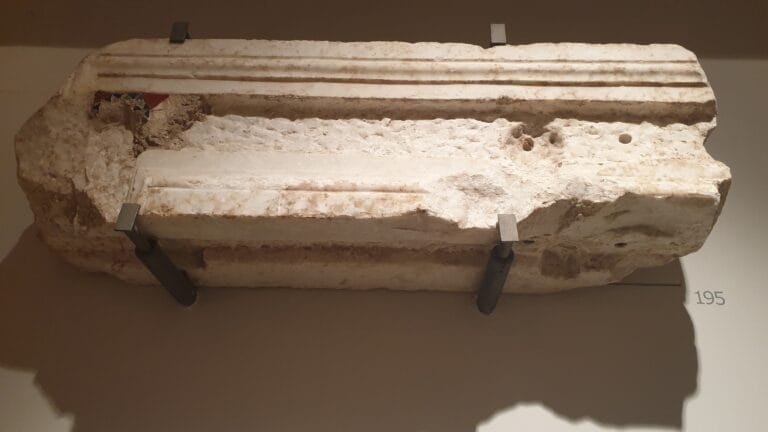
The collection is extraordinary in its breadth. Sculpture, mosaics, frescoes, inscriptions, coins, funerary monuments, and decorative material all play major roles. What makes the museum especially valuable is that it presents Roman material culture not just as a series of masterpieces, but as a social world. Portraiture becomes part of public identity; frescoes become part of domestic life; inscriptions become part of how Roman society recorded authority, family, and memory.
This broader approach is crucial in Rome, where the sheer fame of public monuments can make ancient life seem more imperial than lived. The Museo Nazionale Romano corrects that imbalance. It shows that Roman civilization was built not only out of forums and arches but also out of walls, rooms, objects, words, and bodies. This is one of the institution’s greatest interpretive achievements.
The multi-site structure also gives the collection internal rhythm. Rather than forcing all material into the same visual format, it allows different kinds of archaeological evidence to dominate in different contexts. This makes the museum feel more responsive to the material than a single mega-building might have been.
Architecture / Space
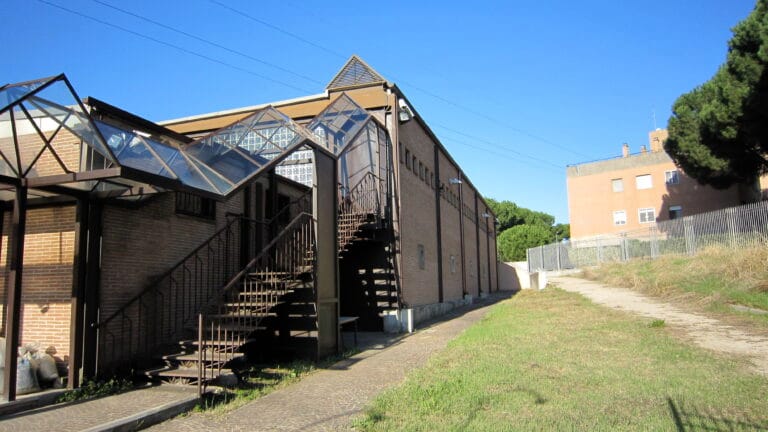
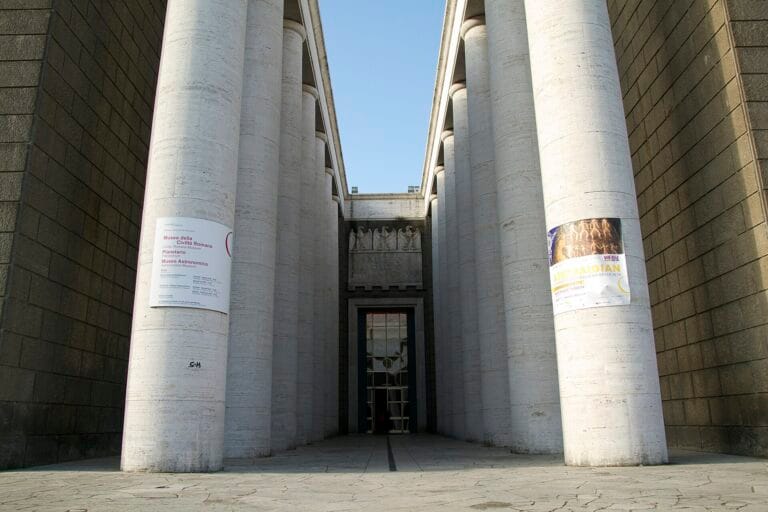
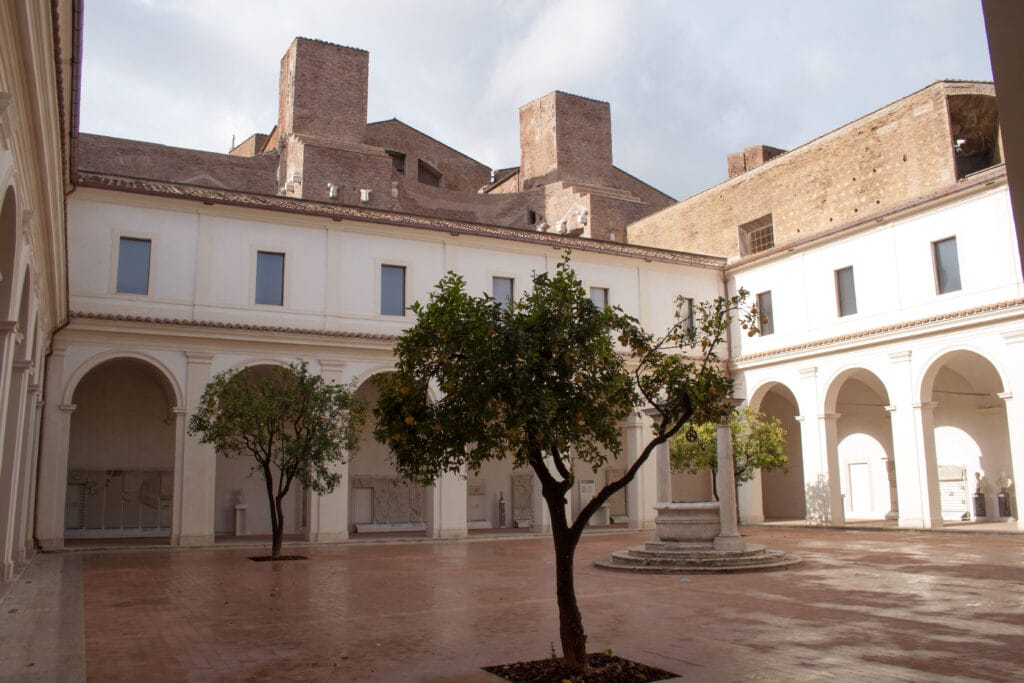
The museum’s architectural character is inseparable from its distributed form. Each site contributes its own historical atmosphere, and this gives the institution a particularly Roman quality. The collections do not sit in neutral gallery boxes detached from the city. They remain in conversation with Rome’s layered built environment. This matters because Roman archaeology gains force when shown in spaces that themselves carry architectural and historical weight.
At the same time, this distributed structure asks more of the visitor. There is no single architectural climax that summarizes the institution. The experience is cumulative, urban, and somewhat fragmentary by design. But that fragmentation is not really a flaw. It reflects the city itself and the archaeological reality out of which the museum emerged.
In a place like Rome, coherence does not always come from concentration. Sometimes it comes from carefully managed dispersion, and the Museo Nazionale Romano understands that better than most museums could.
Visitor Experience
The visitor experience is rewarding for those who enjoy archaeological museums as tools of understanding rather than merely as treasure houses. This is not the easiest museum in Rome for casual visitors who want one spectacular room and immediate orientation. It is, however, one of the best for those who want depth. Its rewards increase with attention, comparison, and a willingness to connect what is seen in the galleries to what is seen outdoors in the city.
Because the museum is multi-sited, visitors can tailor the experience. This makes it possible to focus on particular forms of material culture without losing the larger institutional identity. It also means repeat visits are especially worthwhile. The museum is not exhausted in one glance.
Emotionally, the institution is less about awe than about density. It gives you the sense that ancient Rome was materially thick with objects, images, surfaces, and inscriptions. That density is one of the strongest things the museum communicates.
Historical Context
The Museo Nazionale Romano matters because it is part of the modern effort to make Rome’s archaeological abundance publicly legible. The city has always produced more ancient material than could remain in place, and the museum exists in part because excavation, urban change, and state preservation required a framework for collecting and interpreting that material. In this sense, the institution belongs to the history of archaeology as much as to the history of ancient Rome.
It also matters because it resists reducing Roman civilization to the monumental and the imperial. By restoring domestic, funerary, decorative, and textual material to view, the museum broadens the historical picture. This is essential in Rome, where visual grandeur can easily flatten complexity.
For serious visitors, the institution therefore provides something indispensable: not merely more Roman material, but a more complete Roman world.
Practical Information
The museum should be approached with planning. Most visitors are better served by choosing one or two sites within the institution rather than trying to complete the whole museum in a hurried way. Two hours is a good minimum for a focused visit, with longer or multiple visits useful for anyone especially interested in Roman sculpture, domestic decoration, or archaeological context more broadly.
Because the sites are central, the museum integrates naturally into a broader Rome itinerary. That is exactly how it should be used: as a museum that gives meaning to the city, not one that stands apart from it.
Final Verdict
The Museo Nazionale Romano is one of Rome’s most important museums because it turns the city’s archaeological richness into something more understandable, more material, and more human. Its multi-site structure may require planning, but that structure is also part of its intelligence. It reflects the complexity of Rome rather than simplifying it into a single museum gesture.
For visitors who want to understand ancient Rome through objects as well as monuments, it is essential. Its greatest strength is that it restores texture to a city too often viewed only through grandeur.