Museo Franz Mayer Review
Mexico City, Mexico. The Museo Franz Mayer is a notable institution located in Mexico City, housed within a restored 16th-century colonial building originally constructed as an auction house and later serving as a hospital and a college.…
Mexico City, Mexico. The Museo Franz Mayer is a notable institution located in Mexico City, housed within a restored 16th-century colonial building originally constructed as an auction house and later serving as a hospital and a college.…
Best forMuseum lovers, culture travelers, first-time visitors
Review focusCollections, visitor experience, and practical planning
Historical Context
The Museo Franz Mayer is a notable institution located in Mexico City, housed within a restored 16th-century colonial building originally constructed as an auction house and later serving as a hospital and a college. The establishment of the museum owes itself to the extensive private collection of Franz Mayer, a German collector and financier who settled in Mexico in the early 20th century. Mayer’s collection, accumulated over several decades prior to his death in 1975, focuses on decorative arts, with particular attention to European and Mexican objects spanning the 16th to the 19th centuries. The museum opened to the public in 1986, reflecting an effort to preserve and display the kinds of applied arts that have historically played an essential role in Mexico’s cultural identity but were often overlooked by larger art institutions emphasizing fine arts.
The institution occupies a critical niche within Mexico City’s broad museum landscape by emphasizing decorative arts rather than paintings or archeological artifacts, distinguishing itself from nearby venues like the Museo Nacional de Antropología or Museo de Arte Moderno. The building itself, with its colonial architecture, adds another layer of historical resonance, enhancing the visitor’s sense of stepping into a refined space where craftsmanship and aesthetics were once central to everyday life for an elite class. While the museum’s origins stem from a private collection, it now serves a public role by incorporating acquisitions and donations that broaden the scope of decorative arts, including ceramics, textiles, furniture, and silverwork.
What You See on Arrival
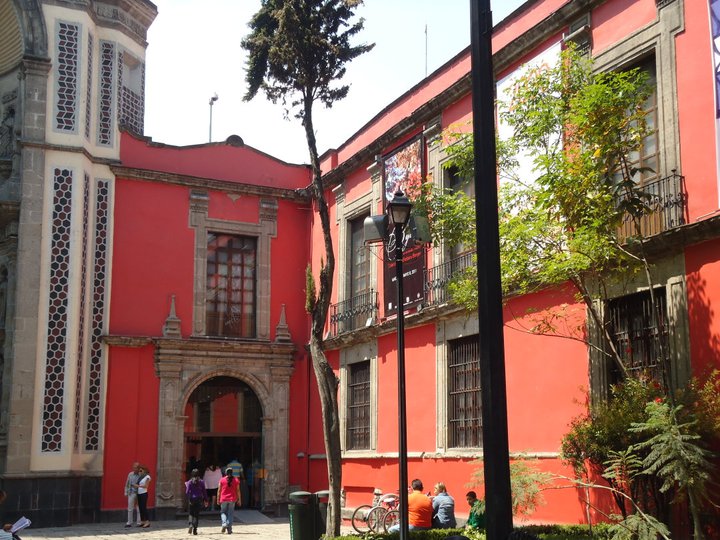
Upon approaching the Museo Franz Mayer, visitors encounter an imposing yet refined colonial façade indicative of the building’s historical character. The architecture signals the museum’s dual focus on artistry and history. The entrance leads into an interior that balances its period features with the requirements of a modern exhibition space. While the building retains much of its colonial charm—courtyards, arches, and wooden beams—it is organized to facilitate the presentation of delicate objects requiring careful lighting and climate control.
Visitors are likely to first notice the museum’s quiet and contemplative atmosphere, which contrasts with the often bustling urban surroundings of Mexico City’s central districts. There is a sense of order and deliberate pacing embedded in the layout, with spaces designed to encourage close viewing and reflection. The museum’s identity as a custodian of decorative arts is clear from the start: instead of large canvases or immersive multimedia, the visitor is presented with carefully crafted objects that demand attention to detail and provenance.
The initial impression emphasizes a museum experience oriented toward an audience with an interest in history, art, and craftsmanship, rather than purely casual tourists. This framing becomes apparent in the way objects are displayed, where labels tend to provide detailed information on provenance, manufacture, and cultural context. The museum’s branding and cataloging reflect a commitment to scholarship while maintaining accessibility for the general public.
Highlights and Key Exhibitions
The Museo Franz Mayer’s permanent collection centers on decorative arts produced in Mexico and Europe from the Renaissance through the 19th century. Its holdings cover a broad range of media, including ceramics, textiles, furniture, glassware, silver objects, and manuscripts. The collection reflects Franz Mayer’s passion for the decorative arts and their role in everyday life and social customs.
One of the key strengths of the museum is its assemblage of Talavera pottery, a distinctive form of Mexican ceramics characterized by its tin-glazed earthenware and blue-and-white designs. These pieces highlight the cross-cultural influences that shaped Mexican craft traditions, tracing roots to Spanish and Italian sources yet developing unique local styles. The ceramics galleries are carefully arranged to juxtapose Mexican works with European examples, allowing visitors to observe technical and stylistic dialogues across the Atlantic.
Furniture is another important category, with a significant grouping of colonial Mexican items that represent the fusion of indigenous, Spanish, and Moorish influences. These pieces provide an important complement to the ceramics and textiles, illustrating how decorative arts served functional as well as aesthetic purposes in domestic environments. The collection includes intricately carved chests, chairs, and religious altarpieces, which convey social hierarchies and cultural values from different periods.
The silverwork collection is notable for both religious and secular objects, including altar pieces, liturgical vessels, and ornately decorated items such as trays and candelabras. Silver was a prominent material in Mexican decorative arts due to the country’s role as a major source of the metal during the colonial period. The museum’s holdings contribute insight into workshop practices and patronage networks, as well as the stylistic evolution of silver decoration.
In addition to the tangible decorative arts, the museum maintains a collection of codices, hand-painted manuscripts combining pictorial and alphabetic elements. These illustrate not only artistic but also historical and ethnographic dimensions, chronicling indigenous knowledge, religious syncretism, and colonial dynamics.
The overall curatorial approach situates the decorative objects within their social and cultural contexts, underlining their roles as markers of identity, trade, and power rather than merely aesthetic artifacts. However, the museum’s focus on historical periods means that contemporary or modern decorative art forms receive limited attention.
Visitor Experience
The Museo Franz Mayer is tailored predominantly to visitors with a serious interest in decorative arts, art history, and Mexican culture. The pace of the visit is moderated by the nature of the objects on display: many are small-scale or intricate, requiring close inspection and time to absorb detailed information. The layout facilitates a chronological and thematic progression that helps clarify links between European and Mexican production.
Interpretive materials generally emphasize craftsmanship, provenance, and cultural significance, but the presentation style remains largely traditional. Labels and texts avoid jargon while providing substantive context but do not often engage with broader interpretive themes or interactive elements that might appeal to younger or less specialized audiences. Those seeking more narrative-driven or multimedia-enhanced experiences may find the museum restrained in this respect.
The museum’s spatial arrangement, with galleries branching from central courtyards, can at times require careful navigation. Visitor flow may be affected during peak times, given that some corridors and display rooms have limited space. Nevertheless, the atmosphere largely preserves a contemplative environment suited to the quiet appreciation of decorative objects, which can be a welcome contrast to larger, busier Mexico City museums.
The collection’s emphasis on historic periods means those interested in contemporary art or design may find the scope limited. Institutions with a wider chronological focus may offer more variety. Similarly, visitors unfamiliar with decorative arts might benefit from preliminary reading or guided interpretation to gain full appreciation of the significance behind the objects.
Tickets, Access, and Planning
Information regarding tickets, opening hours, visitor services, and accessibility should be verified via the museum’s official website prior to planning a visit. While the museum is centrally located in Mexico City and accessible by public transportation, details on parking or special accommodations vary and are best checked ahead of time.
Given the museum’s specialized focus and the delicate nature of many exhibits, photography rules and visitor conduct expectations are generally stringent; these parameters are also worth confirming in advance. As with many museums housing precious heritage objects, group visits and educational tours may require prior arrangement.
Visitors interested in decorative arts and colonial Mexican culture should allocate sufficient time to explore the collection without rushing, though the museum’s scale does not demand a full day. Those with limited time might prioritize ceramics and silverwork galleries to capture the museum’s distinctive character.
Final Verdict
The Museo Franz Mayer offers a valuable and carefully curated window into historical decorative arts with a particular focus on Mexico’s colonial and post-colonial material culture. Its collections reveal the intricate craftsmanship and cultural exchanges that shaped artistic production across centuries, making it a significant resource for those interested in this field.
Strengths lie in the quality and depth of ceramics, silverwork, textiles, and furniture, alongside the atmospheric colonial architecture that frames the display. The museum excels at positioning objects within historical contexts while maintaining a respectful presentation style suitable for detailed study.
However, the museum’s focus on historic decorative arts, with limited engagement with contemporary practices or interactive interpretation, means it may hold less appeal for visitors seeking broader or more dynamic experiences. Additionally, spatial constraints and a relatively traditional presentation approach suggest the museum is best suited to visitors willing to engage closely with the subject matter rather than casual or family audiences looking for a more varied museum day.
In sum, Museo Franz Mayer should be considered a purposeful destination for decorative arts enthusiasts, scholars, and those interested in Mexico’s colonial heritage. Its offerings complement the broader cultural landscape of Mexico City but require a degree of prior interest or preparation to be fully appreciated. Potential visitors are advised to consult official sources for current visitor information and to plan according to personal interests and time availability.