Musée de Grenoble Review
Art Museums · Grenoble, France. The Musée de Grenoble, nestled in the city of Grenoble in southeastern France, is one of the country’s prominent art museums with a century-long history. Founded in 1798, its early collection was established in…
Art Museums · Grenoble, France. The Musée de Grenoble, nestled in the city of Grenoble in southeastern France, is one of the country’s prominent art museums with a century-long history. Founded in 1798, its early collection was established in…
Best forMuseum lovers, culture travelers, first-time visitors
Review focusCollections, visitor experience, and practical planning
Historical Context
The Musée de Grenoble, nestled in the city of Grenoble in southeastern France, is one of the country’s prominent art museums with a century-long history. Founded in 1798, its early collection was established in the wake of the French Revolution, benefiting initially from confiscations of religious and aristocratic collections. Over the 19th and 20th centuries, the museum evolved steadily, expanding its holdings through acquisitions and donations, eventually positioning itself as an institution with a broad, European-focused art collection that spans several centuries.
This museum holds a unique position in the French museum landscape. It was among the first French provincial museums to actively acquire Modern and Contemporary artworks on par with Parisian institutions. Its efforts since the 1920s to build a collection of Impressionist, Post-Impressionist, and modern paintings solidified it as a key site for the history of modern art outside the capital’s more famous venues. The Musée de Grenoble also has a longstanding commitment to large-scale acquisition of classical works, boasting important holdings from the Renaissance and Baroque periods.
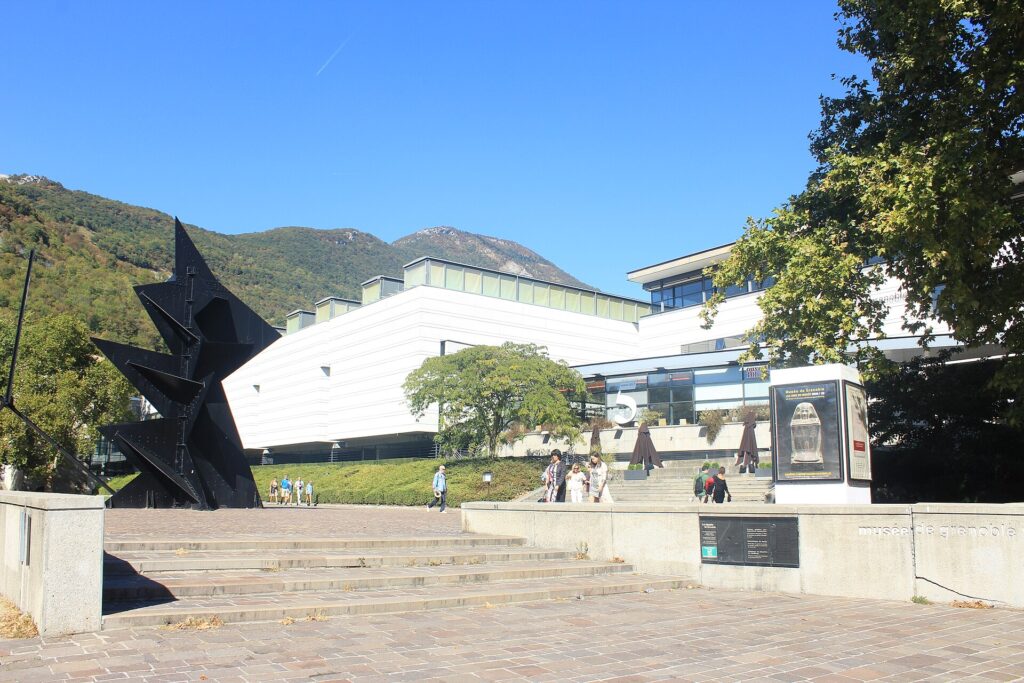
The building itself, while not architecturally revolutionary, embraces a post-war modernist style, dating from a significant reconstruction phase in the 1960s. This physical context frames the museum as a hybrid of traditional provincial museum sensibilities and a modernist approach to art display and public access. The museum’s continuous updates to its collections and display approaches mean it currently faces the challenge of balancing historical depth with modern visitors’ expectations for engagement and clarity.
What You See on Arrival
Visitors approaching the Musée de Grenoble encounter a building that reflects mid-20th-century museum architecture: functional, clean-lined, and geometric, without excessive ornamentation. Its location near Grenoble’s city center situates it conveniently for visitors familiar with the region, though it does not stand out dramatically in an urban environment comprised of administrative and cultural buildings. The entrance area is straightforward and practical, signaling the museum’s no-frills commitment to art display rather than to architectural spectacle.
Inside, the initial impression is one of clear organization. The entrance halls and galleries typically emphasize logical passage through the museum’s narrative of art history. Expect to find a relatively traditional sequence beginning with classical works and moving toward modern and contemporary art in a generally chronological progression. The lighting and gallery space aim to highlight the artworks themselves with neutral wall colors and an absence of distracting decoration.
The museum does not project itself as a grandiose temple of art, but rather as a well-structured repository where visitors can anticipate encountering significant works in a comfortable, if somewhat formal, environment. There is an emphasis on artworks as objects for close visual study rather than on multisensory or interactive elements. This framing prepares visitors for a somewhat scholarly, contemplative visit rather than an entertainment-oriented museum experience.
Highlights and Key Exhibitions
The core strength of the Musée de Grenoble is its collection’s impressive breadth and quality, particularly in European painting. Its holdings range from the Italian Renaissance and Flemish Baroque through to Modernism and Contemporary art. The classical collection includes masterworks by European figures such as Fra Angelico, Tintoretto, and Simon Vouet. Paintings from these eras are displayed with an emphasis on technique and historical context, which appeals to those interested in the roots of Western art.
Notably, the museum holds significant works by artists of the French 19th century. The Impressionist and Post-Impressionist works form a fundamental component of the collection. Painters like Renoir, Sisley, and Monet have representation here, with paintings that illustrate the rise of new approaches to landscape and light. These works give a helpful introduction to the epoch and are presented alongside drawings and sculptures that add depth.
The Modern and Contemporary sections are perhaps where the collection is most distinguished. The museum’s acquisition program has historically sought to include major artists from the early to mid-20th century, offering examples from Fauvism, Cubism, and Surrealism. Works by Matisse, Picasso, and Braque are among those represented. More recent art post-World War II has its place as well, including abstract and figurative works that comment on developments in painting and sculpture up to the late 20th century.
A particular note is the museum’s willingness to integrate sculpture and works on paper alongside paintings, giving visitors a rounded view of artistic production. The correspondence between different media in a single artistic style or period deepens understanding. Some galleries are devoted to thematic explorations, such as portraiture or landscape, allowing artworks from varied epochs to dialogue across time.
However, the museum’s narrative does remain firmly rooted in a European tradition. Visitors interested in non-Western art, contemporary global art practices, or multimedia installation may find the collections limited in these respects. The focus on painting and sculpture rooted in French and European developments runs through the curatorial choices. This limits the venue’s appeal for those seeking a broader, more global art perspective but makes it a consistent destination for those enmeshed in the history of Western art.
Visitor Experience
For visitors inclined toward traditional museum-going, the Musée de Grenoble offers an experience that is accessible without overwhelming sensory input or gimmicks. The flow between galleries is logical, fairly relaxed, and easy to navigate due to clear signage and well-considered spatial layout. The emphasis on chronological and thematic displays aids understanding and facilitates a paced visit that can be adapted to the visitor’s time constraints or depth of interest.
The interpretative material tends to lean on concise labels and wall texts that provide essential context without extensive academic exposition. This straightforward approach strikes a middle ground for general audiences and art students alike. It enables visitors to gain insight without feeling bogged down yet might seem sparse for those looking for in-depth historical or critical analysis. Photographic reproduction and multimedia content are minimal, which can be viewed both as a clarity-improving measure and as a potential missed opportunity to broaden engagement.
The typical visitor will likely find the museum welcoming to families with older children and adult learners, with the museum’s layout facilitating both slow contemplation and more cursory tours. While the environment is calm and structured, it may not compete with larger, more feature-rich sites that incorporate interactive technology, thematic programming, or participatory elements to engage younger demographics or casual visitors.
The museum’s scale is manageable, avoiding the exhaustion sometimes associated with vast art institutions. Still, its arrangement allows for focused encounters with major works rather than a rush through overly commodified displays. However, this approach also means the museum might lack what some visitors seek in terms of spectacle or dramatic presentation.
Tickets, Access, and Planning
Specific details about ticket prices, discounts, schedule, and available visitor services should be checked on the museum’s official website before planning a visit, as such practical information can frequently change and museums often adjust hours or visitor services seasonally or due to public health considerations.
Access to the Musée de Grenoble is generally convenient for those familiar with the city, given its central location. However, visitors unfamiliar with the city or region should be aware that transit options may vary in frequency and convenience. The museum’s building and pathways tend to be straightforward, but up-to-date accessibility information for visitors with reduced mobility or other needs should be confirmed directly with museum staff or official resources.
The museum does not rely heavily on special exhibitions at all times, which can be a planning consideration. Visitors focusing on the core collection will find content available year-round. Given the collection’s depth and variety, even a single visit can cover multiple significant historical periods in European art.
Final Verdict
The Musée de Grenoble stands as a solid and serious institution dedicated to presenting a coherent narrative of European art, with strong holdings in classical, Impressionist, and modern collections. It offers visitors a relatively calm and ordered environment suited to those with a genuine interest in art history rather than casual tourism or multimedia spectacle.
Its strength lies in the quality and historical scope of its permanent collection, which reflects both regional pride and a wider ambition to place Grenoble within the network of important French art museums. The museum’s clear chronological progression and emphasis on painting and sculpture will satisfy art enthusiasts, students, and culturally engaged travelers who appreciate a focused approach.
That said, the museum’s focus on a traditional European canon means it is less suited for visitors seeking the expanded multicultural and multimedia perspectives found in some larger, metropolitan institutions. Its mid-century architecture and restrained gallery design can feel a little dated to those expecting more dynamic architectural experiences.
Ultimately, the Musée de Grenoble rewards visitors who approach it with a deliberate intention to study and appreciate European art’s progression over several centuries. Practical planning, especially regarding timing and access, requires consulting official resources. For those prioritizing a measured and scholarly engagement over flashy exhibition design or high-tech interaction, this museum provides a trustworthy and enriching experience.