Galleria Doria Pamphilj Review
Art Museums · Rome, Italy. The Galleria Doria Pamphilj in Rome is a private art gallery housed within the palazzo of the Doria Pamphilj family, one of the city’s most influential aristocratic lineages. Its origins trace back to the…
Art Museums · Rome, Italy. The Galleria Doria Pamphilj in Rome is a private art gallery housed within the palazzo of the Doria Pamphilj family, one of the city’s most influential aristocratic lineages. Its origins trace back to the…
Best forMuseum lovers, culture travelers, first-time visitors
Review focusCollections, visitor experience, and practical planning
Historical Context
The Galleria Doria Pamphilj in Rome is a private art gallery housed within the palazzo of the Doria Pamphilj family, one of the city’s most influential aristocratic lineages. Its origins trace back to the 17th century when the Doria and Pamphilj families combined their collections, establishing a foundation for the museum’s holdings today. The palazzo itself was developed in stages across the 16th and 17th centuries, serving as a residence rather than a purpose-built museum. This domestic context shapes the gallery’s character, blending the art with richly decorated interiors that reflect Baroque tastes and successive architectural adaptations.
By the time the collection was opened to the public in the late 19th and early 20th century, it represented a private assemblage curated over generations, with a focus on Italian masters alongside prominent European artists. The collection’s continuity within a single family has ensured a narrative geared towards personal patronage and familial prestige, which distinguishes it from many state-run institutions. That lineage and private ownership continue to influence how the gallery presents itself and preserves works. In Rome’s densely layered landscape of cultural heritage, the Galleria Doria Pamphilj takes a particular niche, offering access to historically significant art in a setting that closely resembles the private palatial environment in which they were once housed.
What You See on Arrival
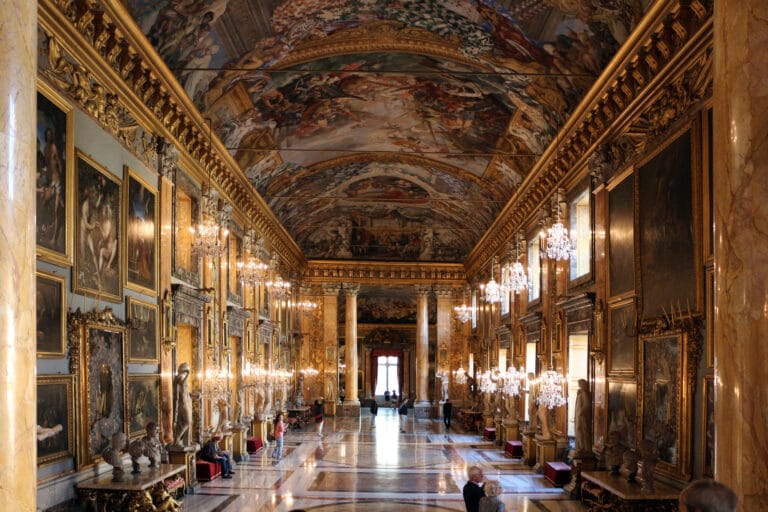
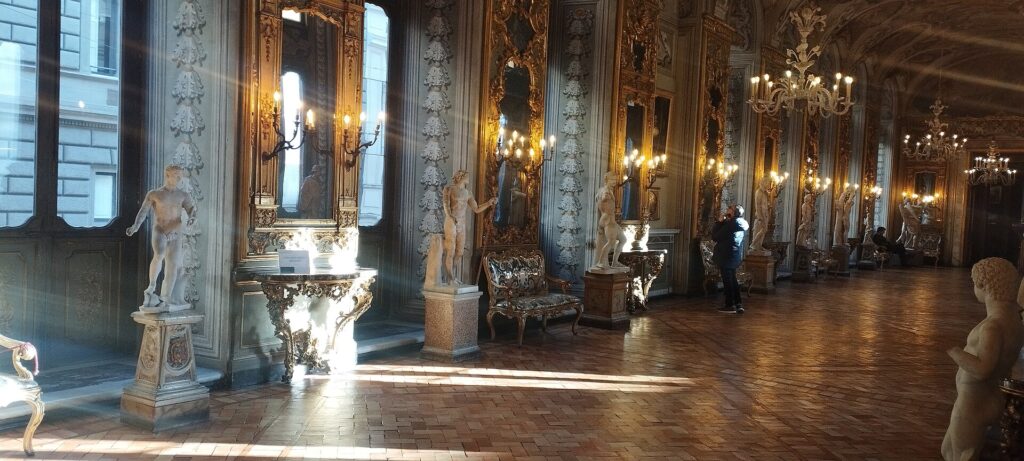
Visitors approaching the Galleria Doria Pamphilj find themselves stepping into a building that is as much a residence as it is a museum. The entrance lies on Via del Corso, one of Rome’s main arteries, but the interior immediately signals a departure into an intimate world of aristocratic splendor. Rather than a large, open public museum hall, the gallery is composed of a series of interconnected rooms and corridors, each richly appointed with original furnishings, stucco work, frescoes, and tapestries. This setting distinguishes the gallery from the more expansive national museums of Rome by integrating art with domestic architecture.
The scale of the museum is moderate; the layout invites a sequential walk through stately rooms that often follow the rhythms of private apartments rather than formal exhibition spaces. The initial impression, derived from the combination of architectural details and the artworks on display, frames the experience as not only an art viewing opportunity but also a glimpse into the lifestyle of one of Rome’s noble families. This residential aspect affects how the collection is encountered: artworks are hung salon-style in many rooms, complementing high ceilings and decorative walls, rather than being isolated in white cube presentation. Such an environment guides visitor expectations toward a more intimate and layered visit rather than a broad survey or thematic exploration typical of larger institutions.
Highlights and Key Exhibitions
The Galleria Doria Pamphilj’s collection is particularly noted for its concentration of Italian Baroque and Renaissance masterpieces, alongside significant examples from other European schools. The collection owes much to centuries of acquisitions, patronage, and marriages that aggregated works under the Doria-Pamphilj umbrella.
One of the most renowned works is Raphael’s “Portrait of Pope Innocent X.” This portrait stands out not only for its artistic importance but also due to its dramatic psychological intensity. The painting occupies a key position, embodying the intersection of religious authority, family history, and artistic mastery. Its presence in the gallery is a central draw, often cited as a highlight by art historians and visitors alike.
Caravaggio’s “Rest on the Flight into Egypt” offers another notable example from the Baroque period. Though smaller in scale than some of his other works housed in Roman institutions, it remains valuable for its chiaroscuro technique and emotive naturalism. Its presence underscores the gallery’s strength in early 17th-century Italian painting.
Velázquez’s “Portrait of Innocent X,” sometimes confused with Raphael’s, is also part of the collection. The Doria Pamphilj ownership uniquely positions the gallery in relation to papal portraiture, an area of significance given Rome’s role in Catholic history and artistic patronage.
Beyond these iconic works, the collection spans a wide array of artists including Titian, Guido Reni, Annibale Carracci, and Jan Brueghel the Elder. Many rooms combine paintings with period furniture, sculptures, and decorative arts, which reinforces the sense of a lived-in aristocratic collection rather than a sterile art deposit. The holdings include a notable number of portraits, religious scenes, and mythological subjects, reflecting the tastes and interests of the collectors through centuries.
The decorative elements of the palazzo walls, ceilings, and galleries are themselves significant and add layers to the overall experience. Frescoes and stucco by artists like Mattia Preti and others integrate the architecture with the display of artworks, creating a cohesive aesthetic that few museums can replicate.
While the permanent collection is the main focus, the museum relies on the strength of this curated presentation sustained by centuries of collecting rather than elaborate or frequently changing temporary exhibitions. This can be a limitation for visitors seeking a constantly refreshed programming slate, but it suits those interested in a deep dive into the historical aristocratic milieu and classical art from Italy and Europe.
Visitor Experience
The visitor experience at the Galleria Doria Pamphilj is shaped by the museum’s historic and spatial characteristics. The relatively compact size and apartment-like layout encourage a measured pace, with visitors moving through a sequence of rooms that feel intimate rather than cavernous. This may appeal to those who prefer concentrated viewing without the exhaustion of vast complexes. However, the salon-style hanging and dense walls can challenge viewers accustomed to modern display conventions where each artwork is given more isolation.
Interpretation within the gallery tends to focus on historical context, family connections, and artistic significance. Labels and descriptions are generally clear but may assume a degree of prior knowledge, especially regarding Catholic iconography, papal history, and Baroque art conventions. Visitors less familiar with these subjects might find some passages less accessible. The family history is emphasized, which helps anchor the artworks to specific patronage stories, but also means that broader art historical narratives can feel secondary.
The sense of intimacy also means the gallery is less noisy and crowded than nearby large museums, although visitor flow can depend on the time of day and season. Because the space is residential in scale, large groups might find the circulation somewhat constrained.
For art enthusiasts, the Galleria Doria Pamphilj offers a rewarding experience with rare and well-preserved artworks in a richly decorative context rarely replicated outside private collections now moved into public hands. Its emphasis on portraiture, baroque mastery, and papal commissions makes it especially suitable for visitors interested in Italian high art and aristocratic culture.
On the other hand, those seeking more thematic or chronological presentations spanning wide geographic regions might find the scope limited. Similarly, visitors looking for modern interactive or multimedia interpretation are unlikely to find it prioritized here. The experience is more about absorbing historical ambience and refined aesthetic display than interactive engagement.
Tickets, Access, and Planning
Information available regarding tickets, opening hours, accessibility, guided tours, and audio guides should be verified directly from the gallery’s official website or contact points before planning a visit. As a private collection housed in a historic palazzo, the Galleria Doria Pamphilj may have policies differing from state-run or municipal museums, including limited hours or specific days closed.
Given the central location on Via del Corso, the museum is accessible by various forms of public transportation common in Rome, but parking details would require individual checking. Visitors should be prepared for historic building constraints that might affect accessibility for those with reduced mobility.
Because the museum is smaller in scale and involves movement through private apartments, it is advisable to consider visitor flow and peak times when planning the visit to avoid crowded conditions. The absence of large clusters of temporary exhibitions also means that the time needed for a visit can be moderate, but the appeal is in quality and concentration rather than quantity.
Final Verdict
The Galleria Doria Pamphilj occupies a distinctive place among Rome’s art institutions. Its private collection and palatial setting offer an experience closer to the art’s original aristocratic context than many large public museums. The quality and rarity of works, especially the Raphael portrait of Pope Innocent X and significant Baroque paintings, justify attention from art historians, connoisseurs, and visitors with a serious interest in Italian art history.
At the same time, the museum’s format imposes certain limits. Its size and salon-style installation may not align with visitors expecting modern museology or comprehensive coverage of art history beyond family and regional focuses. Accessibility considerations may also arise due to the building’s age and private character.
In clarifying its niche, the Galleria Doria Pamphilj rewards those interested in intimate encounters with classical art within the architecture and decoration of a historic Roman palace. It offers a contemplative alternative to the busier, larger museums of the city. For those seeking thematic breadth or cutting-edge interpretation, other venues might serve better. But as a home to an enduring aristocratic collection, it stands as an important fixture in Rome’s cultural landscape, preserving art alongside the tangible legacies of noble patronage. Prospective visitors should consult official sources for practical details to align expectations and planning.