Musée Bourdelle Review
Art Museums · Paris, France. The Musée Bourdelle in Paris dedicates itself to the legacy of Antoine Bourdelle (1861–1929), a prominent sculptor whose work marked a transition between the 19th-century tradition and modern sculpture. Bourdelle trained under Auguste Rodin…

Art Museums · Paris, France. The Musée Bourdelle in Paris dedicates itself to the legacy of Antoine Bourdelle (1861–1929), a prominent sculptor whose work marked a transition between the 19th-century tradition and modern sculpture. Bourdelle trained under Auguste Rodin…
Best forMuseum lovers, culture travelers, first-time visitors
Review focusCollections, visitor experience, and practical planning
Historical Context
The Musée Bourdelle in Paris dedicates itself to the legacy of Antoine Bourdelle (1861–1929), a prominent sculptor whose work marked a transition between the 19th-century tradition and modern sculpture. Bourdelle trained under Auguste Rodin but developed a distinctive style that combined classical rigor with bold expressive forms. His influence extended beyond his own creations as he taught and mentored a new generation of artists, including Alberto Giacometti and Henri Matisse.
This museum is housed in the artist’s former studio and residence, preserving the environment in which Bourdelle worked during the early 20th century. Established as a public museum in 1949, it is one of several artists’ house-museums in Paris that aim to provide insight into the creative process by situating the artworks in their original spatial and historical context. The museum’s setting in the 15th arrondissement, on the edge of the Montparnasse area known for its artistic community, connects the collection with the broader history of modern art production in Paris.
Musée Bourdelle’s collection bridges sculpture, drawings, and architectural projects, reflecting Bourdelle’s varied interests. The museum also preserves personal archives and photographs, enabling a fuller understanding of his role in the artistic milieu between traditional academic sculpture and the more abstract forms that emerged in the 20th century. Its historical importance lies not only in the works displayed but also in the context it provides for examining shifting artistic practices during a period of intense change in European art.
What You See on Arrival
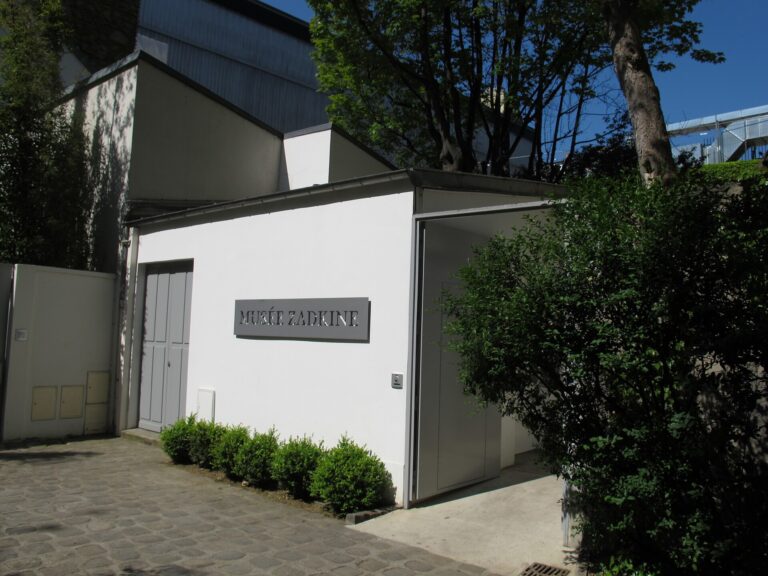
Approaching the Musée Bourdelle, visitors encounter an unassuming but distinctive late nineteenth-century building that served as the artist’s studio and home. The modest façade, located along a quiet street, contrasts with the weight of the artistic output inside and the surrounding garden space where many of Bourdelle’s monumental outdoor sculptures are installed.
The museum’s identity as both a biographical and artistic site is evident from the entrance. Unlike larger museums organized by period or style, this venue emphasizes the life and working environment of a single artist. This offers a more intimate encounter, with the museum positioned as a place to study the sculptor’s creative method as much as to admire finished artworks.
The outdoor garden is an immediate point of engagement. Bourdelle’s preference for large-scale sculptures as public monuments means that the garden space is integral to the museum’s presentation. Statues placed in open air provide the chance to view his work in three dimensions and against natural light—which is essential given the strong volumetric qualities of his sculptures. For many arriving, the garden may set expectations for the combination of classic and avant-garde elements that characterize Bourdelle’s oeuvre.
Inside, the museum entrance directs visitors to galleries arranged to highlight the chronological progression of Bourdelle’s career alongside thematic groupings. The transition from outdoor sculptures into the intimate studio rooms underscores the shift from public works to more personal and preparatory pieces.
Highlights and Key Exhibitions
At the core of the Musée Bourdelle’s appeal is its extensive collection of sculptures spanning the artist’s mature period from the late 19th century until his death in 1929. Bourdelle’s work is notable for its synthesis of classical anatomy with a robust, expressive style that prefigures later modernist sculpture. The collection includes many plaster casts, bronze sculptures, and marble pieces.
One of the museum’s most significant attractions is the display of Bourdelle’s portrait busts. These range from realistic depictions imbued with psychological depth to increasingly stylized forms that showcase his departure from naturalism. Visitors can compare early works with later ones to trace how Bourdelle simplified and exaggerated forms while retaining a sense of monumentality.
Bourdelle’s monumental commissions for public spaces appear through models, maquettes, and finished sculptures within the museum. Key among these is the heroic figure of Hercules, a recurring motif in Bourdelle’s work symbolizing strength and endurance. Sculptures like the “Hercules the Archer” illustrate Bourdelle’s engagement with mythological themes through a modern lens, characterized by dynamic poses and sharply defined musculature.
The museum also highlights Bourdelle’s role as a teacher and collaborator. This includes sketches, architectural drawings, and work associated with set design, illustrating the breadth of his interests beyond sculpture. Through these materials, the museum situates Bourdelle not just as an isolated figure but as part of a wider network of artists and intellectuals related to the early modernist avant-garde.
In addition to sculpture, the collection contains a series of drawings and models that shed light on Bourdelle’s creative process. These works demonstrate his skill in draftsmanship and his iterative approach to form, allowing visitors to appreciate the preparatory stages that underpin finished sculptures. The juxtaposition of detailed drawings and large sculptures offers insight into Bourdelle’s attention to proportion, anatomy, and composition.
The garden space extends the museum’s exhibition into its architectural design and outdoor display. It includes large-scale bronze and stone works that engage with the environment in ways the indoor galleries cannot. This outdoor gallery allows close-up viewing of surface textures and the massiveness of forms, crucial to understanding the impact Bourdelle sought in his public sculptures.
While the museum does not focus heavily on temporary exhibitions, the permanent display effectively presents a coherent picture of Bourdelle’s career and artistic intentions. The presentation encompasses an important transitional phase in sculpture, situated between academic traditions and the experimentation that would define the 20th century.
Visitor Experience
The Musée Bourdelle is particularly well-suited to visitors interested in sculpture as an art form, especially those keen to explore the evolution of style and technique in the early modern period. The museum’s layout, which moves from outdoor monumental works to the artist’s intimate studio and final galleries, provides a clear narrative but without overwhelming scale or pretension.
Visitors should expect a slower, contemplative pace of viewing. The relatively compact size of the museum makes it manageable and reduces fatigue compared with larger Parisian museums. The presence of the garden adds variation and relief from indoor spaces.
Interpretation at Musée Bourdelle tends to focus on formal analysis and biographical context. Label texts provide details about specific works, myths invoked by sculptures, and Bourdelle’s artistic philosophy. Although this is sufficient to understand the major themes, visitors looking for extensive historical context or detailed social background might find the material somewhat sparse compared to larger institutions with broader curatorial resources.
The museum’s focus on a single artist means that it appeals most directly to those who already have some interest or background in sculpture or art history. Casual visitors without this may find some works challenging to place or interpret without additional support. The absence of extensive multimedia presentations or interactive elements means that the experience remains traditional and visually oriented.
Crowd levels at Musée Bourdelle are generally moderate, avoiding the congestion seen at more famous Parisian museums but making for a quietly engaging environment. The outdoor space works well for those seeking a break from gallery rooms, and the ability to view sculptures outdoors is an important part of the experience that reflects Bourdelle’s intentions.
One limitation to note is that some of the sculptures in the garden can be affected by weathering, which might impact close-up examination. This is a common issue for outdoor sculpture collections but nonetheless relevant for visitor expectations.
Tickets, Access, and Planning
Prospective visitors should check the official Musée Bourdelle website for the most recent information on admission policies, opening hours, and any special requirements. As a specialist museum located outside the city’s primary tourist hubs, it may not offer the same variety of visit options—such as audio guides or guided tours—commonly found in larger institutions. Verification in advance is advisable for those who prioritize such features.
Access by public transport is generally straightforward given the museum’s location in Paris, but exact access details, including disability accommodations, should be confirmed onsite or via official sources. The museum sits in an area served by several bus and metro lines, allowing visitors to combine their visit with other local attractions if desired.
Those planning their visit should note that the museum’s size means that a typical visit can be comfortably completed within a couple of hours. Longer study or repeat visits might be warranted for scholars or enthusiasts of Bourdelle’s work specifically.
Final Verdict
Musée Bourdelle offers a focused and insightful perspective on an important figure in the history of sculpture. The museum’s preservation of the artist’s studio, combined with a substantial permanent collection, allows visitors to engage with the evolution of modern sculpture through the lens of an individual who bridged 19th-century traditions and early 20th-century innovations.
It is particularly valuable for visitors with an interest in sculpture technique, artistic process, and the history of the Paris art scene in the early 1900s. The outdoor garden complements the indoor galleries effectively, emphasizing the scale and physicality that Bourdelle championed.
While the museum’s specialized nature and limited interpretive resources might make it less accessible to general audiences or those unfamiliar with sculpture, its intimate setting and coherent displays offer depth and clarity for those prepared to engage. It neither competes in scale with larger Parisian museums nor attempts to. Instead, it presents a distinct chapter in art history, allowing more focused appreciation of an artist who might otherwise be overshadowed by his famous contemporaries.
In sum, Musée Bourdelle meets the needs of its core audience well while providing a compelling but not exhaustive account of an influential sculptor’s life and work. For anyone studying or simply curious about the transition to modern sculpture, it represents a well-preserved and thoughtfully presented resource.