Louvre-Lens Review
Art Museums · Lens, France. The Louvre-Lens is a branch of the famed Louvre Museum in Paris, located in the city of Lens in northern France. It was inaugurated in 2012, aimed at decentralizing the rich cultural heritage of…
Art Museums · Lens, France. The Louvre-Lens is a branch of the famed Louvre Museum in Paris, located in the city of Lens in northern France. It was inaugurated in 2012, aimed at decentralizing the rich cultural heritage of…
Best forMuseum lovers, culture travelers, first-time visitors
Review focusCollections, visitor experience, and practical planning
Historical Context
The Louvre-Lens is a branch of the famed Louvre Museum in Paris, located in the city of Lens in northern France. It was inaugurated in 2012, aimed at decentralizing the rich cultural heritage of the Louvre and making it more accessible beyond the capital. The creation of the Louvre-Lens is part of a trend in France to promote cultural engagement in former industrial regions, with Lens historically known for coal mining and steel production. This context has given the museum a dual role, not only as a repository of art but as a catalyst for regional cultural revitalization and economic regeneration.
The project involved close collaboration between regional authorities, the Louvre institution, and the French government. The museum’s design and mission reflect an ambition to foster dialogue between the local community and global artistic traditions. The structure itself is situated on a former mining site, which adds symbolic weight given the city’s post-industrial identity. The Louvre-Lens thus situates itself at the crossroads of art, history, and regional transformation, aiming to offer a fresh model of museum engagement outside major urban centers.
What You See on Arrival
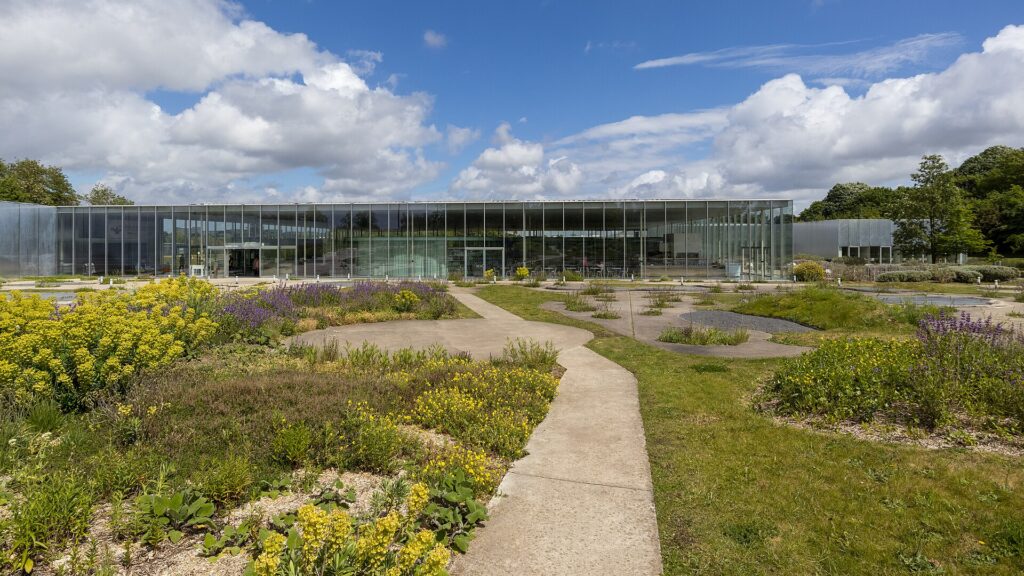
Upon approaching the Louvre-Lens, visitors encounter a low-lying, modern architectural complex that contrasts with the traditional grandiosity often associated with major French national museums. The building’s horizontal layout, extensive use of glass, and integration with the landscaped grounds emphasize openness and connection to the surrounding environment. This design discourages monumental or intimidating impressions and instead suggests an approachable and accessible cultural space.
The museum identifies itself clearly through understated signage and a minimalist exterior aesthetic that simultaneously marks it as a contemporary institution related to the Paris Louvre yet rooted in its own regional setting. The expansive plaza in front of the entrance provides a gathering place but remains modest in scale, without overwhelming visitors. The setting encourages contemplation and gradual immersion rather than immediate spectacle.
Inside, the lobby area is likely to be spacious and well-lit, prioritizing clarity of circulation and visitor orientation. The architectural choices support a logical progression through exhibits without forcing confrontational encounters. Visitors are gently guided into the experience, with an emphasis on ease of movement and visual connection to the galleries ahead.
Highlights and Key Exhibitions
The Louvre-Lens primarily serves as a satellite display space for rotating selections from the Louvre’s vast collections. While it does not house large permanent collections of its own, the museum’s strength lies in carefully curated exhibitions that span a broad timeline and variety of themes. The displays often feature artworks and artifacts transported from Paris, providing visitors with meaningful access to masterpieces that otherwise sit permanently in the capital.
The galleries can include a mixture of ancient civilizations, classical art, and works from the modern period, reflecting the Louvre’s encyclopedic nature. Visitors might expect to see significant pieces from Egyptian antiquities, Greco-Roman sculptures, and Renaissance paintings. The Louvre-Lens is noted for its ability to present these items in thematic groupings that encourage reflection on cultural histories and artistic development.
Special attention is given to presenting objects in a way that links local heritage with universal human creativity. For instance, exhibitions often explore the impact of industrialization, which resonates given Lens’s mining background. The museum may also engage with more contemporary art discussions, albeit anchored around the historical works on display.
The exhibitions typically incorporate clear labels and contextual information suitable for a broad audience, from schoolchildren to specialist visitors. There is an effort to balance scholarly insight with accessibility, avoiding overly academic language while ensuring accuracy and depth. The layout of the galleries tends to encourage a linear or chronological journey, easing comprehension and maintaining visitor engagement.
A notable aspect of the Louvre-Lens is the “Galerie du Temps” (Gallery of Time), which presents works from various periods in chronological order. This innovative arrangement fosters a sense of historical progression and cultural continuity, distinguishing the museum from more traditional, compartmentalized displays. This chronological strategy invites visitors to observe connections across epochs and cultural boundaries.
Visitor Experience
The overall visitor experience at the Louvre-Lens is shaped by its scale and curatorial choices. The museum is not as vast or overwhelming as the main Louvre in Paris, which can be an advantage for those seeking a more focused and comfortable visit. The contained site allows for a visit that can be thorough without requiring several hours of intense navigation.
Visitors with a general interest in art history, or those looking for an introduction to the Louvre collections outside Paris, will find the museum well-suited to their needs. The thematic and chronological presentations make it easier to follow artistic and historical narratives than in larger, more dispersed institutions. However, those looking for the sheer quantity or depth of cultural objects found at the Louvre in Paris might find the offerings somewhat limited in scale.
Interpretive materials tend to be well-considered, blending wall texts, object labels, and multimedia elements when appropriate. This variety helps accommodate different learning styles, though the degree and availability of digital or interactive guides may fluctuate. The careful layout supports steady pacing and reduces the risk of visitor fatigue.
The museum's location in Lens offers a quieter, less tourist-saturated context than Paris, which may appeal to visitors who prefer a more relaxed environment. Group visits and educational trips are likely accommodated, though the museum’s mid-size nature requires some planning during busy periods. The infrastructure is modern and designed for comfort, with straightforward visitor flows and clear sightlines.
Tickets, Access, and Planning
Since the Louvre-Lens is a relatively recent establishment operating under the Louvre’s auspices, practical details such as ticketing, opening hours, and accessibility policies are managed with a strong visitor service ethos. Nonetheless, for accurate, timely information, potential visitors should consult the museum’s official website directly. This is vital for confirmations about current opening days, prices, guided tours, audio guides, or any special conditions particularly relevant during health or safety advisories.
Access to the museum involves travel to Lens, a city in northern France that is accessible by train, car, or local transit options. Visitors should plan accordingly, as Lens is not as immediately accessible as Paris but is reachable within reasonable travel times from major northern French hubs such as Lille. The transport infrastructure is generally straightforward, but visitors should verify connections to avoid inconvenience.
The museum grounds and building are designed to accommodate a range of visitors, including those with mobility needs. Still, any visitor with specific accessibility requirements should confirm facilities and services through official channels beforehand. Planning for busy times is advisable since the museum can attract considerable local and international interest, particularly during weekend periods or school holidays.
Final Verdict
The Louvre-Lens represents a thoughtful experiment in satellite museum practice and regional cultural development. It offers a distinct experience compared to its Parisian parent institution by focusing on depth rather than breadth, curatorial clarity over sheer volume, and regional engagement alongside international artistic dialogue.
The museum’s modern architecture and open setting help frame a calm, accessible environment. Its thematic and chronological presentations create coherent, meaningful journeys through periods of art and history drawn from the Louvre’s expansive collections.
It is particularly strong as a venue for visitors who appreciate narrative structure, who want an introduction to major art historical themes without the challenge of navigating a sprawling museum, or who have a specific interest in how art relates to industry, memory, and regional identity.
However, it is not a substitute for the full Louvre experience. Its collections are relatively limited in number, and its calm scale means visitors seeking extensive cultural immersion or a comprehensive overview of global art history should still prioritize the main Louvre or other larger institutions.
This branch’s success lies in how it complements the Louvre’s broader mission through careful focus and regional sensitivity, reminding us that art museums can both reflect and reshape their local contexts. Visitors prepared to engage on these terms will find the Louvre-Lens a worthwhile cultural stop on any northern France itinerary. Those requiring up-to-date visitor information should consult the museum’s official channels to plan accordingly.