Lugdunum Review
Lyon, France. Lugdunum, situated in Lyon, holds a distinctive place among archaeological museums focused on Roman antiquity. It is not merely a repository of classical artefacts; it is dedicated specifically to Lyon’s role as a major…
Lyon, France. Lugdunum, situated in Lyon, holds a distinctive place among archaeological museums focused on Roman antiquity. It is not merely a repository of classical artefacts; it is dedicated specifically to Lyon’s role as a major…
Best forMuseum lovers, culture travelers, first-time visitors
Review focusCollections, visitor experience, and practical planning
The Museum in Context
Lugdunum, situated in Lyon, holds a distinctive place among archaeological museums focused on Roman antiquity. It is not merely a repository of classical artefacts; it is dedicated specifically to Lyon’s role as a major Roman city, then known as Lugdunum, the capital of Gallia Lugdunensis. This geographical and historical narrowing distinguishes it from more generic Roman museums, anchoring its collection and interpretation around the identity of one of the largest cities in the Roman Empire outside Italy. Lyon’s layered history as a Roman administrative, commercial, and artistic hub lends Lugdunum a focus that is both local and imperial, connecting regional traditions with the broader Roman world.
The museum occupies a site tied to Lyon’s Roman past, close to where the ancient city developed. This closeness to place contributes to its mission of telling a cohesive story about the city’s development and role in Roman Gaul. Rather than attempting to cover the entirety of Roman history or archaeology indiscriminately, it channels its resources into understanding Lyon’s urban fabric, its civic institutions, religion, and daily life as shaped under Roman rule. This makes Lugdunum a specialized museum with depth in its subject matter rather than a broad, sweeping overview of Roman civilization.
Collections Worth Understanding
The museum’s collection centres on archaeological discoveries from Lyon and its immediate surroundings, with a particular emphasis on objects dating from the 1st century BCE to the 3rd century CE. Key elements include mosaics, sculptures, inscriptions, everyday objects, and religious artefacts. This range enables a multifaceted exploration of urban Roman life in Gallia.
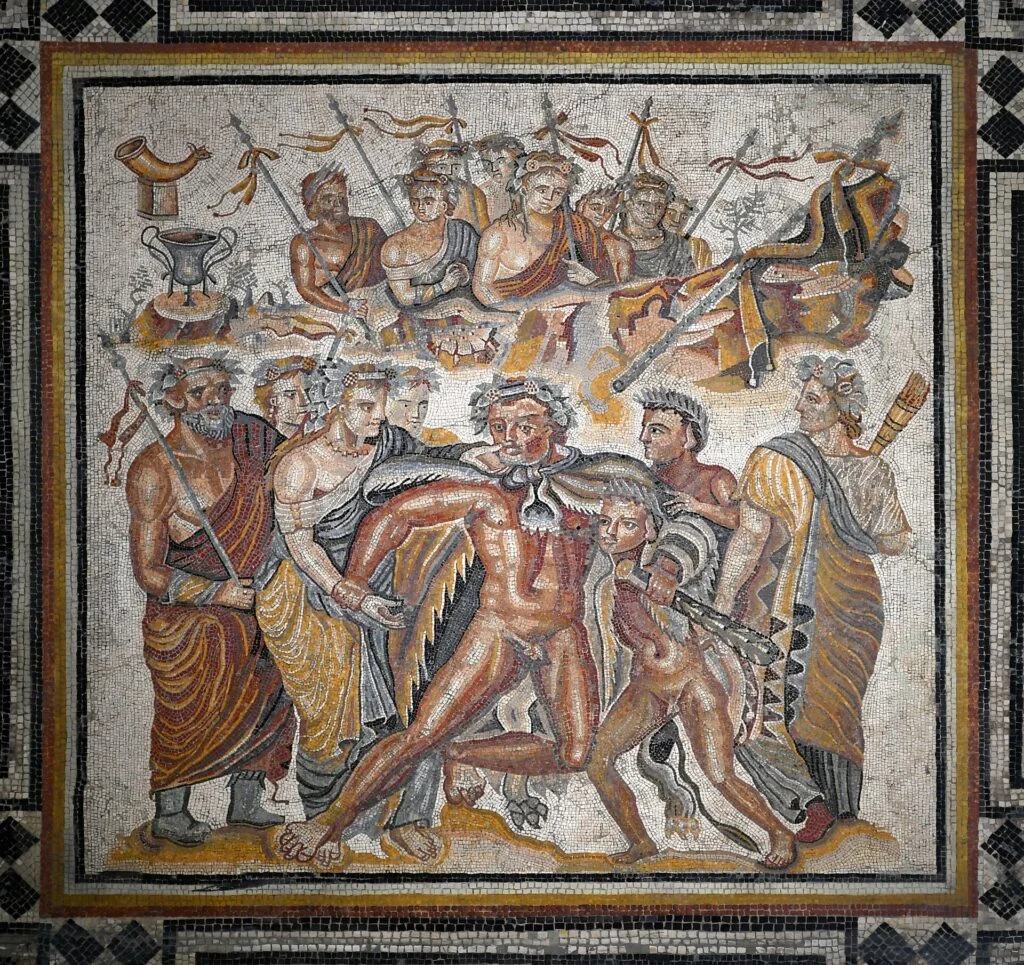
An important subset of the collection consists of mosaics recovered from public baths and private homes. These offer rare insights into both craftsmanship and the visual culture that decorated the city’s built environment. The mosaics demonstrate Roman aesthetic preferences, mythology, and social values. Similarly, the sculptural finds—statues, busts, and reliefs—are not just impressive in craftsmanship but stand as material evidence of Lyon’s political and religious elites and its civic identity.
Epigraphic materials such as inscriptions on stone and metal provide necessary context, revealing details about political offices, religious dedications, and personal names. Together with everyday objects like ceramics, tools, and coins, the collection enables archaeological and historical narratives that move beyond elite perspectives, portraying a fuller social and economic history.
One of the museum’s standout artefacts is the monumental altar to Emperor Augustus, which speaks to imperial propaganda and how Lyon’s citizens viewed their place within the Roman empire. This piece embodies the intersection of local identity and imperial power, a theme central to the museum’s interpretation strategy.
Presentation and Storytelling
Lugdunum’s narrative strategy prioritizes clarity and focus. Exhibits are designed to trace Lyon’s transformation from a Gallic settlement into a capital city under Roman rule, emphasizing political structures, urban planning, and religious life. The museum avoids the temptation to conflate Roman history with ancient history generally, instead giving detailed attention to the period and place that its collection naturally represents.
Interpretive text tends to be concise, relying on objects to speak for themselves, supported by sufficient chronological and contextual frameworks. Maps and models supplement artefacts, helping situate objects within the ancient city’s layout. This visual and textual support assists in understanding the scale of public buildings, roads, and baths that marked Roman urbanism.
Storytelling centres less on broad cultural generalizations and more on the specifics of Lyon’s administrative and religious developments, showcased by epigraphy and inscriptions. For example, sections on imperial cult practices and local governance underline how central Roman ideology and local practice were deliberately intertwined.
Some might find the museum’s interpretation conservative in style, lacking the more theatrical or multimedia approaches found in comparably dated archaeological museums. However, this restraint can help maintain focus on the material culture and the archaeological evidence itself without distraction.
The Experience on the Ground
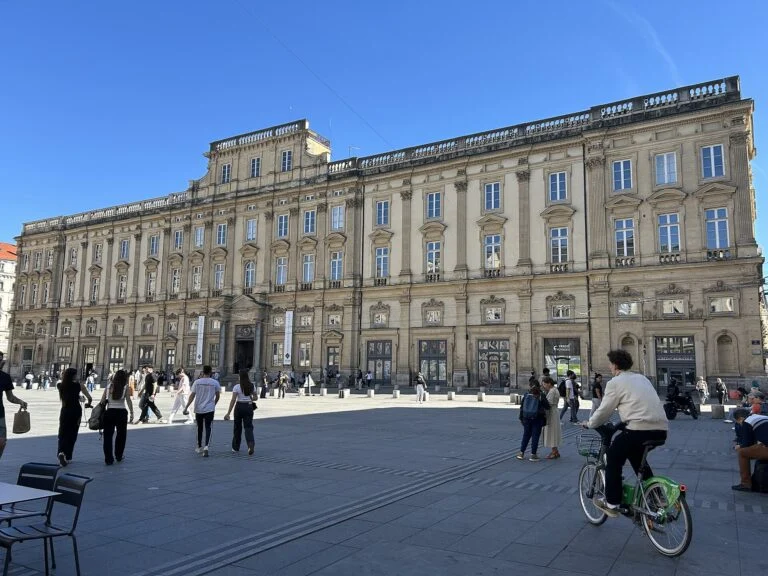
The museum is housed in a contemporary building adjacent to the archaeological site of the Roman theatres, itself a highlight for visitors with interest in ancient architecture. Its spatial layout supports thematic exploration, roughly following the city’s evolution and key civic functions. Exhibition spaces are arranged to facilitate a chronological understanding but also thematic concentration on art, architecture, and daily life separately.
Gallery lighting and display cases prioritize visibility and preservation, though the atmosphere can feel clinical or subdued compared to more immersive archaeological museums. The way objects are grouped, for instance fragments of large mosaics or extracted stonework, underscores archaeological processes, reminding visitors of the excavation and conservation work behind the collections.
Lugdunum’s onsite access to the Roman theatre remains allows for a tangible connection between material and place, though the theatre itself is outside the museum and requires a separate visit. This link between museum collection and archaeological site is a significant advantage but also requires some logistical coordination on the visitor’s part.
Many exhibits offer bilingual explanations in French and English, catering to an international audience. Labels tend not to be overwhelming but supply just enough detail to contextualize without sidelining the objects themselves.
Where the Museum Excels
Lugdunum’s strongest asset is the focused archaeological narrative it constructs around the Roman city of Lyon. This tight thematic concentration—urban archaeology and civic Roman life—creates a clear curatorial identity that is less about classical art in a general sense and more about the lived experience of a provincial Roman capital.
The epigraphic collection and related interpretations provide a level of detail and authenticity that is uncommon in many Roman collections. Because inscriptions are the voices of the past, their presence contextualized by the museum’s research enriches the narrative in a way that goes beyond surface aesthetics.
Another strength lies in linking the museum to Lyon’s broader Roman archaeological landscape. Being physically situated next to the Roman theatre ruins allows visitors to bridge the gap between artefact and architecture, complementing the indoor experience with an outdoor encounter with ancient material culture.
The museum also successfully balances its role as a research institution and a public space. It gives enough archaeological context to serve scholars and informed visitors without losing sight of clear storytelling for less specialized audiences.
What to Know Before Visiting
The museum sits in a part of Lyon celebrated for its Roman heritage, but the surrounding area is otherwise quiet, so arriving prepared with transport plans is sensible. Practical details like exact opening hours, ticket prices, and guided tours are best verified on the museum’s official website, given that such information can vary seasonally.
Although the museum offers English-language materials, it is worth noting that more detailed interpretive information, especially in temporary exhibitions or publications, may be predominantly in French. Visitors particularly interested in archaeological detail or Roman history would benefit from prior reading on the city’s Roman past to enhance appreciation.
The museum’s proximity to the Roman theatres and other archaeological sites such as the ancient forum means that a fuller exploration of Lyon’s Roman history involves multiple venues. Those keen on this period should consider planning for more than just the museum visit alone.
Our View
Lugdunum defines itself through a well-chosen lens: the Roman city of Lyon as a political, religious, and urban centre. This concentration is its greatest strength and shapes everything from acquisitions to interpretive approach. Its archaeological focus supplies depth rather than breadth, offering a nuanced narrative about how Rome functioned regionally.
It does not compete with grander classical collections or multimedia-heavy institutions. Instead, it offers a grounded, fact-driven presentation that privileges material evidence and epigraphy as keys to understanding the provincial Roman world. This is both a limitation and an advantage. Visitors seeking a broad sweep of Roman history or spectacular ancient art might find the museum too focused or specialized. On the other hand, those interested in urban archaeology, Roman provincial societies, or the specifics of ancient Lyon will find the concentration rewarding and intellectually satisfying.
The connection to Lyon’s archaeological sites outside the museum is a distinctive feature that adds authenticity and context, encouraging visitors to piece together museum exhibits, inscriptions, and ruins into a comprehensive picture of Roman urban life.
Overall, Lugdunum is a museum with a clear, defined mission supported by the richness of its local collection. Its thoughtful, straightforward presentation respects the intelligence of its audience and invites engagement through material culture rather than theatrical gimmicks. For a study of Roman imperialism from the viewpoint of one of its key provincial centres, it remains one of the most coherent and well-grounded museums in Europe.