Lithuanian Sea Museum Review
Klaipėda, Lithuania. The Lithuanian Sea Museum in Klaipėda defines itself through a focused exploration of the Baltic Sea’s natural environment, maritime history, and marine biology. It stands apart from general maritime museums by emphasizing the unique…
Klaipėda, Lithuania. The Lithuanian Sea Museum in Klaipėda defines itself through a focused exploration of the Baltic Sea’s natural environment, maritime history, and marine biology. It stands apart from general maritime museums by emphasizing the unique…
Best forMuseum lovers, culture travelers, first-time visitors
Review focusCollections, visitor experience, and practical planning
Context and Identity
The Lithuanian Sea Museum in Klaipėda defines itself through a focused exploration of the Baltic Sea’s natural environment, maritime history, and marine biology. It stands apart from general maritime museums by emphasizing the unique relationship between Lithuania and its maritime surroundings rather than broader national or global naval histories. Its location in Klaipėda, the country’s primary seaport, naturally anchors its identity in the Baltic maritime landscape. The museum serves as a custodian of the local sea’s ecosystems and the human cultures that have depended on them, reflecting a maritime heritage shaped by a relatively narrow but impactful stretch of coastline.
This geographic and cultural specificity reduces the scope of the institution but deepens its expertise. It offers a substantive account of the Baltic Sea’s influence on Lithuania’s coastal city, economy, and ecology. By focusing on the particularities of the Baltic environment, such as its brackish water and unique marine species, the museum tailors its exhibitions to a regional context that large national maritime museums might overlook. This positioning suits it well as a specialized resource for understanding a specific maritime space, its biodiversity, fisheries, and the history of human interaction with this body of water over centuries.
Inside the Collection
The core of the museum’s collection consists of taxidermied marine animals, sea-related artifacts, ship models, and archival documents concerning Baltic maritime activities. The extensive aquarium complex stands out as a major feature, hosting native species such as cod, flounder, sturgeon, and the Baltic herring. Contrary to many maritime museums that focus predominantly on man-made objects, the Sea Museum blends natural history and maritime culture with a greater emphasis on marine biology.
Among the taxidermy displays are seals and seabirds indigenous to the Baltic region, which highlights an ecological perspective often omitted from maritime history narratives. The collection also includes fishing equipment and tools from various periods, illustrating changes in livelihood practices along the Lithuanian coast. Ship models represent the local commercial and fishing vessels rather than iconic warships or international fleets, reinforcing the museum's regional maritime identity.
The aquarium facilities function as live collections but also serve an educational role by demonstrating the Baltic ecosystem’s complexity. This element aligns the museum closer to an aquatic research and presentation centre than a classic maritime museum purely interested in human technology or naval history. The combination of preserved biological specimens, live aquatic exhibits, and historical maritime objects offers multiple entry points into understanding the Baltic Sea’s significance.
Architecture and Display
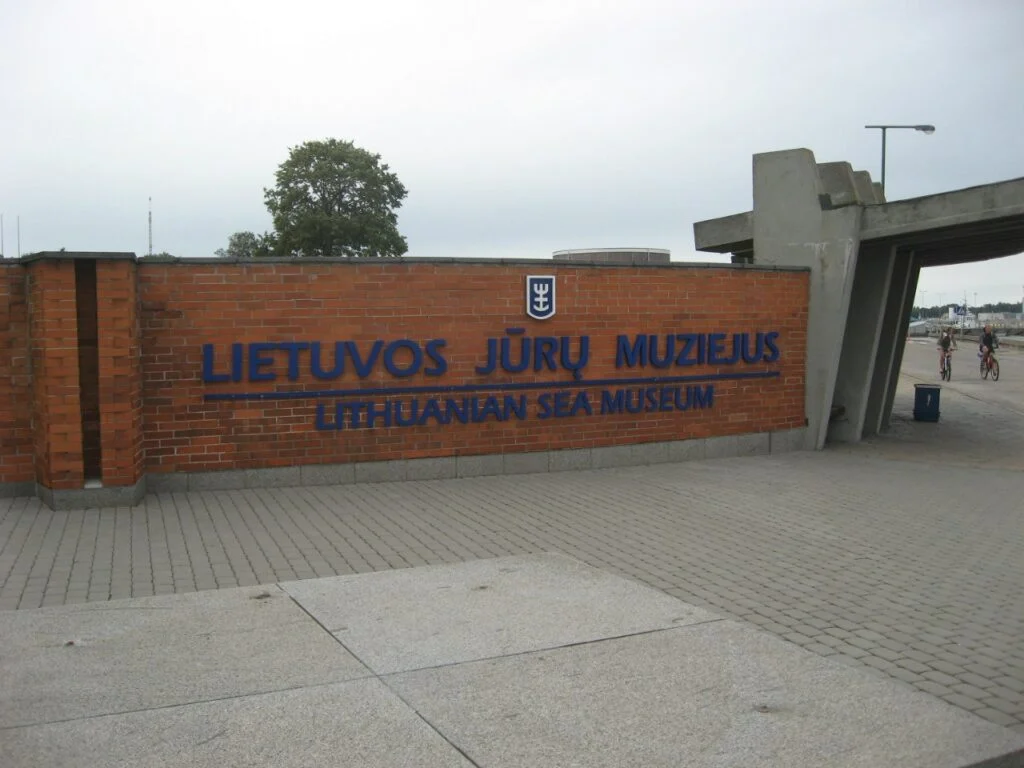
Situated on the Curonian Spit near the Baltic Sea, the Lithuanian Sea Museum occupies a building that was originally a decommissioned fortification from the late 19th century. Its conversion into a museum effectively repurposes the historic military architecture, giving the experience an additional layer of historical resonance. The juxtaposition of the fortress structure with aquarium tanks and exhibition spaces creates a spatial dialogue between the military history of Klaipėda and the natural world of the Baltic Sea.
The displays inside respect the museum’s dual focus. The aquarium component is substantial and professionally maintained, with large tanks designed to replicate Baltic marine environments. These aquatic spaces predominate physically and conceptually. Exhibits featuring objects and documents are arranged in more modest galleries, which sometimes feel secondary to the aquariums but maintain coherent narratives about fishing communities and maritime development.
Interpretive materials rely on straightforward labeling and occasional panels but shy away from overly lengthy text or multimedia. This approach suits the museum’s target audiences who are likely curious about marine life and local maritime culture but may not seek detailed academic analyses. The design emphasizes clear visibility of specimens over immersive or thematic display techniques, which can give the galleries a somewhat functional aesthetic but ensures straightforward access to the material.
For Families, Specialists, and First-Time Visitors
The museum’s aquarium is naturally an attractive element for families, offering an immediate and engaging way to connect with marine life. Children and adults alike can observe species native to the Baltic Sea, which may be unfamiliar to many outside the region. This live-animal focus presents a tangible way to learn about biology and ecology that complements static museum displays.
For specialists, particularly those interested in marine biology, ichthyology, or Baltic maritime history, the museum’s collection and live specimens offer concrete relevance. Its focus on local species and human adaptation to a brackish sea environment provides a distinctive niche. Scholars of maritime ethnography might find the fishing gear and archival materials on local maritime economy worth further study.
First-time visitors approaching the museum with a generic maritime interest will find it different from larger maritime museums emphasizing grand naval stories or global exploration. Instead, this institution offers depth on a narrower subject, with ecological and regional cultural perspectives that require a certain interest in local maritime issues or natural history to fully appreciate.
What Works Best
The museum’s integration of natural history with maritime culture works particularly well. The aquarium tanks give several species a sustained platform, highlighting environmental conditions and ecosystem relationships rarely covered in maritime museums. That focus serves a clear educational purpose: presenting the Baltic Sea not just as a setting for human history but as a living environment continuously shaping livelihoods and culture.
Using a former fortress building adds an unexpected physical dimension of historical layering. The building itself narrates a story of military and strategic importance alongside the maritime and environmental narratives inside. While the military story is not the museum’s central theme, the architecture amplifies Klaipėda’s position as a Baltic outpost and maritime hub.
Rather than trying to cover every aspect of maritime activity, the museum concentrates on coherent themes. This choice enhances thematic clarity even if it might disappoint visitors hoping for broader maritime subjects like naval warfare, shipbuilding innovations, or transatlantic voyages. The strong emphasis on Baltic marine ecology and fishing emphasizes what makes Lithuanian maritime history distinctive.
Practical Considerations
Operational details such as opening times and ticketing fluctuate; it is advisable to consult the museum’s official website for current information. The museum’s coastal position near Klaipėda adds a logistical element for visitors who might be combining a museum visit with other seaside activities or tours of the Curonian Spit.
Physical access to the site benefits from proximity to Klaipėda’s urban centre and transport connections, but information regarding accessibility for visitors with reduced mobility should be checked in advance, as the conversion of an old fortress building can present challenges. Visitors should also confirm the availability of guides or informational materials in languages other than Lithuanian, given the museum’s regional and international interest.
Verdict
The Lithuanian Sea Museum’s strength lies in its regional and ecological focus on the Baltic Sea’s marine environment and its human interconnections. The deliberate choice to highlight native species alongside local maritime history gives it a distinctive profile. This specialization limits the museum’s appeal if expectations lean toward broad maritime history or large-scale naval collections, but it offers a focused experience for those interested in Baltic ecology, fisheries, and Klaipėda’s maritime life.
The aquarium anchors the visit, shaping the museum as much by living sea creatures as by historical artifacts. This makes the institution part natural history venue, part cultural museum, a division that informs every aspect of its presentation and scope. The use of a historic fortress building adds atmosphere without overwhelming the main themes.
In sum, the Lithuanian Sea Museum provides a tight, clear perspective on the Baltic Sea as a natural and cultural space, defined by local specificity rather than grand nautical narratives. For those invested in that area of the world or its marine life, it presents useful, well-curated material in an unusual setting.