Istanbul Archaeology Museums Review
Archaeology Museums · Istanbul, Turkey. The Istanbul Archaeology Museums stand as a testament to Turkey's rich and layered history, nestled at the crossroads of civilizations in one of the world’s most culturally significant cities. Founded in the late 19th…
Archaeology Museums · Istanbul, Turkey. The Istanbul Archaeology Museums stand as a testament to Turkey's rich and layered history, nestled at the crossroads of civilizations in one of the world’s most culturally significant cities. Founded in the late 19th…
Best forMasterpieces, architecture, cultural history
Review focusCollection highlights, building, visitor flow
Historical Context
The Istanbul Archaeology Museums stand as a testament to Turkey's rich and layered history, nestled at the crossroads of civilizations in one of the world’s most culturally significant cities. Founded in the late 19th century during the Ottoman Empire’s final decades, the museums embody a scholarly ambition to preserve and display antiquities from an extensive geographical area that includes Anatolia, the Balkans, the Middle East, and the Mediterranean. These museums reflect Istanbul’s historical legacy as a hub of ancient trade routes and imperial conquests, encompassing eras from the prehistoric period to the Byzantine, Ottoman, and early Republican periods of Turkey. Their collections offer crucial insights into the region’s contribution to the development of human culture and highlight Turkey’s pivotal role in the continuity of civilizations. Over the years, the Istanbul Archaeology Museums have evolved into a major research institution and cultural landmark, housing artifacts that reveal the complexities of ancient societies and the regions’ interconnected histories.
What You See on Arrival
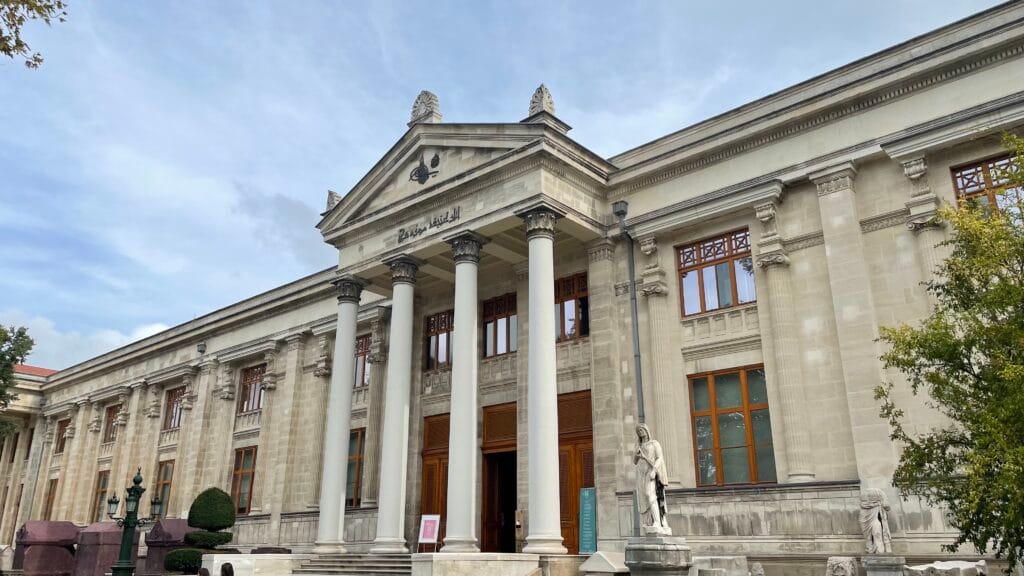
Upon approaching the Istanbul Archaeology Museums, visitors are greeted by an impressive complex that consists of multiple buildings situated in a serene garden setting adjacent to Gülhane Park, near the historic Topkapi Palace. The classical architecture of the main museum building exudes an aura of dignity and timelessness, setting the tone for the treasures held within. Statues, reliefs, and columns are often seen around the entrance, hinting at the depth of antiquity on display. The outdoor courtyards provide a tranquil prelude to the museums’ collections, blending historical ambiance with the natural beauty of shaded trees and open space. From the outside, the museums strike a balance between educational purpose and aesthetic appeal, inviting visitors into a space dedicated to the exploration of ancient worlds.
Highlights and Key Exhibitions
The Istanbul Archaeology Museums comprise three main museums: the Archaeological Museum proper, the Museum of the Ancient Orient, and the Tiled Kiosk Museum. Each venue contributes to a comprehensive narrative of human history across different regions and periods.
The Archaeological Museum is the centerpiece, featuring an extraordinary collection of artifacts from ancient civilizations that flourished in and around current-day Turkey and beyond. Among its priceless holdings are the Sarcophagus of Alexander the Great, which is an emblematic highlight due to its detailed reliefs and historical significance, portraying the legendary conqueror’s mythologized legacy. Another notable exhibit is the Alexander Sarcophagus—an evocative sculptural masterpiece that astonishes with its sculptural detail and artistic craftsmanship.
The Museum of the Ancient Orient complements this with its extensive collection of Assyrian, Babylonian, and Hittite artifacts, including intricately carved stelae, cuneiform tablets, and ceremonial objects that bring the ancient Near East’s history to vivid life. The variety and depth of artifacts provide a comprehensive view of the civilizations that had profound influences on law, literature, and religion.
The Tiled Kiosk Museum offers a more focused exploration of Ottoman and Islamic art and architecture, primarily through its exquisite collection of Anatolian tiles and ceramics. This smaller, more intimate space provides insights into the decorative arts that thrived in the region, with vibrant patterns that reveal centuries of artistic tradition.
Visitor Experience
The overall visitor experience at the Istanbul Archaeology Museums is multifaceted. The museums are curated in a manner that caters both to scholars and the general public, with descriptive plaques and explanations that contextualize the artifacts historically and culturally. However, the sheer volume and diversity of exhibits can feel overwhelming without a guided tour or prior knowledge of the collections. The layout encourages exploration, though some areas might benefit from clearer signage and thematic organization to enhance comprehension for visitors less familiar with archaeology.
The museums also maintain a quiet and contemplative environment conducive to study and reflection, with ample seating areas scattered throughout the galleries. Photography policies are generally accommodating for personal use, allowing visitors to capture memories of the unique artifacts and their intricate details.
Though facilities such as restrooms and cafés are available, they tend not to be spacious, which can impact comfort during peak visitation times. Nonetheless, the gardens and courtyards offer peaceful spots to take breaks and appreciate the historical ambiance outside the museum buildings.
Tickets, Access, and Planning
Entry to the Istanbul Archaeology Museums is reasonably priced, with tickets offering access to all three museums within the complex. There are discounted rates for students, seniors, and groups, making the museums accessible to a broad demographic. It is advisable for visitors to allocate several hours to fully engage with the extensive exhibits rather than a brief stop, as the wealth of artifacts requires time to appreciate.
The museums are located in the historic Sultanahmet district, well-served by public transportation including tram lines, which facilitates easy access from various parts of the city. The proximity to other major attractions such as the Topkapi Palace and Hagia Sophia means that visiting the museums can be conveniently integrated into a broader cultural itinerary.
For those with mobility challenges, the museum complex generally provides reasonable access, although some older buildings and outdoor areas may present minor difficulties due to the historic nature of the site. Visitors are advised to check in advance for any specific accommodations or assistance available.
Final Verdict
The Istanbul Archaeology Museums offer an unparalleled window into the ancient civilizations that shaped not only the history of Turkey but also the wider ancient world. Their comprehensive collections stand as both scholarly resources and cultural treasures, presenting artifacts with historical depth and artistic excellence. The diversity of the museums—from monumental sarcophagi to delicate ceramics—makes the complex a rich destination for lovers of history, archaeology, and art alike.
While the museums’ vastness can challenge casual visitors, those who approach the site with curiosity and time to spare will find themselves rewarded with a profound journey through ancient narratives. The setting near other historic landmarks offers an added layer of contextual richness often sought by cultural travelers. Enhancements in signage and visitor amenities could elevate the experience further, yet the educational value and aesthetic appeal remain strong draws.
Overall, the Istanbul Archaeology Museums succeed in preserving and presenting a heritage that is crucial to understanding the civilizations that have influenced the modern world. They are essential for anyone hoping to gain a deeper appreciation of Istanbul’s unique place at the junction of past and present.