Inner Mongolia Museum Review
Archaeology Museums · Hohhot, China. The Inner Mongolia Museum in Hohhot, China, serves as a cultural repository dedicated to the history, ethnography, and natural heritage of Inner Mongolia Autonomous Region. Established to highlight the distinctive identity of this northern…
Archaeology Museums · Hohhot, China. The Inner Mongolia Museum in Hohhot, China, serves as a cultural repository dedicated to the history, ethnography, and natural heritage of Inner Mongolia Autonomous Region. Established to highlight the distinctive identity of this northern…
Best forMuseum lovers, culture travelers, first-time visitors
Review focusCollections, visitor experience, and practical planning
Historical Context
The Inner Mongolia Museum in Hohhot, China, serves as a cultural repository dedicated to the history, ethnography, and natural heritage of Inner Mongolia Autonomous Region. Established to highlight the distinctive identity of this northern Chinese region, the museum reflects its role as a bridge between the nomadic traditions historically predominant in the area and the broader narrative of Chinese civilization. Inner Mongolia’s complex past is defined by waves of migration, engagement with steppe cultures, and shifting political boundaries, situating the museum in a unique geographic and historical position.
Since its inception, the museum has evolved to accommodate both archaeological and anthropological collections, aiming to represent the diverse cultural practices of Mongolian peoples alongside geological and paleontological artifacts. It is located in Hohhot, the regional capital, itself a city with Mongolian and Han Chinese influences. This background underscores the museum’s mission to foster understanding of the region’s heritage, which includes the interaction of nomadic pastoralism and settled agricultural communities across centuries. The Inner Mongolia Museum is thus not only a collection of objects but an institution engaged in presenting a regional identity within contemporary China’s cultural mosaic.
What You See on Arrival
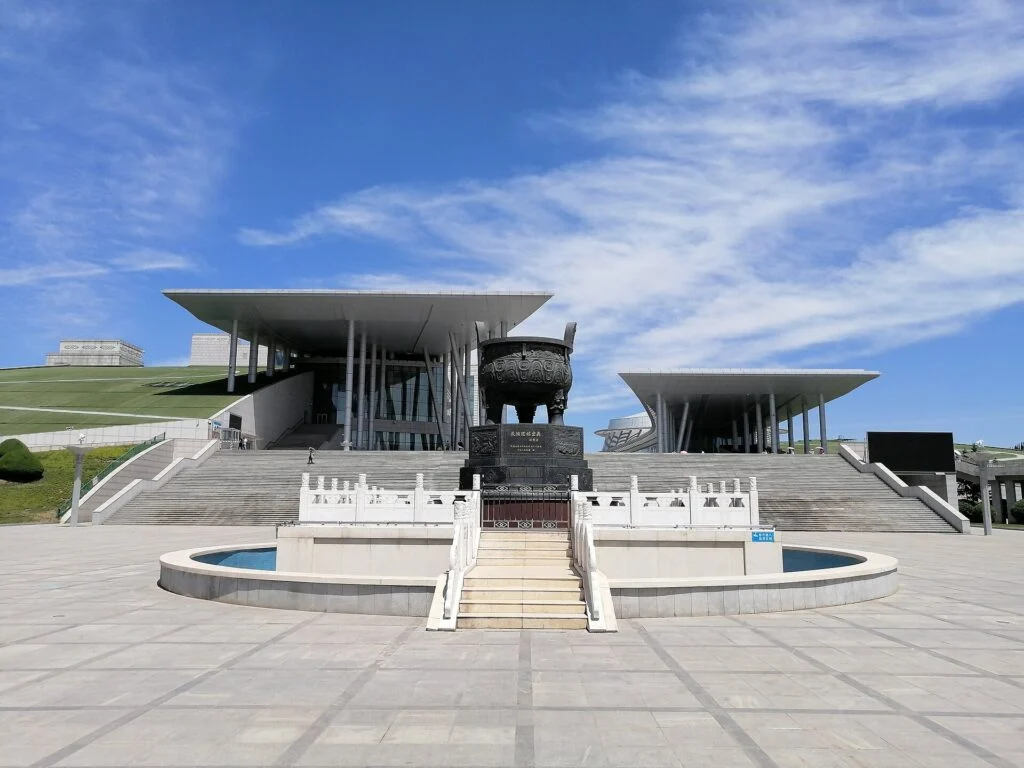
Upon approaching the Inner Mongolia Museum, visitors encounter a building designed to reflect certain symbolic aspects of Mongolian culture and regional history. The museum’s architecture and external presentation convey a sense of solidity and tradition while integrating modern design principles. The structure is intended to situate the museum as a significant cultural landmark within Hohhot’s urban landscape, balancing both local aesthetics and functional public space.
The entrance area organizes visitor flow efficiently, offering a clear point of access that frames the museum’s contents without overwhelming new arrivals. Exhibits inside are introduced with regional contextualization, setting up expectations about the themes and artifacts that follow. There is an emphasis on natural history, archaeology, and ethnography, which allows the visitor to mentally prepare for a multidisciplinary visit.
Signage and introductory material likely highlight the museum’s role in collecting and preserving objects related primarily to Inner Mongolia’s indigenous peoples, geology, and ancient civilizations. While the precise spatial layout is specialized, the initial framing suggests a focus on regional identity and historical continuity rather than a broader national or global narrative.
Highlights and Key Exhibitions
The Inner Mongolia Museum’s most notable strengths lie in its well-curated archaeological and ethnographic collections, which provide insight into the diverse cultures that have shaped the region. Among the most significant exhibits are the prehistoric fossil finds, including those related to dinosaurs and other extinct species that once roamed the Mongolian plateau. These natural history elements carry scientific value and emphasize the geological distinctiveness of the area.
Complementing the paleontological displays is the museum’s archaeological material, which spans from Neolithic settlement evidence to ancient burial artifacts. These objects deepen understanding of human habitation patterns in Inner Mongolia, illustrating local developments alongside wider Eurasian steppe cultures. Artifacts such as tools, weaponry, ceramics, and ritual objects reveal varying interactions between nomadic and sedentary societies, providing tangible connections to historical lifestyles.
Ethnography exhibits form a core component, focused principally on Mongolian traditional life and culture. This includes displays of costumes, textiles, religious artifacts, and items related to pastoral nomadism—such as saddlery and yurts (traditional tents). These presentations aim to convey the rhythms and practices of Mongolian herders, enabling visitors to appreciate the persistence of certain cultural elements despite modern pressures and changes.
The museum also addresses Inner Mongolia’s place within the Chinese state and its political history, though this is treated with a measured tone, avoiding overt politicization. Exhibits in this category commonly discuss the administrative evolution of the region and the shifting interactions between Mongolian and Han Chinese populations.
Highlights extend to the museum’s collection of historical documents and photographs, which offer more recent perspectives on local social history and identity formation. These materials assist in bridging the past with contemporary issues relevant to Inner Mongolia.
Overall, the Inner Mongolia Museum’s exhibitions intersect natural history with human history, emphasizing the unique ecological environment as well as the cultural practices connected to it. The displays provide a coherent story of continuity and adaptation, suitable for interested audiences ranging from students of anthropology and history to visitors seeking a regional cultural overview.
Visitor Experience
The visitor experience at the Inner Mongolia Museum is shaped by the thematic diversity and scope of its holdings. For audiences interested in anthropology, archaeology, or natural sciences, the museum offers a solid introduction to the region’s heritage. The pacing necessarily varies—some sections may require more time to understand complex archaeological displays, while ethnographic areas tend to be visually engaging and accessible.
Interpretation within the museum likely includes bilingual signage (Chinese and English) though the depth and style of explanation might vary depending on the exhibit. This affects the accessibility of information for international visitors with no prior knowledge of the region. While labels and text panels provide factual context, the interpretative narrative tends to focus on straightforward presentation rather than layered analysis, which may leave curious visitors seeking a more nuanced discussion somewhat under-served.
The museum appears well-suited for families, scholars, and tourists interested in cultural history. Younger audiences might appreciate the fossil displays and colorful ethnographic objects, though interactive elements, if any, are limited. The flow between galleries is probably organized to allow gradual immersion into different aspects of Inner Mongolian identity, though certain thematic transitions might feel abrupt to some.
One limitation to consider is that the museum’s regional focus means it does not extensively engage with broader Chinese or global histories beyond their local implications. Visitors looking for connections between Inner Mongolia and global historical phenomena may find the treatment somewhat insular. Equally, the museum’s straightforward approach may not satisfy visitors expecting highly interpretive or narrative-driven exhibitions.
The balance between natural history and cultural presentations adds value but necessitates a flexible mindset from visitors, as the subject matter shifts significantly across exhibits. Overall, the museum’s atmosphere is likely calm and contemplative rather than theatrical, suiting those who prefer slower, detail-oriented exploration.
Tickets, Access, and Planning
Prospective visitors are advised to check the Inner Mongolia Museum’s official website or contact local sources for the most current information before planning a visit. Admission policies, opening hours, and availability of special tours or guided programs can vary and are not consistently documented in publicly accessible sources.
Access to the museum is generally straightforward from Hohhot city center, though details on transportation options and parking facilities should be confirmed closer to the intended visit date. The museum’s location in an urban setting suggests that public transit connections exist, but the ease of access for those with mobility impairments or specific needs is not comprehensively verified.
Planning a visit may benefit from allotting adequate time to see both the archaeological and ethnographic sections, as well as the natural history displays. Given the range of exhibits, visitors might prefer to allocate several hours to avoid rushing through content. Check for any temporary closures or restrictions, particularly around regional holidays or special events.
Since details about interpretive services like audio guides or multilingual guided tours are unclear, travelers should be prepared for a primarily self-directed experience supported by onsite signage. Those with limited Chinese language skills may want to research supplementary materials or consider joining organized group visits.
Final Verdict
The Inner Mongolia Museum in Hohhot serves as a focused cultural institution emphasizing the history, natural environment, and ethnic traditions of one of China’s most distinctive regions. It offers a substantive introduction to Inner Mongolia’s archaeological past, geological significance, and ongoing cultural practices, centering the Mongolian heritage that shapes the area’s identity.
Its collection is suitably varied and reasonably comprehensive within the regional framework, balancing natural history specimens with artifacts related to human habitation and ethnographic life. This makes the museum a valuable resource for visitors who want to understand the local context without broader national or international framing. The museum’s straightforward approach and clear organizational strategy make it accessible to a general audience, although international visitors might find some interpretative limitations.
The museum’s positioning in Hohhot is logical and convenient for those already in the region, and it functions effectively as a cultural anchor in Inner Mongolia. Potential visitors should prepare for a self-guided experience and verify current operational details before attending. While the museum does not attempt extensive comparative analysis or thematic innovation, it fills an important niche by documenting and displaying the natural and cultural heritage of this often overlooked part of China.
In summary, the Inner Mongolia Museum is best suited to those interested in regional anthropology, archaeology, and natural science within a Chinese setting. Its clear presentation style and focused collections command respect, even if advanced interpretive programming or broader contextualization is limited. The museum contributes a valuable, if specialized, perspective on a significant cultural landscape.