District Six Museum Review
History Museums · Cape Town, South Africa. The District Six Museum, located in Cape Town, South Africa, stands as a poignant testament to the turbulent history of apartheid-era forced removals and the resilience of a displaced community. District Six was once…
History Museums · Cape Town, South Africa. The District Six Museum, located in Cape Town, South Africa, stands as a poignant testament to the turbulent history of apartheid-era forced removals and the resilience of a displaced community. District Six was once…
Best forMasterpieces, architecture, cultural history
Review focusCollection highlights, building, visitor flow
Historical Context
The District Six Museum, located in Cape Town, South Africa, stands as a poignant testament to the turbulent history of apartheid-era forced removals and the resilience of a displaced community. District Six was once a vibrant, multicultural neighborhood home to roughly 60,000 residents, a mix of freed slaves, artisans, laborers, and immigrants from diverse backgrounds. However, in 1966, the apartheid government declared District Six a "whites-only" area, initiating the forced eviction of its inhabitants and the systematic destruction of their homes and community fabric. The museum was established in 1994, coinciding with the dawn of democracy in South Africa, to preserve the memory of those displaced and to give voice to their stories. It serves not only as a historical archive but a living memorial that explores themes of displacement, identity, and social injustice through personal narratives, photographs, and artifacts, enabling visitors to understand the human cost of segregationist policies and the enduring spirit of the District Six community.
What You See on Arrival
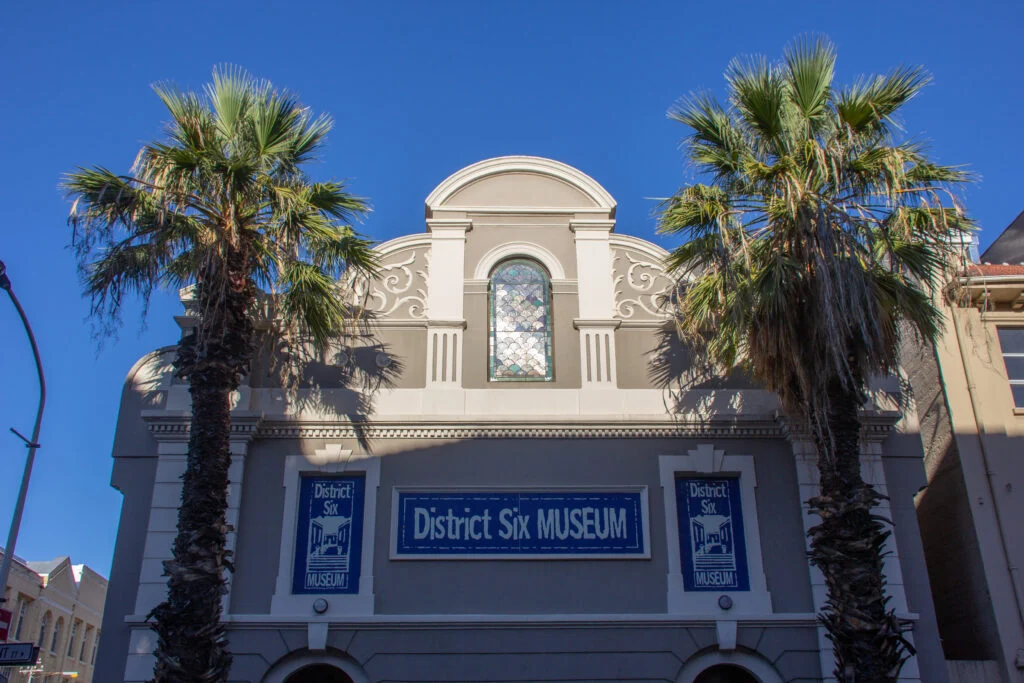
Entering the District Six Museum, visitors are immediately struck by the unassuming exterior, situated in a modest building that once housed a fruit and vegetable market. The unpretentious facade and location contribute to the museum’s authenticity, offering a sense of place within the urban fabric of Cape Town. Upon stepping inside, a collage of memories greets you: walls speckled with vibrant, fragmented murals, archival photographs, and personal letters that evoke a strong emotional resonance. The atmosphere balances reverence and vitality, with an entrance hall that acts as a gateway from past to present. A large comprehensive map of the old District Six dominates one section, charting the former neighborhood’s intricate layout, streets, and landmarks that no longer physically exist but remain etched in collective memory. These visual elements set a sobering tone, preparing visitors for an immersive encounter with a forcibly erased community.
Highlights and Key Exhibitions
The museum's core strength lies in its unwavering dedication to personalized storytelling. Through a curated collection of over 5,000 photographs, numerous oral histories, and tangible remnants, the exhibits draw visitors into the intimate realities of those affected. One of the central exhibitions revolves around the forced removals, highlighting the sequence of government notices, eviction orders, and testimonies that reveal not only bureaucratic cruelty but the profound psychological impact on families uprooted from their homes. A particularly compelling section features original household items—furniture, clothing, musical instruments—that speak volumes about everyday life and cultural identity before displacement.
Another significant element is the community wall, a sprawling mosaic created by former residents and their descendants, incorporating tiles, handprints, and personal inscriptions. This mosaic is not merely artistic expression but an act of reclamation, capturing individual and collective memories that refuse to be erased. The museum also dedicates space to the socio-political backdrop, offering context on apartheid’s broader machinery and its implementation in Cape Town, helping visitors understand District Six within South Africa’s wider apartheid system.
The museum's multimedia installations, including audio booths where recorded testimonies echo throughout the space, deepen the immersive experience. These voices lend authenticity and human connection that text and images alone cannot fully communicate. While the museum avoids the typical gallery format, the spatial organization fosters a narrative flow—from the community’s flourishing life pre-1960s, through displacement, to ongoing efforts at restoration and remembrance.
Visitor Experience
The District Six Museum offers a solemn yet uplifting journey that invites reflection and respect. Its layout is deliberately uncluttered, allowing visitors to engage closely with individual stories without distraction. Signage and descriptions are thorough and thoughtfully presented, but the rich oral histories provide the most impactful engagement, as visitors listen to residents’ accounts of joy, loss, and hope. For those not fluent in English, it is worth noting that while most information is available in English, some resources and recorded interviews are presented in Afrikaans and Xhosa, reflecting the linguistic diversity of the original community.
Staff members and guides at the museum are deeply knowledgeable and approachable, often providing additional context and answering questions, enhancing the educational value. Group tours, available on request, add a layer of depth by facilitating dialogue and discussion. Interactive elements such as the community wall offer visitors a chance to contribute their own messages, connecting past and present.
The museum maintains a contemplative atmosphere, suitable for learners, historians, and tourists alike, encouraging visitors not only to witness history but to consider ongoing social injustices and community resilience. However, the absence of temporary exhibitions or a wide variety of interactive technologies might leave some contemporary museum-goers seeking more dynamic or changing content. The focus here remains steadfastly on preservation and remembrance rather than spectacle.
Tickets, Access, and Planning
Access to the District Six Museum is straightforward, situated in the central Cape Town area, easily reachable by public transport or car. Parking facilities nearby are limited, so visitors often choose taxis or ridesharing services. The museum is compact, allowing for a visit that generally lasts between one to two hours, depending on the depth of engagement. It is advisable to allocate sufficient time for audio tours to fully appreciate the oral histories.
Ticket pricing is moderate and designed to be accessible to a wide audience. Entry costs are lower for children, students, and seniors, with group rates available for educational outings, which aligns with the museum’s commitment to community education and inclusion. Online information about admissions and opening hours is reliably maintained by the museum’s official channels, although it is recommended to check for occasional changes during public holidays or special commemorative events.
The museum is mindful of accessibility concerns, offering wheelchair access and accommodating visitors with mobility impairments, though some interior spaces retain their original architecture, which can pose minor challenges. Visitors with hearing or visual impairments might find fewer specialized aids than in larger metropolitan museums, but staff are generally accommodating and eager to assist.
Final Verdict
The District Six Museum is an essential cultural institution for anyone interested in South Africa’s complex history of race, displacement, and reconciliation. It excels in honoring the lived experiences of a marginalized community through deeply personal, evocative exhibits that resist abstraction and highlight human stories at the heart of historical events. This focus on narrative and memory transforms the museum from a simple repository of artifacts into a space of collective remembrance and social justice reflection.
Its modest physical size and restrained use of contemporary museum technologies might not appeal to visitors seeking interactive or multimedia-heavy experiences. Nonetheless, the authenticity and emotional weight conveyed through its photographs, oral histories, and community artwork create a powerful immersive environment. The museum serves as both a remembrance of the injustices inflicted and a celebration of community resilience, renewal, and hope.
For educational groups, historians, and socially conscious travelers, the District Six Museum offers a profound and meaningful encounter. It poignantly addresses not only the historical consequences of apartheid’s policies but also speaks to broader global themes of forced displacement and the indomitable spirit of those who strive to reclaim their narrative. This museum remains a critical destination within Cape Town’s cultural landscape and a vital institution for preserving the legacy of District Six for future generations.